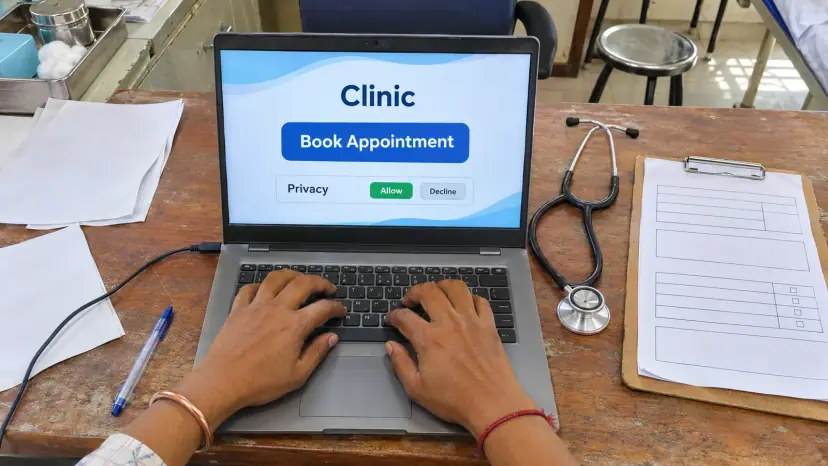
AI marketing for healthcare uses data and automation to help clinics, hospitals, diagnostic centres and health-tech firms get found by patients, answer enquiries quickly and publish accurate health information. Brainguru plans this work around India's medical ethics rules and data protection law, so growth never rests on a claim a doctor could not stand behind.
Why healthcare marketing works differently
Choosing a doctor or a hospital is a personal decision, often made under stress. Patients search for symptoms, compare providers, read reviews and check timings before they call. The marketing that works here is clear, accurate and calm. Loud offers and bold promises tend to damage trust, and in medicine they can also break the rules.
Competition is real. According to IBEF, India had 13,88,185 registered allopathic doctors as of March 2026, and the private sector accounts for around 62% of the country's healthcare infrastructure. A clinic in a busy city is rarely the only option within a few kilometres, so being easy to find and easy to trust matters.
The rules are strict. The Code of Medical Ethics Regulations, 2002, published by the National Medical Commission, treats soliciting patients directly or indirectly as unethical, bars physicians from boasting of cases, cures or remedies, and limits what an institution run by physicians may advertise. Regulators are watching too. In its 2024-25 complaints report, the Advertising Standards Council of India counted healthcare among the most violative sectors at 5.23% of cases, and flagged 233 ads that potentially violated the Drugs and Magic Remedies Act.
What AI marketing for healthcare covers
AI is useful in healthcare marketing when it handles volume and routine work, and when a qualified person still approves anything clinical. The work usually falls into these areas.
Local search for clinics and hospitals: Accurate Google Business Profile listings, consistent name, address and phone details across directories, and one clear page per specialty and location. AI helps track how listings appear for searches such as a specialty plus a locality, and flags missing or outdated information.
Appointment enquiries: Forms, call tracking and chat that capture the service requested and the preferred contact method, then route the enquiry to the right desk. A marketing form should never ask for a medical history.
Reviews and replies: Monitoring reviews on Google and health platforms, spotting recurring themes, and drafting replies for staff to approve. Replies matter: in BrightLocal's Local Consumer Review Survey 2026, 89% of consumers said they expect business owners to respond to reviews, and templated or generic replies made 50% unlikely to choose a business. In healthcare a reply must also never confirm that the reviewer is a patient.
Health content with clinical review: Patient education pages, treatment explainers and FAQs drafted with AI help, then checked by a doctor before publishing. Content should explain, not promise outcomes.
Paid search and social campaigns: Campaigns built around services and locations, measured on attended appointments rather than clicks. Health conditions should not be used to build advertising audiences.
Communication with referring doctors: Clear service information for doctors who refer patients, and timely updates on shared patients, with no payment or incentive tied to referrals.
Many of these pieces connect to our wider local SEO services, to AI chatbot development for enquiry handling, and, for younger health-tech companies, to our guide to the AI stack for healthcare startups.
Patient data and the DPDP Act
Health information is among the most sensitive data a business holds. In India, the Digital Personal Data Protection Act, 2023 sets the rules. Its implementing rules were notified in the Gazette of 13 November 2025, and most duties of data fiduciaries, including notice, security safeguards and breach intimation, start eighteen months later, on 13 May 2027.
Practical steps help long before that date:
- Separate data: Keep clinical records out of marketing tools. Marketing systems need contact details and preferences, not diagnoses.
- Record consent: Keep a clear record of what each person agreed to receive, and make it easy to withdraw.
- Split messages: Keep appointment reminders apart from promotional messages, so a patient who opts out of offers still gets the reminder.
- Limit access: Give agencies and tools only the access they need, and remove it when the work ends.
Clinics that serve patients in the United States also need to consider HIPAA, and those serving patients in Europe need to consider the GDPR. Your own legal adviser should confirm what applies.
A practical workflow for clinics and hospitals
Start with the care service and the enquiry path, not a list of patient attributes. A clinic seeking consultations needs different content and follow-up from a hospital promoting a diagnostic service. This workflow is a planning outline, not a case study, and it promises no results.
- Service discovery: Publish the actual consultation scope, appointment route and service area supplied by the provider. AI can help organise a content library, but clinical claims need clinical approval.
- Appointment enquiries: Capture the requested service and contact preference, route enquiries to the right booking team, and record whether the appointment was attended.
- Capacity and follow-up: Connect campaigns to available appointment slots. Pause promotion of a service that is fully booked or unavailable.
- Measurement: Track attended appointments and the cost of an attended appointment, not just form submissions. Review cancellations and out-of-area enquiries separately.
For a first conversation, bring the approved service list, how enquiries are handled today, a description of the data you hold, and the name of the person who signs off clinical content.
What affects the cost of healthcare marketing?
We quote each engagement after a free consultation, because two clinics with the same specialty can need very different work. The main factors are:
- Locations and specialties: Each location and service line needs its own pages, listings and tracking.
- Channels: Search, social, email, SMS and WhatsApp each add setup and review work.
- Clinical review: More health content means more doctor time to approve it.
- Integrations: Connecting a booking system, call tracking or a hospital information system takes development effort.
- Languages: Content in several languages needs translation and a second review.
Questions to ask any healthcare marketing provider
- Clinical sign-off: Who approves health claims before anything is published?
- Data: Which patient data will your tools see, and where is it stored?
- Rules: How do you check content against medical ethics and advertising rules?
- Measurement: Will you report attended appointments, or only clicks and leads?
- Reviews: How will you ask for reviews without offering rewards or filtering out unhappy patients?
Local Healthcare Planning Guides
Choose a city for official local references, enquiry information and a reviewed workflow. Each guide covers healthcare providers we serve from Noida; these cities do not have branch offices of ours.