In this article
- Key takeaways
- Why website traffic alone does not pay the bills
- What a website needs to capture leads
- Where cloud telephony fits in lead generation
- Channels that feed your lead funnel
- SEO versus paid: choosing where to start
- Respond fast: the most underrated lead tactic
- Handle lead data with care
- Measure, then improve
- Conclusion
- Frequently Asked Questions
Lead generation is the work of turning website visitors into enquiries your team can follow up and close. This guide is for Indian B2B and service businesses whose sites get traffic but too few calls or forms. It covers capture paths, fast replies, where cloud telephony fits, which channels feed the funnel and how to measure results.
Editor's note: this article was first published in March 2015 about cloud telephony for Indian businesses. It was rewritten in 2026 as a broader guide to website lead generation. The original point, that a hosted phone system helps turn traffic into customers, still holds and is covered below.
In one sentence: lead generation is the process of attracting the right audience, capturing their enquiry or contact details, and getting that interest to your sales team quickly enough to act on it.
Why website traffic alone does not pay the bills
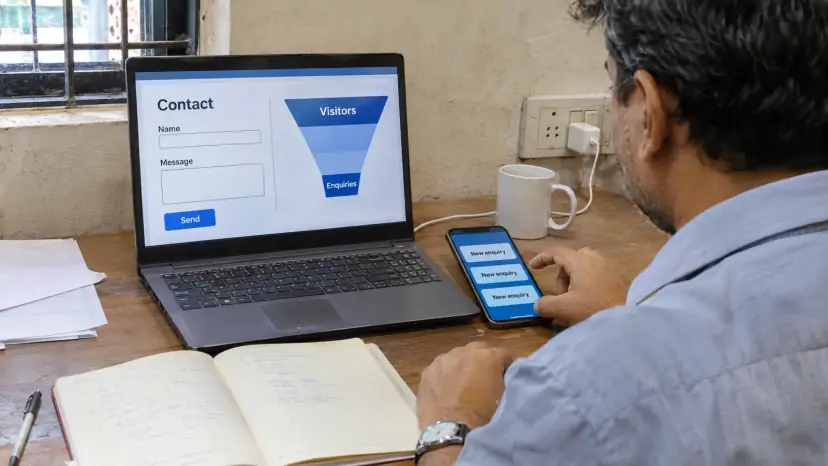
Traffic means little until it turns into enquiries. Many businesses spend on search and ads, move up the rankings, and still wonder why the phone is quiet. The gap is usually in the conversion layer: weak calls to action, slow follow-up, too many steps in the contact path, or no way to see which campaigns actually produce enquiries.
If this sounds familiar, read our companion piece on why website traffic doesn't convert into leads and how to fix it. The core idea: every visit should have an obvious, easy next step, and every enquiry should reach a person quickly.

What a website needs to capture leads
Websites that bring in enquiries steadily share a few traits. None of them is unusual; they are simply done on purpose.
- One clear offer and one main action per page. Each page should make one promise and offer one main next step: call, fill in a form or start a chat.
- Several capture paths. Phone, enquiry form, WhatsApp and email suit different visitors. Forcing one channel loses people who prefer another.
- Fast, mobile-first pages. StatCounter's figures for India show that 84.21% of page views in October 2026 came from mobile devices. A slow or awkward layout on a phone loses the visitor before the form loads.
- Trust signals. Real contact details, a physical address and clear information about who you are reassure first-time visitors.
- Measurable touchpoints. If you cannot see which page or campaign produced a lead, you cannot improve it.
The build itself is the foundation. A fast, mobile-friendly site with a clear layout does more for enquiries than any single clever tactic. If your site feels dated, start with why your brand needs a modern, mobile-friendly website, and use our guide to Core Web Vitals for Indian websites to find what slows your pages down.
Make WhatsApp easy to reach
Many buyers would rather send a WhatsApp message than fill in a form. A click-to-chat button that opens a chat with a pre-filled message removes a step, and a separate link per page or campaign shows where each chat came from. Our guide to WhatsApp click-to-chat links for business explains how to create and track them.
Where cloud telephony fits in lead generation
Cloud telephony is a hosted phone system that runs over the internet instead of fixed lines and an office exchange. You manage calls, routing and tracking from one dashboard. For lead generation it matters in two ways: it makes it easier for an interested visitor to reach a real person, and it makes phone enquiries measurable.
For an Indian business, the practical benefits are:
- Fewer missed enquiries. Calls can be routed to whoever is free, queued, or sent to voicemail by email, so an inbound lead is less likely to be lost.
- Room for spikes. A hosted system copes with a rise in calls during a campaign without new hardware.
- One number for a spread-out team. Staff in different offices, or working from home, answer the same business number.
- Call tracking. A separate number per campaign shows which channels actually produce calls, closing the measurement gap most websites have.
- Better handling. IVR menus, call recording and faster routing improve how prospects are treated from the first ring.
The original argument behind this post still holds: when a visitor wants to talk, the easier and faster you make that conversation, the more leads become customers. A cloud phone system is one way to do that, working alongside forms and chat rather than replacing them. Our guide to cloud telephony for business communication covers the features and a buyer's checklist.
Channels that feed your lead funnel
A steady flow of enquiries rarely depends on one source. Most businesses blend organic discovery, paid reach and direct response.
Organic search and local visibility
Ranking for what your buyers search for is the most lasting lead source. Work on the content and technical health of your site, and if you serve a city or region, keep your local business profile complete so you appear in map and "near me" results. For a structured approach, see the complete SEO guide for Indian businesses.
Paid search and social ads
When you need leads faster than organic search can deliver, paid search and paid social put you in front of people who are looking now. Our PPC and paid marketing guide covers how to set up campaigns so spend maps to enquiries, not just clicks.
Social media and content
Regular social posts and helpful content build awareness and trust over time, so people already know you when they reach a form. The wider payoff is covered in the key benefits of internet marketing and our roundup of internet marketing strategies you must focus on.
SEO versus paid: choosing where to start
Both channels produce leads; they work on different timelines and budgets. Most growing businesses use both, weighted to their stage and cash flow.
| Factor | Organic / SEO | Paid / SEM |
|---|---|---|
| Time to first leads | Weeks to months | Days |
| Cost behaviour | Mostly upfront effort; cost per lead can fall over time | Pay per click; stops when budget stops |
| Durability | Lasts while rankings hold | Ends when you pause spend |
| Best for | Steady, lower long-run cost | Fast results, launches, testing |
Respond fast: the most underrated lead tactic
Reply while interest is fresh. Someone who has just filled in your form or called may be contacting other suppliers at the same time, so a quick, useful answer gives you a better chance. A lead followed up days later has usually cooled or moved on. This is where a connected phone and website setup earns its keep: an instant call connection, a one-tap call button on mobile, or automatic routing gets the enquiry to a person in minutes, not hours.
Set a target your team can meet, for example a call back within the hour during working hours, and check it every week. Then pair speed with good handling. Train whoever answers to ask a few qualifying questions, note the details and agree a clear next step. The technology opens the door; people close the deal.
Handle lead data with care
Every form, call recording and chat holds personal data, so collect only what you need to follow up. Under the Digital Personal Data Protection Act, 2023, the main duties in the DPDP Rules apply from 13 May 2027. They include a clear notice, in plain language, of what data you collect and why, at the point you ask for consent. Prepare now: tidy your forms, write the notice and decide how long you keep enquiry records. Our DPDP Act checklist for digital marketers goes into detail.
Measure, then improve
You cannot improve what you do not track. At a minimum, record how many leads each channel produces, your cost per lead and how many enquiries become customers. Call tracking numbers, form analytics and simple CRM logging make these visible. Over time the data tells you where to put more effort and what to cut. AI tools increasingly help spot patterns and score which leads are most likely to buy, a topic we explore in AI tools for performance marketing.
Conclusion
Good lead generation is less about more traffic and more about what happens when a visitor is ready to talk. Give each page one clear next step, offer phone, form, WhatsApp and email, make the site fast on a mobile, and reply while interest is fresh. Use cloud telephony and call tracking so phone enquiries are counted, handle lead data carefully, and judge every channel by the customers it brings.
Frequently Asked Questions
What is lead generation for a website?
Lead generation for a website means attracting relevant visitors and capturing their enquiry or contact details so your sales team can follow up. In practice it turns anonymous traffic into named, contactable prospects through forms, phone calls, WhatsApp chats, email and similar capture points placed where visitors expect them.
How does cloud telephony help with lead generation?
Cloud telephony makes it easier for an interested visitor to reach a real person. It routes calls so enquiries are not missed, copes with spikes during campaigns, lets a spread-out team answer one business number, and adds call tracking so you can see which channels actually produce phone enquiries.
Why is my website getting traffic but not leads?
Usually the conversion layer is weak: unclear calls to action, slow or awkward pages on mobile, too many steps in the contact path, or slow follow-up. Give each page one clear next step, offer more than one way to get in touch, and make sure every enquiry reaches a person quickly.
Should I focus on SEO or paid ads for leads?
SEO builds a lasting flow of leads over weeks to months, while paid search and social bring leads within days but stop when you pause spend. Most businesses use both, weighted to their stage and budget, and judge each channel by its cost per lead and the customers it brings.
How quickly should I respond to a new lead?
As quickly as you can. A prospect is easiest to win while their interest is fresh, and they may be talking to other suppliers too. Set a response target your team can meet during working hours, and use instant call connection, a tap-to-call button and automatic routing to reach new leads within minutes.
How do I measure whether my lead generation is working?
Track the number of leads per channel, your cost per lead and the share of enquiries that become customers. Call tracking numbers, form analytics and a simple CRM make these figures visible, so you can put more into the channels that work and cut the ones that do not.
Want help with this?
Talk to our team about technology services.
Read next

Cloud Telephony for Business in India: A Practical Guide
How a cloud phone system works, the main services, how it compares with an office PBX, the rules on promotional calls and a checklist for choosing a provider.
Read article
How We Rebuilt Brainguru.in: Two WordPress Sites Into One Next.js Application
Two WordPress sites became one Next.js app. See why the blog left its subdomain, how URLs were kept and what we would change.
Read article
GA4 Setup for eCommerce in India: Events, Consent Mode and Debugging
How to set up GA4 ecommerce events, Consent Mode and INR values on Shopify, WooCommerce or a custom store, and how to debug what goes wrong.
Read article
Comments
Be the first to share your thoughts on this article.