
In this article
Paid marketing means buying visibility on search engines, social platforms and video sites, usually paying per click or per view. This guide explains how pay-per-click (PPC) auctions work, which paid channels suit which Indian businesses, how to set a budget you can measure, how to hire a PPC expert, and where AI campaign types fit.
What PPC Is and How It Works
Pay-per-click is an advertising model where you pay when someone clicks your ad. Instead of waiting to earn visitors through search rankings or social posts, you buy targeted traffic to your website, landing page or app. Google Ads is the best-known PPC platform, but the same idea applies on Meta (Facebook and Instagram), LinkedIn, YouTube and Microsoft Ads.
Paid channels now take most of the money in Indian advertising. The Dentsu digital advertising report 2026, as reported by Indian Television, put digital advertising at Rs 71,621 crore in 2025, or 59 per cent of total ad spend. That competition is why careful setup matters more than a large budget.
How the Google Ads Auction Works
Each time someone searches, Google runs an auction among advertisers whose keywords match. Google's help page About Ad Rank explains that Ad Rank decides whether your ad is eligible to show and where it appears relative to other ads. It is calculated from your bid, the quality of your ad and landing page, the context of the search and other auction factors.
The result is that a well-written, relevant ad leading to a useful page can beat a competitor who bids more with a poor setup. Google also reports a Quality Score for each keyword, but its help page on Quality Score says it is a diagnostic tool, not an input in the ad auction. Use it to find weak ads and pages, not as a target in itself.
PPC and SEO Compared
| Factor | PPC (paid) | SEO (organic) |
|---|---|---|
| Cost | Ongoing spend for every click | Time and work upfront, no per-click fee |
| Speed | Traffic within days of launch | Builds over months |
| When spending stops | Traffic stops | Rankings carry on for a while |
| Control | You choose keywords, places and timing | Google decides what ranks |
Most businesses use both: paid ads for enquiries now, SEO to lower the cost of each enquiry over time. Our article on whether to start with SEO or Google Ads helps decide the order.

Types of Paid Marketing Channels
Google Search Ads
Text ads that appear above and below Google search results for chosen keywords. They reach people already looking for what you sell, which makes them the first choice for service businesses, B2B firms and local businesses. Click costs vary a great deal by industry; insurance, finance, legal services and real estate are among the most competitive. Check the bid estimates in Google's Keyword Planner before setting a budget.
Google Display and Demand Gen
Display ads appear across partner websites and apps; Google's help page on Demand Gen campaigns says they run across YouTube (including Shorts), Discover, Gmail, Maps and the Display Network. Clicks usually cost less than on search, but the intent is lower. They work best for retargeting visitors who did not convert and for building awareness with strong visuals.
Meta Ads on Facebook and Instagram
Image, video, carousel, Stories and Reels ads, targeted by location, age, interests and behaviour, or by lookalikes of your customers. Meta ads create demand among people who match your customer profile but are not searching yet. They suit D2C brands, e-commerce, education, real estate and local businesses with appealing visuals. Our comparison of Google Ads and Meta Ads goes into the trade-offs.
LinkedIn Ads for B2B
Ads targeted by job title, seniority, company size, industry and skills. Clicks are usually the most expensive of the major platforms, but for companies selling high-value services to decision makers, the lead quality can justify the cost.
YouTube Ads
Skippable and non-skippable in-stream ads, in-feed video ads, short bumper ads and Shorts ads, usually bought per view or per thousand impressions. Google's ad tools showed 500 million YouTube users in India in late 2025, according to DataReportal. Video suits products that need explaining or showing, such as edtech, real estate, cars and consumer brands.
Paid, Owned and Earned Media
| Type | What it is | Examples |
|---|---|---|
| Paid media | Visibility you pay for | Google Ads, Meta Ads, sponsored posts, paid creator content |
| Owned media | Channels you control | Your website, blog, email list, app and social profiles |
| Earned media | Attention you did not pay for | Press coverage, reviews, shares and word of mouth |
The three work together. Paid media brings traffic quickly and shows which messages work. Owned media turns that traffic into subscribers and customers. Earned media adds trust that ads cannot buy. A new business usually leans on paid media to get started; an established one can shift more effort into owned and earned channels as its reputation grows. Review the split every quarter using your own results.
How to Set a Paid Marketing Budget
Start from what a customer is worth, not from what others spend.
- Work out your break-even cost per sale. Take your average order value, multiply by your gross margin, and you have the most you can spend to win one sale without losing money. Aim well below it.
- Estimate clicks and conversions. Use Keyword Planner's bid ranges and your website's current conversion rate to see how many clicks a sale is likely to need.
- Budget for learning. New campaigns need enough clicks and conversions for you and the platform's bidding to learn what works. A budget too small to collect that data wastes the spend it does have.
- Know how Google paces spend. Google's help page on average daily budgets says a campaign can spend up to 2 times its average daily budget on a given day, but you are never charged more than 30.4 times the daily budget in a month.
- Keep fees separate. Agency or freelancer management fees sit on top of ad spend. Track them as a separate line.
CPA and ROAS
Cost per acquisition (CPA): ad spend divided by the number of sales or leads. Compare it with your break-even figure.
Return on ad spend (ROAS): revenue from ads divided by ad spend. A healthy ROAS depends on your margin: a high-margin service can live with a lower ROAS than a low-margin online store. Set your target from your own numbers, not from a published average.
How to Hire a Dedicated PPC Expert
In-House, Agency or Freelancer
| Option | Strengths | Watch for |
|---|---|---|
| In-house hire | Knows the business, direct control | One person's skills and time, plus tool costs |
| PPC agency | A team with experience across many accounts | Junior staff doing the work, long lock-ins |
| Freelancer | Flexible, suits small budgets and tests | Quality varies, cover during leave |
What to Look For
- Certification and evidence: Google Ads certification is a basic check; examples of work in your sector matter more.
- Knowledge of Indian buyers: regional targeting, Indian-language ads and local buying habits.
- Clear reports: click-through rate, cost per click, conversions, CPA and ROAS, shown regularly in plain terms.
- Fair contracts: short notice periods and no long lock-ins.
- Your accounts: Google Ads and Meta Ads accounts in your company's name, with the expert given access.
Questions to Ask
- Can you show results from businesses in my industry?
- How do you research keywords and manage negative keywords?
- How do you handle a campaign spending too fast or too slowly?
- Which tools do you use for bidding and reporting?
- Who will be my day-to-day contact?
- What happens to my ad account if we stop working together?
AI Tools Changing PPC
Google Performance Max
Google describes Performance Max as a goal-based campaign type that reaches all Google Ads inventory, including YouTube, Display, Search, Discover, Gmail and Maps, from a single campaign. You supply creative assets and audience signals, and Google's AI handles bidding and placement. It needs reliable conversion tracking to work well, so many smaller advertisers start with standard Search campaigns and add Performance Max once they have steady conversion data.
Meta Advantage+
Meta's Advantage+ campaigns automate audience targeting, creative combinations and placements. They can cut setup time, especially for e-commerce catalogue ads, at the cost of less control over who sees your ads.
Bid Management and Reporting Tools
Third-party tools such as Optmyzr and Adalysis spot wasted spend, suggest changes and flag problems across accounts. They are most useful for agencies and businesses running many campaigns. Our article on AI tools for performance marketing compares more options.
Conclusion
Paid marketing is accountable when it is set up properly: relevant ads, useful landing pages, accurate conversion tracking and a budget based on what a customer is worth to you. Start with the channel closest to your sales, give campaigns time to learn, keep accounts in your own name and judge every rupee by the leads and sales it brings.
Frequently Asked Questions
Is there a minimum budget for Google Ads in India?
Google does not set a fixed minimum. The practical minimum is a budget large enough to collect clicks and conversions each week, so you can tell what works. Check click costs for your keywords in Keyword Planner, work out how many clicks a sale needs, and budget for that, plus any management fee.
Google Ads or Meta Ads: which is better?
Neither is better for everyone. Google Search ads capture people already looking for what you offer. Meta ads create demand among people who fit your customer profile but are not searching. Start with the channel closest to your sales, usually Google for services and Meta for consumer products, then test the other.
How long before PPC campaigns become profitable?
Expect several weeks of testing. Early on, the platform and your team learn which keywords, audiences and ads convert. You then cut poor performers, improve ads and landing pages, and move budget to what works. Be wary of anyone promising instant profit, because the learning period is real and cannot be skipped.
Want help with this?
Talk to our team about search engine marketing.
Read next

SEO or Google Ads First? A Budget Framework for Indian SMEs
Work out your maximum cost per lead from customer value and close rate, then judge SEO and Google Ads against it.
Read article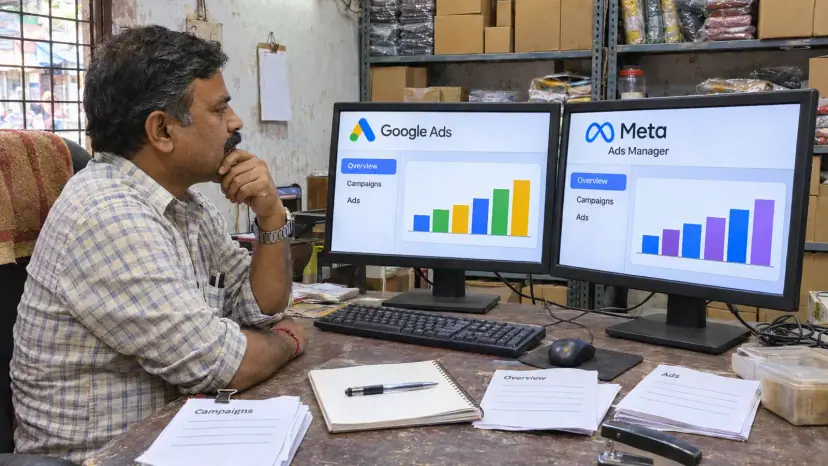
Google Ads vs Meta Ads: Which Works Better for Indian SMEs?
Google Ads catches people already searching; Meta Ads reach people by interests. Compare cost per lead, not cost per click, and test both.
Read article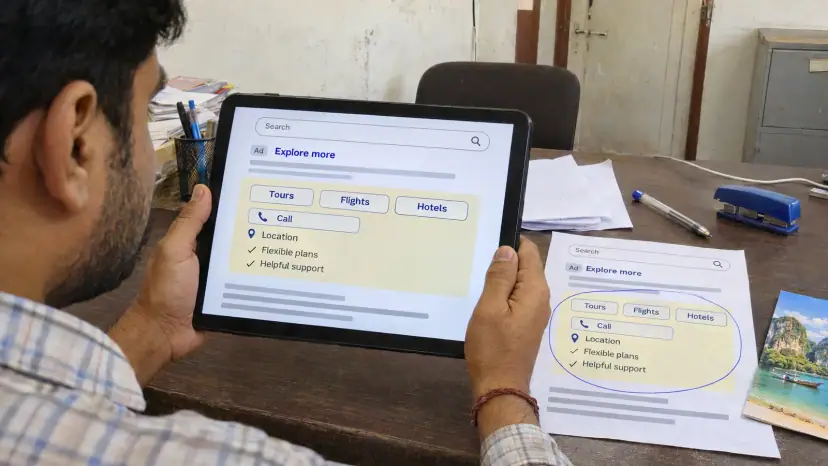
Ad Extensions in Search Advertising: A Practical Guide
Adding extensions costs nothing by itself, though clicks may cost more. Pair them with honest trust signals, the right match types and negatives.
Read article
Comments
Be the first to share your thoughts on this article.