In this article
- Key takeaways
- Why AI Matters for Indian MSMEs Now
- Competing on Cost: Where AI Saves Money
- Customer Experience: Competing Like Big Brands
- Smarter Marketing With AI and Marketing Automation
- Competing on Speed: Faster Decisions With AI Analytics
- Operations: Doing More With a Small Team
- Sales Automation for Small Teams
- Compliance, Risk and Security
- Government Support for AI Adoption
- AI Myths That Hold MSMEs Back
- How to Get Started
- Conclusion
- Frequently Asked Questions
Indian MSMEs can now use AI and marketing automation that once only large enterprises could afford, through cloud tools paid for by the month. This guide shows where AI helps a small firm compete: costs, customer service, marketing, decisions, operations, sales and security, plus the common myths and a simple way to start.
Why AI Matters for Indian MSMEs Now
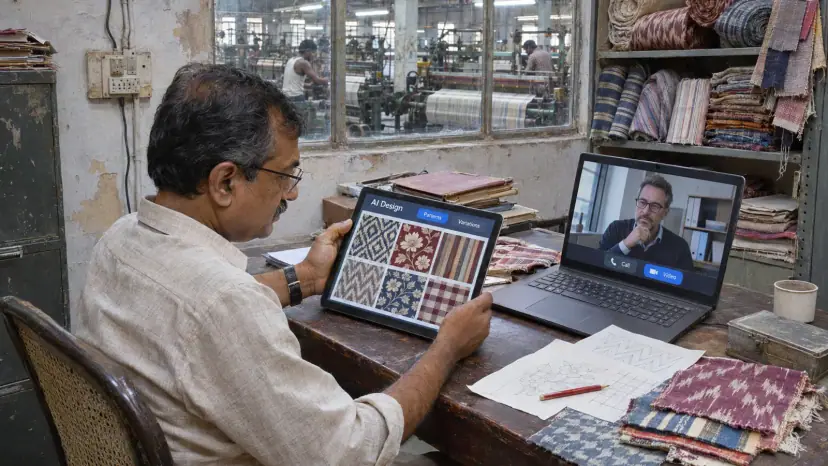
Large companies used to win through scale: bigger teams, bigger budgets and their own IT departments. Much of that advantage came from software that small firms could not buy or run. Cloud services have changed this. Many AI features now come built into accounting, CRM, messaging and advertising tools that a small business already pays for, or can rent by the month.
The number of formal small businesses is also large and growing. As of 30 June 2026, over 8.84 crore enterprises had registered on the Udyam portals, the Minister of State for MSME told the Rajya Sabha, as reported by KNN. Many of them compete with larger rivals for the same customers, often in the same city.
Adoption among bigger organisations is already high. The Stanford AI Index 2025 reported that 78% of organisations reported using AI in 2024, up from 55% the year before. That gap is the reason to act: a small firm that waits will be competing against rivals who already answer faster and plan better.
AI will not make a small firm bigger. What it can do is take routine work off a small team, so the owner and staff spend more time on customers, quality and new business. Where a small firm does have an edge, such as speed, personal service and quick decisions, AI can make that edge sharper.
Competing on Cost: Where AI Saves Money
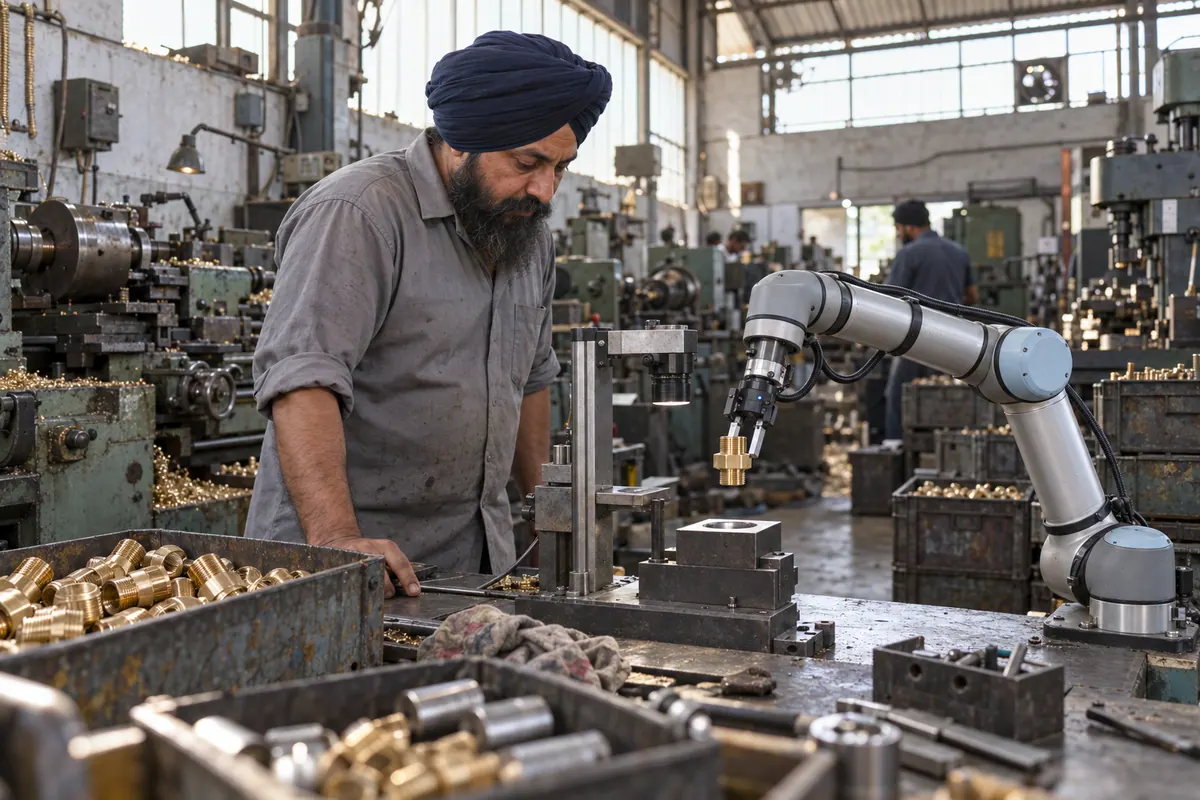
Enterprises spread fixed costs over large volumes. A small firm cannot, so every hour of manual work weighs more. These are the areas where automation usually pays back first:
- Accounting and invoicing: tools that read bills, match payments and send reminders cut data entry and late payments.
- Inventory forecasting: forecasts from past sales help avoid both overstock and empty shelves.
- Predictive maintenance: sensors and software that flag unusual machine behaviour help plan repairs before a breakdown.
- HR tasks: attendance, payroll and screening of job applications can be partly automated.
For example, a distributor that forecasts demand from its own sales history can hold less slow-moving stock and keep more cash free for the lines that sell. Start with the task that costs your team the most hours each week and measure the time before and after.
Customer Experience: Competing Like Big Brands
Customers judge a business by how quickly and clearly it answers, not by its size. AI tools let a small team respond faster:
- Chatbots on WhatsApp and the website: they answer common questions, share prices or catalogues and book appointments outside office hours.
- Voice bots: they route calls and answer simple questions before a person picks up.
- CRM with AI features: it reminds staff to follow up and shows each customer's history in one place.
- Review and feedback analysis: it groups complaints by theme so you can fix the most common ones.
Keep a clear route to a person. A bot that cannot hand over a difficult query loses the customer it was meant to keep. Our guide to generative AI in SME operations has more examples of where these tools fit.
Smarter Marketing With AI and Marketing Automation
Marketing budgets have always favoured large firms. Marketing automation narrows the gap by doing repeat work at the right moment without extra staff. Useful starting points for an MSME:
- Keyword research and content planning with AI assistants, checked by someone who knows the business.
- Ad campaigns where the platform's automated bidding and targeting work towards a goal you set, such as calls or form fills.
- Email and WhatsApp follow-ups that go out automatically after an enquiry, a quote or a purchase.
- Lead scoring that ranks enquiries by how likely they are to buy, so sales calls the best ones first.
- Scheduled social media posts planned a month ahead.
The aim is to spend less on guesswork and more on what the data shows is working. Before you buy any tool, set up tracking so you can see which channels bring enquiries and sales. Our AI marketing automation guide for Indian businesses walks through the setup in more detail.
Competing on Speed: Faster Decisions With AI Analytics
Large companies often decide slowly because of layers of approval. A small firm can decide in a day, and AI analytics helps it decide on facts rather than hunches:
- Sales dashboards that update daily from billing or CRM data.
- Revenue and cash-flow forecasts based on past months.
- Early warnings when regular customers order less often.
- Trend reports on which products, areas or channels are growing.
With this in front of them, owners can spot a problem before it grows, act before a competitor does and change course quickly when something is not working.
Operations: Doing More With a Small Team
Many MSMEs struggle to hire and keep skilled staff. AI can act as a force multiplier for the people you have:
- Automated order entry from emails, WhatsApp messages or purchase orders.
- Camera-based quality checks on a production line.
- Route planning for deliveries.
- Vendor scorecards based on delivery times and rejection rates.
Because a small firm has fewer old systems to replace, it can often adopt these tools faster than a large company. Our post on real examples of AI automation in Indian businesses shows how firms have applied them.
Sales Automation for Small Teams
Enterprises invest heavily in sales teams. A small firm can use automation to make sure no lead is forgotten:
- Automatic qualification of new enquiries based on what they asked and where they came from.
- Deal scoring that shows which quotes are most likely to close.
- Follow-ups by WhatsApp, SMS or email on a set schedule.
- Voice AI for appointment reminders and simple outbound calls, used within TRAI's rules on commercial calls and messages.
The result to aim for is a steady follow-up on every lead, even when the sales team is small.
Compliance, Risk and Security
Security and data protection are no longer only enterprise concerns. Breaches are expensive: IBM's Cost of a Data Breach Report found the average cost of a data breach in India reached INR 220 million in 2025, 13% higher than the year before. That is an average across the organisations IBM studied, but even a smaller incident can hurt a small firm badly.
AI-based tools can help with:
- Spotting unusual payments or transactions that may be fraud.
- Checking invoices and filings for errors before they go out.
- Flagging suspicious logins and email attachments.
- Controlling who can see which customer data.
India's Digital Personal Data Protection Act, 2023 also matters here. Under the DPDP Rules notified in November 2025, its main duties for businesses start on 13 May 2027. If your AI tools handle customer data, check how they collect consent, store data and delete it. Our guide to cybersecurity for Indian SMEs covers the basic protections.
Government Support for AI Adoption
The government is investing in shared AI infrastructure. In March 2024 the Union Cabinet approved the IndiaAI Mission with a budget outlay of Rs 10,371.92 crore. According to the PIB release, it includes compute capacity of 10,000 or more GPUs and an AI marketplace offering AI as a service and pre-trained models.
Most of this is aimed at startups, researchers and developers rather than at small firms directly. For an MSME, the practical benefit is indirect: more Indian AI products, more models trained on Indian languages and more vendors to choose from. Check the Ministry of MSME and your state industries department for any current scheme before you buy, and read the eligibility rules carefully.
AI Myths That Hold MSMEs Back
Myth: AI is too expensive. Many AI features come inside software you may already use, and others are sold as monthly subscriptions. Start with one tool for one task and expand only when it pays back.
Myth: AI needs technical experts. No-code and low-code tools let staff set up chatbots, workflows and reports without programming. A custom system needs expert help, but most small firms do not need one to begin.
Myth: AI replaces people. In a small firm, AI mostly takes over repetitive tasks so staff can spend more time with customers and on work that needs judgement.
How to Get Started
- List the five tasks that take your team the most time each week.
- Pick one where the result is easy to measure, such as replies to enquiries or invoices sent.
- Check whether your current software already has an AI or automation feature for it.
- Run a short trial and compare time, errors and sales before and after.
- Train the people who will use it, and keep a person responsible for checking its output.
- Expand to the next task only when the first one works.
Conclusion
Size still matters, but it matters less when a small firm can automate routine work, answer customers quickly and make decisions from its own data. Start with one costly task, measure the result, protect customer data and build from there. MSMEs that adopt AI step by step can compete with much larger rivals on speed, service and focus.
Frequently Asked Questions
Is AI too expensive for an MSME?
Not usually. Many AI features are built into accounting, CRM, messaging and advertising tools that small firms already use, and others are sold as monthly subscriptions. Start with one tool for one costly task, measure the time or money it saves, and expand only when the first tool clearly pays back.
Does an MSME need technical expertise to use AI?
Not to begin. No-code and low-code tools let staff set up chatbots, automated follow-ups and reports without programming. You will need expert help for a custom system or for connecting several tools, but most small firms can start with features inside their existing software and a little training.
Where can AI help an MSME reduce costs?
Common areas are accounting and invoicing, inventory forecasting, predictive maintenance and HR tasks such as attendance, payroll and screening applications. Pick the task that takes your team the most hours each week, measure it before you start and compare the result after a short trial.
How does marketing automation help a small business?
Marketing automation sends follow-ups, reminders and posts at the right time without extra staff. It can score leads so sales calls the most likely buyers first, and let ad platforms bid towards calls or form fills. Set up tracking first, so you can see which channels bring enquiries and sales.
Will AI replace MSME teams?
No. In a small firm, AI mostly takes over repetitive work such as data entry, routine replies and scheduling. That frees staff to spend more time with customers and on tasks that need judgement. Keep a person responsible for checking what each AI tool produces, especially anything sent to customers.
Read next
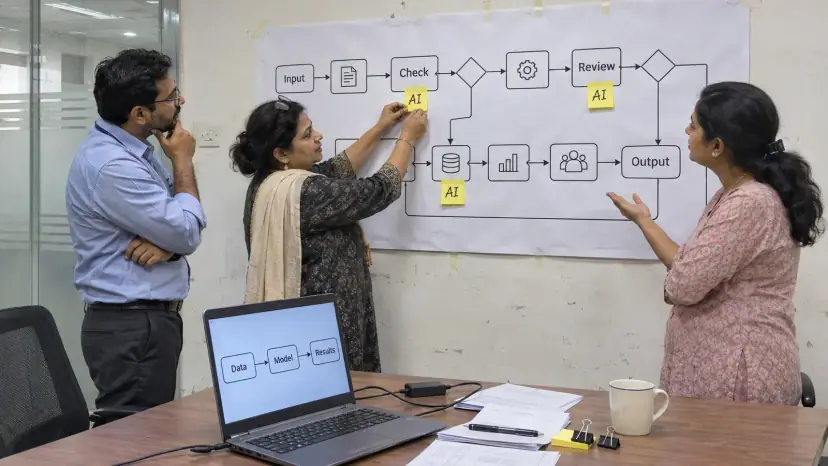
AI Business Consulting: A Practical Guide for Businesses
What AI consultants actually do, why data readiness comes first, how a small proof of concept protects the budget, and the questions to ask before hiring one.
Read article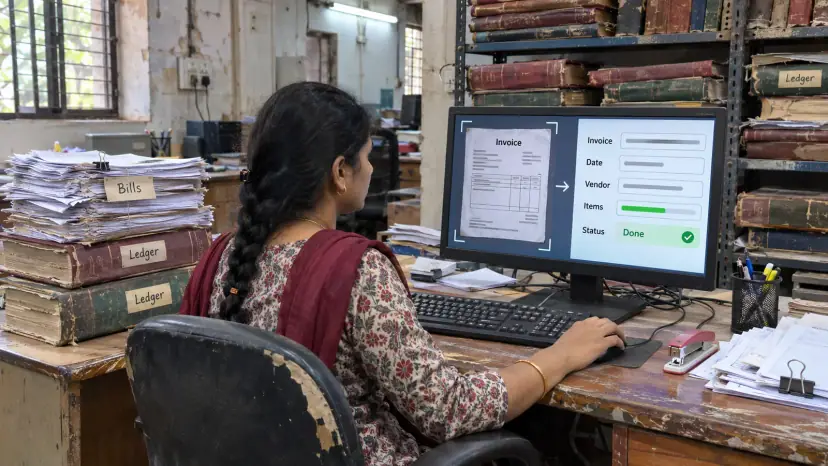
How AI Will Replace Traditional Business Operations
Which tasks AI is taking over in support, sales, HR and finance, what the research says about jobs, why AI projects fail, and the first steps to prepare.
Read article
AI SEO vs Traditional SEO: Key Differences for Indian Businesses
Traditional SEO is still the base. See what Google says about AI Overviews, how AI search changes clicks, what gets a brand cited, and where chatbots hand to people.
Read article
Comments
Be the first to share your thoughts on this article.