In this article
- Why India went mobile-first (and why it stays that way)
- The four "digital waves" every business must surf
- What a mobile-first website actually requires
- Mobile-first vs desktop-first: the practical difference
- Turning mobile traffic into actual leads
- The next wave: AI-driven and conversational search
- A simple action plan to start surfing
- Related Services
- Frequently Asked Questions
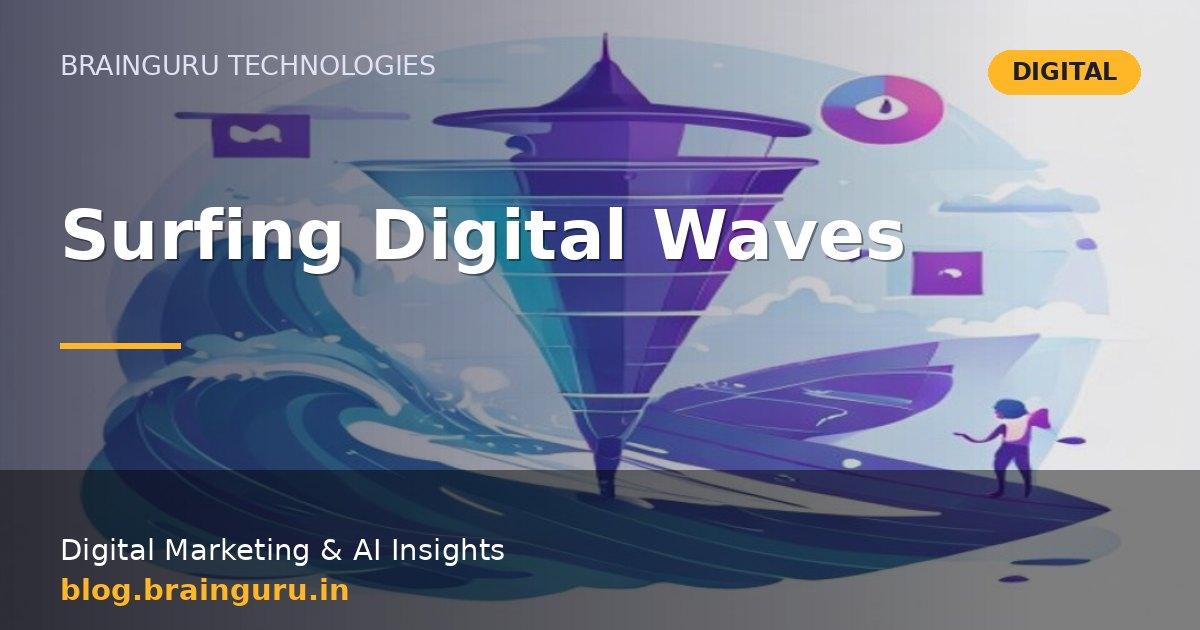
Mobile-first digital marketing has become the single most important shift for any Indian business that wants to be found, chosen, and remembered online. With the vast majority of Indians now reaching the internet through a smartphone first, the way people search, shop, watch, message, and decide has been rebuilt around a small screen and a data connection. This guide explains what the mobile-first digital landscape really means, why it matters for businesses in Delhi NCR, Noida, and across India, and the practical steps you can take to ride the wave instead of being swept under by it.
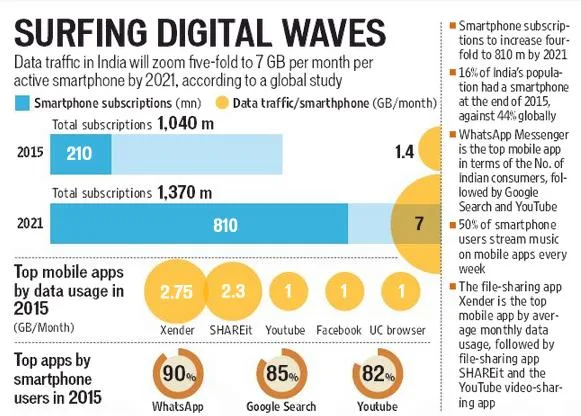
Editor's note: this post was originally published in 2016 to highlight the early surge of smartphone and mobile-data adoption in India. The specific forecasts and app rankings from that era are now out of date, so the article below has been re-angled into an evergreen explainer on building a mobile-first digital strategy. The original numbers have been removed rather than presented as current.
Mobile-first digital marketing is the practice of designing every part of your online presence (website, content, advertising, and social media) for people who interact with your brand primarily on a smartphone, and only secondarily (if at all) on a desktop.
Why India went mobile-first (and why it stays that way)
For a large share of Indians, the smartphone was the first computer they ever owned. Affordable handsets and inexpensive mobile data meant that millions of people came online without ever using a desktop PC. That single fact reshapes buyer behaviour: product research, price comparison, reviews, video, payments, and customer support all happen on the phone, often on the move.
For businesses, the implication is direct. If your website is slow on a mid-range phone, hard to tap, or impossible to read without pinching and zooming, you are losing customers before they ever see your offer. A mobile-first approach is not a nice-to-have add-on; it is the baseline expectation of the modern Indian customer.
The four "digital waves" every business must surf
The original idea behind this article was that businesses must learn to surf digital waves rather than be drowned by them. That metaphor still holds. Today the four waves that matter most are search, video, messaging, and social, and each is overwhelmingly mobile.
1. Search has moved to the phone
Most searches in India happen on mobile, and increasingly they are local ("near me"), conversational, and voice-driven. Showing up requires a fast, mobile-friendly site and a strong local presence. Our SEO services and local SEO services are built to win exactly these mobile and "near me" searches, and our guide to voice search optimization in India covers the conversational side in depth.
2. Video is the default content format
Short-form and long-form video dominate attention on mobile screens. Brands that explain, demonstrate, and tell stories through video build trust faster than text alone. A focused YouTube marketing plan turns that attention into reach and recall.
3. Messaging is the new storefront
Chat and messaging apps are where many Indians prefer to ask questions, place orders, and get support. Building a presence on the channels your customers already use, and responding quickly, closes the gap between interest and purchase.
4. Social keeps discovery alive
Discovery increasingly happens inside social feeds rather than on a search bar. A consistent, helpful, mobile-optimised presence keeps your brand in front of people. Our social media optimization service and our social media marketing guide for Indian businesses lay out how to do this well.
What a mobile-first website actually requires
Riding these waves starts with a website that performs on a phone in real Indian conditions: variable signal, mid-range devices, and impatient users. A mobile-first website is not simply a shrunken desktop site.
- Speed: pages should load quickly even on a moderate connection. Heavy images and bloated scripts are the most common culprits.
- Responsive layout: content reflows cleanly to any screen size, with readable text and comfortable spacing.
- Tap-friendly design: buttons and links are large enough to tap accurately; forms are short and easy to complete with a thumb.
- Clear next step: a phone call, WhatsApp, or enquiry button should always be one tap away.
If your current site was built desktop-first, a rebuild often pays for itself. Explore our responsive web design and UI/UX design services, and read why your brand needs a modern, mobile-friendly website.
Mobile-first vs desktop-first: the practical difference
It helps to see the contrast clearly. The table below summarises how a mobile-first mindset changes everyday decisions.
| Decision area | Desktop-first (old habit) | Mobile-first (modern practice) |
|---|---|---|
| Design starting point | Large screen, then shrink down | Small screen, then expand up |
| Page speed priority | Assumes fast wired connection | Optimised for variable mobile data |
| Primary action | Multi-field contact form | One-tap call, chat, or short form |
| Content format | Long blocks of text | Scannable text plus video and visuals |
| Search intent | Broad, typed queries | Local, voice, and "near me" queries |
Turning mobile traffic into actual leads
Getting visitors is only half the job; converting them is the other half. Many businesses attract mobile traffic and still struggle to generate enquiries because the path from "interested" to "in touch" is too long. If that sounds familiar, our breakdown of why website traffic doesn't convert into leads is worth reading.
A reliable conversion approach on mobile combines fast pages, a single clear call to action, trust signals such as reviews and credentials, and follow-up channels people already use. Paid campaigns can accelerate results when the landing experience is genuinely mobile-ready; our search engine marketing team and our PPC and paid marketing guide show how to do this without wasting budget.
The next wave: AI-driven and conversational search
The digital waves keep coming. The newest one is AI-assisted search, where answer engines and AI overviews summarise results directly, often before a user ever taps a link. Preparing for this means structured, genuinely useful content and a clean technical foundation. Our resources on Google AI Overviews in India and AI marketing solutions explain how to stay visible as search itself evolves. The brands that adapted early to mobile are the ones best placed to adapt early to AI; the discipline is the same: meet people where they actually are.
A simple action plan to start surfing
- Audit your site on a real mid-range phone: note anything slow, cramped, or hard to tap.
- Fix speed and layout first; slow or cramped pages lose mobile visitors before they ever see your offer.
- Claim and optimise your local listings so you appear in "near me" searches.
- Add video and scannable content where customers ask the most questions.
- Make contact effortless: one-tap call, chat, and a short enquiry form.
- Measure, then layer in paid search and social once the foundation converts.
For the bigger picture, our complete digital marketing services guide and complete SEO guide for Indian businesses tie all of these waves together into one coherent strategy.
Related Services
- Digital Marketing Solutions | GEO, SEO, SMM Company In India
- Mobile Website Design Brainguru Technologies
- Responsive Web Design Optimize User Experience
- Digital Marketing for Startups & New Businesses
- Mobile App Development Scalable & Secure Apps
- Expert SEO Services Rank Higher & Grow Online
Frequently Asked Questions
What does "mobile-first digital marketing" mean?
It means designing your website, content, ads, and social presence primarily for people using smartphones, since most Indians reach the internet on a phone first. Desktop is treated as the secondary experience rather than the starting point.
Why is a mobile-first strategy so important in India?
Many Indians came online through an affordable smartphone and inexpensive data, so search, shopping, video, and messaging happen mostly on mobile. A site that performs poorly on a phone loses customers before they see your offer.
How do I know if my website is mobile-friendly?
Open it on a real mid-range phone and check whether it loads quickly, reads without zooming, and lets you tap buttons easily. If anything feels slow or cramped, a responsive redesign is usually the fix.
Does mobile-first affect my Google rankings?
Yes. Search engines evaluate the mobile version of your site, and speed plus usability on mobile influence visibility. A fast, well-structured mobile site supports both rankings and conversions.
What is the next big shift after mobile?
AI-assisted and conversational search, where answer engines summarise information directly. Structured, useful content and a clean technical foundation help your brand stay visible as search evolves.
Can Brainguru Technologies help build a mobile-first presence?
Yes. Brainguru Technologies offers SEO, local SEO, responsive web design, social media, and paid campaign services designed for India's mobile-first audience. You can reach the team on +91-8010010000.
Ready to stop watching the digital waves and start surfing them? Whether you need a faster mobile site, stronger local search visibility, or a full digital strategy, our team can help you turn smartphone-first audiences into real customers. Call us on +91-8010010000 or get in touch with Brainguru Technologies to map out your next move.
Related Articles

WhatsApp Click-to-Chat Links for Business: Create, Share and Track Them
Turn WhatsApp into your easiest enquiry channel: wa.me link format, pre-filled messages, QR codes, campaign references and the mistakes that waste clicks.
Read More
DPDP Act 2023 for Digital Marketers in India: The 2026 Compliance Checklist (CRM, Ads, WhatsApp, Cookies)
Practitioner's guide to DPDP Act 2023 compliance for Indian digital marketers: CRM purpose tagging, cookie banner spec, channel-by-channel impact, sector callouts, plus a 14-point self-audit checklist.
Read More
10 Digital Marketing Strategies for Indian SMEs in 2026: Budget, Stack & Channel Priorities
Practical 2026 digital marketing strategies for Indian SMEs: budget tiers (₹15K to ₹2L/mo), illustrative scenarios (D2C, B2B SaaS, local services), and a stack that actually works for a 5-to-50 person business.
Read More
Comments
Be the first to share your thoughts on this article.