In this article
- Key takeaways
- Why Online Growth Matters for Indian Businesses
- 1. Build a Consistent Digital Brand
- 2. Use AI and Automation Where It Saves Time
- 3. Run Paid Campaigns You Can Measure
- 4. Strengthen SEO and Content
- 5. Connect Your Channels Into One Journey
- How to Grow Your Business Online in India: Where to Start
- Use Data to Decide What to Do Next
- Common Mistakes to Avoid
- Conclusion
- Frequently Asked Questions
Knowing how to grow your business online in India comes down to five areas: a consistent digital brand, sensible use of AI and automation, paid campaigns you can measure, search and content that earn trust, and customer journeys that connect across channels. This guide explains each one for startups, SMEs and larger firms, and what to check first.
Why Online Growth Matters for Indian Businesses
Indian customers now research, compare and buy online at scale. IBEF, the government's India Brand Equity Foundation, says India's e-commerce industry was valued at US$ 125 billion in 2024 and is projected to reach US$ 345 billion by 2030. It puts the online shopper base at nearly 290 to 300 million in 2025, with Tier-2 and smaller cities accounting for around 65% of new shoppers.
Most of that activity happens on a phone. Statcounter's figures for October 2026 show mobile at 84.21% of web traffic in India. So whatever you build online, from your website to your ads, has to work first on a small screen.
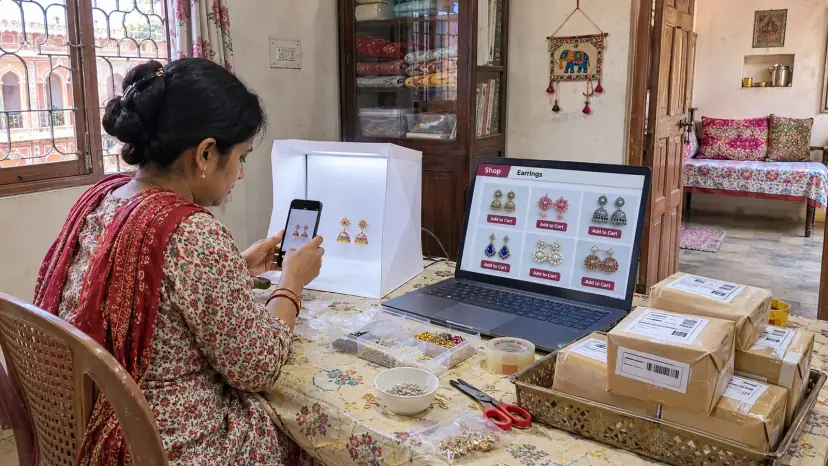
The opportunity is not only for online shops. A clinic, a coaching institute, a manufacturer or a local service business can all win enquiries online if customers can find them, trust them and contact them easily.

1. Build a Consistent Digital Brand
Your digital brand is the first impression most customers get. It is more than a logo or a colour palette: it is the tone, the story and the experience people have each time they meet your business online.
- One look and message everywhere: keep your website, social profiles, marketplace listings and ads consistent in visuals, wording and contact details.
- A real story: explain who you are, what you do and why. Show the people, the workshop or the process behind the product.
- Relevant experiences: use what you know about visitors, such as their location or past purchases, to show them more useful content.
- Reputation care: read reviews, social mentions and feedback regularly, and reply politely to complaints as well as praise.
For younger companies, our article on the future of digital branding for Indian startups looks at this in more detail.
2. Use AI and Automation Where It Saves Time
AI is most useful when it takes repetitive work off your team and helps you decide faster. Common uses for a growing business include:
- Predicting behaviour: tools that analyse past orders and visits to suggest which customers are likely to buy again or drop away.
- Chatbots and assistants: answering routine questions and capturing enquiries outside office hours, with a clear route to a person.
- Recommendations: suggesting related products or services based on what a customer has viewed.
- Drafting content: AI writing tools can produce first drafts of emails, posts and ad copy, which a person then checks and edits.
- Ad optimisation: ad platforms now use automation for bidding, budgets and placements.
Tip: start with one task that eats hours every week, such as answering the same WhatsApp questions, and automate that before buying a large platform.
Examples of tools in this space include WhatsApp chatbots, Jasper (which describes itself as AI agents for marketing) and CRM platforms such as LeadNXT, which combines CRM, cloud telephony, AI automation and WhatsApp in one platform. LeadNXT is built by Brainguru, the publisher of this blog.
3. Run Paid Campaigns You Can Measure
Organic work builds trust over time; paid advertising brings reach quickly. The main platforms now automate much of the targeting:
- Google Performance Max: Google describes it as a goal-based campaign type that gives access to all Google Ads inventory, including YouTube, Display, Search, Discover, Gmail and Maps, from a single campaign.
- Meta Advantage+: Meta's set of AI and automation products, which can apply AI automatically to a campaign's audience, placements and budget.
- Short video ads: YouTube and Instagram Reels let you tell a product story in seconds.
- LinkedIn for B2B: lead gen forms and sponsored content help service firms reach decision makers.
- Retargeting: showing ads to people who visited your site but did not enquire.
Key to success: a clear picture of the buyer, A/B tested creative, a fast landing page with one clear action, and tracking that shows cost per enquiry or sale.
Automation still needs good inputs. Feed the platforms accurate conversion data and review search terms and placements every week. Our guide to PPC and paid marketing in India covers budgets, bidding and tracking.
4. Strengthen SEO and Content
Search is still one of the main ways customers find a business. Google says its systems look for content that shows experience, expertise, authoritativeness and trustworthiness, which it calls E-E-A-T, and that of these, trust is the most important.
AI search has not changed the basics. Google's guide to AI Overviews and AI Mode says the same SEO best practices apply, and that a page only needs to be indexed and eligible to show with a snippet: there are no additional technical requirements.
- Conversational searches: write answers to the questions customers actually ask, including spoken questions for voice search.
- Video: give videos descriptive titles, captions and transcripts.
- Useful long-form guides: pages that solve a real problem earn links and repeat visits.
- Local SEO: Google says local results are mainly based on relevance, distance and prominence, so keep your Business Profile complete and accurate and respond to reviews.
- Technical basics: fast pages, a mobile-first design and a clean site structure.
For a full plan, see our complete SEO guide for Indian businesses.
5. Connect Your Channels Into One Journey
Customers rarely buy in a straight line. A buyer might find you on Instagram, visit your website, read an email and finally order after seeing a retargeted ad. Each step should feel like the same business.
- One customer record: a CRM that collects enquiries from the website, phone, WhatsApp and social channels in one place.
- Email and WhatsApp follow-up: timely, relevant messages to people who have agreed to hear from you.
- Remarketing across platforms: reminders on search, display and social for people who showed interest.
- One brand voice: the same tone and design in every message.
Collect only the customer data you need and say clearly how you will use it; India's Digital Personal Data Protection Act, 2023 sets rules for how businesses handle personal data. If you are choosing a system, our comparison of CRMs for Indian startups sets out the options.
How to Grow Your Business Online in India: Where to Start
You do not need to do all five at once. A practical order for most small businesses is:
- Fix the website so it is fast, clear and easy to use on a phone.
- Claim and complete your Google Business Profile, and ask happy customers for reviews.
- Set up analytics and conversion tracking so you can see where enquiries come from.
- Pick one or two channels where your customers spend time, and post or advertise there consistently.
- Add automation and a CRM once enquiries grow beyond what a person can track by hand.
Use Data to Decide What to Do Next
Every click, call and sale tells you something. Data helps you understand what customers want, see which campaigns bring paying customers rather than just clicks, plan for seasonal demand and move budget to what works.
Tools such as Google Analytics 4, Meta's ad insights and the reports inside your CRM give you this picture. Review them on a fixed day each month and write down one change to test before the next review.
Common Mistakes to Avoid
- Spreading too thin: being on every platform but active on none.
- Buying ads before fixing the site: paying for traffic that lands on a slow or confusing page.
- Measuring the wrong thing: chasing likes and impressions instead of enquiries and sales.
- Automating without checking: letting AI publish content or answer customers with no human review.
- Ignoring reviews: leaving complaints unanswered where every future customer can read them.
Conclusion
Growing a business online in India rests on five pillars: a consistent digital brand, AI and automation used where they save time, paid campaigns you can measure, SEO and content that earn trust, and channels that connect into one journey. Start with the website and tracking, grow one channel at a time, and let your own data decide the next step.
Frequently Asked Questions
What are the main ways to grow a business online?
Five areas matter most: build a consistent digital brand, use AI and automation for repetitive work, run paid campaigns you can measure, strengthen SEO and content, and connect your channels so customers get one experience. Most small businesses should start with a fast mobile website and proper tracking, then add channels one at a time.
What makes a strong digital brand?
A strong digital brand looks, sounds and behaves the same everywhere customers meet it: website, social profiles, listings and ads. It tells a real story about who you are, keeps contact details consistent, and responds to reviews and comments. Logos and colours help, but trust comes from the experience people have each time.
What makes a paid campaign succeed?
A paid campaign needs a clear picture of the buyer, creative that is tested against alternatives, and a fast landing page with one obvious action. It also needs accurate conversion tracking, so you can see the cost of each enquiry or sale and move budget towards the ads, keywords and audiences that actually bring customers.
Does SEO still matter with AI search?
Yes. Google says the same SEO best practices apply to AI Overviews and AI Mode, and a page only needs to be indexed and eligible to show with a snippet to appear as a supporting link. Helpful, trustworthy content, a sound technical setup and a complete Business Profile remain the foundations of search visibility.
Which tools help with marketing data?
Google Analytics 4 shows how visitors arrive and what they do on your site. Meta's ad insights report on Facebook and Instagram campaigns, and a CRM tracks each enquiry through to a sale. Together they show which channels bring paying customers. Review them monthly and test one change at a time.
Want help with this?
Talk to our team about social media optimization.
Read next
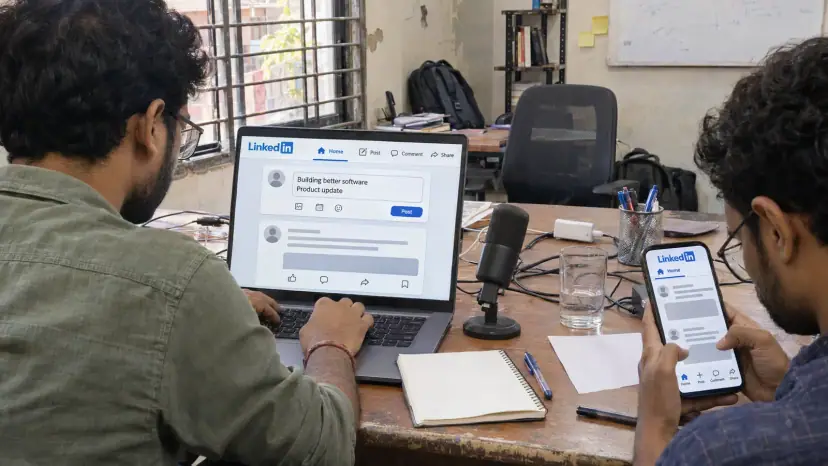
LinkedIn Marketing for B2B SaaS in India: A Founder-Led Playbook and ABM Stack
Founder profiles first, then ads, Sales Navigator and the CRM. A practical LinkedIn plan for B2B SaaS companies in India, with formats, cadence and mistakes.
Read article
Social Media Optimization (SMO) in India: Reels, WhatsApp, Threads and LinkedIn
Pick two or three platforms and go deep. Covers short video by sector, WhatsApp Channels, Threads, LinkedIn and regional language posts.
Read article
Social Media Marketing Trends in India: A Guide for Businesses
The latest Indian audience figures by platform, the trends that matter, how to pick one or two platforms, a five-step plan and how to measure results.
Read article
Comments
Be the first to share your thoughts on this article.