In this article
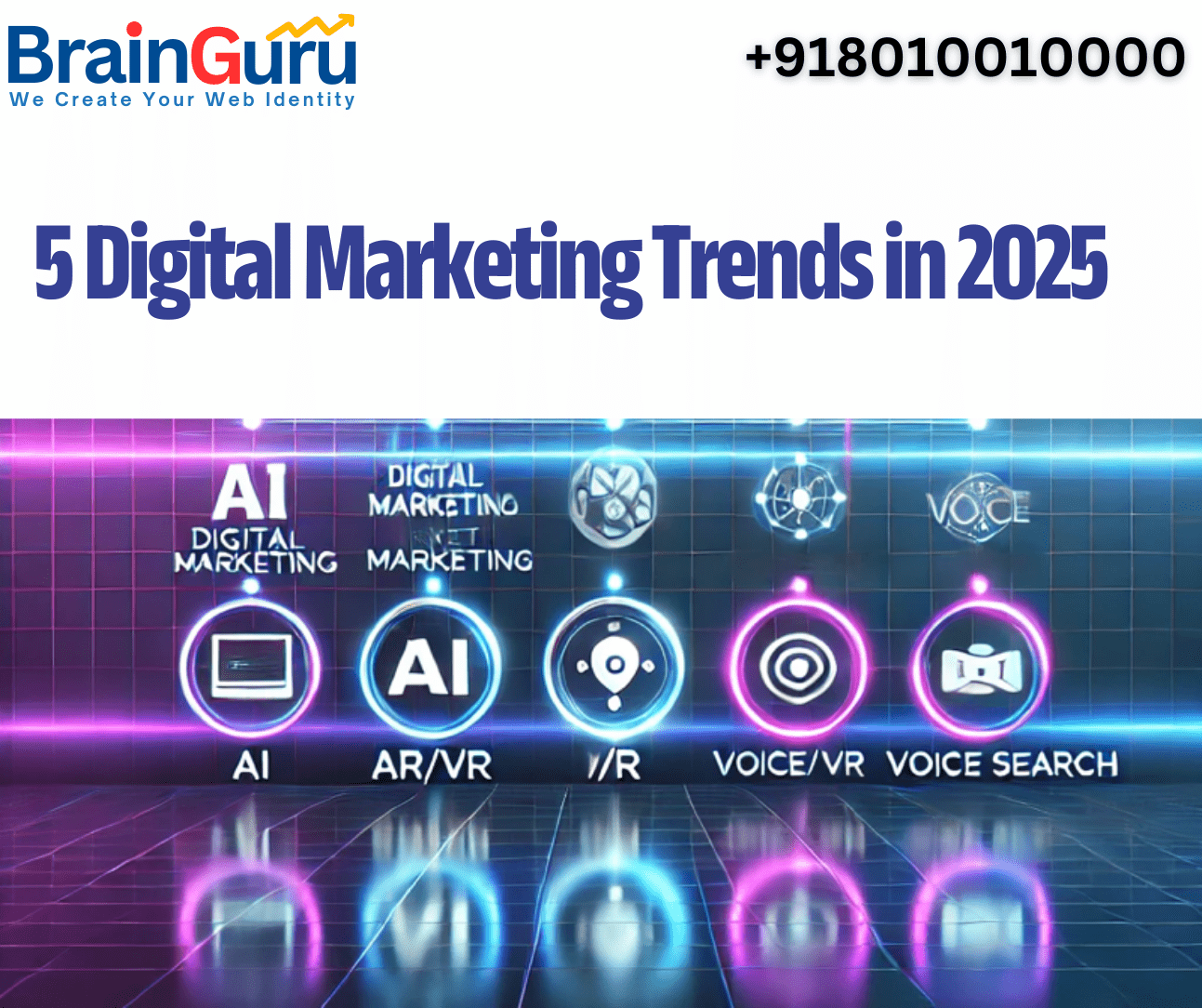
The world of digital marketing is evolving at an unprecedented pace. With new technologies and consumer behaviors shaping the industry, staying ahead of the curve is crucial for businesses looking to remain competitive. As we step into 2025, here are the five digital marketing trends that are set to redefine the industry.
Five Trends to Watch in 2025
1. AI-Powered Marketing
Artificial Intelligence (AI) continues to revolutionize digital marketing by enabling automation, predictive analytics, and hyper-personalization. AI-driven tools help brands analyze consumer behavior, optimize ad targeting, and create personalized customer experiences. From chatbots to AI-generated content, businesses leveraging AI will gain a competitive edge in audience engagement and conversion rates.
2. Augmented Reality (AR) & Virtual Reality (VR) Experiences
AR and VR are transforming the way consumers interact with brands. In 2025, we can expect more businesses to integrate immersive experiences, such as virtual try-ons, 3D product showcases, and interactive advertisements. These technologies enhance customer engagement and build stronger brand loyalty by creating memorable, real-life experiences online.
3. Voice Search Optimization
With the growing popularity of voice assistants like Alexa, Siri, and Google Assistant, optimizing content for voice search is more important than ever. Voice search queries are typically longer and more conversational, requiring businesses to adopt natural language processing (NLP) techniques in their SEO strategies. Ensuring your content is optimized for voice search will improve visibility and accessibility in 2025.
4. Hyper-Personalization with Big Data
Consumers expect tailored experiences, and brands that leverage big data analytics can meet these expectations. Hyper-personalization involves using AI and machine learning to analyze customer data, predict preferences, and deliver targeted marketing messages in real-time. Whether it’s personalized email campaigns, product recommendations, or dynamic website content, businesses that prioritize personalization will see higher engagement and conversion rates.
5. Web3 & Decentralized Marketing
The rise of Web3 technologies, including blockchain and NFTs, is shifting digital marketing towards decentralization. Businesses are exploring new ways to build direct relationships with their audiences without relying on third-party platforms. Decentralized marketing allows for greater transparency, data security, and user control, creating a more trustworthy digital ecosystem.
How These Trends Look From 2026
Predictions are only useful if you check them afterwards. The five trends above did not all age the same way, and the differences are more useful to a business than the original list.
- AI-powered marketing moved from experiment to everyday tooling. Drafting, research, segmentation and reporting are now routine AI tasks for teams of every size. The edge shifted from using AI to using it with judgment: clear briefs, human review and a reliable way to check facts before anything is published.
- Search itself changed shape. AI-generated answers (Google's AI Overviews, ChatGPT search, Perplexity and similar tools) became a real discovery channel. Being cited inside those answers is now part of visibility, which is the job of generative engine optimization.
- Voice search did not become a discipline of its own. It folded into the wider shift toward conversational, question-shaped queries, where the same work (clear answers, well-structured pages, accurate local listings) serves voice assistants and AI answers alike.
- Hyper-personalization now runs through consent. India's Digital Personal Data Protection Act, 2023 puts consent, given after a clear notice, at the centre of how customer data can be used, so personalization built on data customers knowingly shared is the version of this trend that lasts.
- AR and VR proved their value where seeing the product is the purchase decision: virtual try-ons, 3D product views and property walkthroughs. Outside those categories they stayed a campaign novelty rather than a channel.
- Web3 and decentralized marketing stayed niche for most businesses. The underlying idea (owning the relationship with your audience instead of renting it from a platform) survived, but through email lists, WhatsApp communities and memberships rather than tokens.
How to Judge a Marketing Trend Before You Invest
New trends arrive every year and no business can chase all of them. A short set of questions separates the ones worth testing from the ones worth watching:
- Is your audience actually there? A channel your customers do not use is not a trend for your business, however much attention it gets.
- Does it connect to an outcome you already measure? If you cannot say which number should move (enquiries, sales, repeat purchases), you will not be able to tell whether it worked.
- What does it cost to be early, and what does it cost to be late? Some shifts, like changes in how search works, punish late movers. Others reward waiting until the tools and costs settle.
- Can you run a small, time-boxed test? A defined experiment with a budget cap and an end date is cheaper than a strategy rewrite, and it gives you evidence instead of opinions.
- Does it depend on data you are allowed to use? Targeting and personalization ideas that rely on data collected without clear consent are a legal risk, not an opportunity.
- Would it still matter if the hype faded? Trends that solve a real customer problem (faster answers, easier buying) outlast the ones that mainly generate headlines.
Where an Indian Business Should Start
For most small and mid-sized businesses the practical order of work is the same, whichever trend is loudest this year:
- Fix measurement first. Analytics and conversion tracking you trust, set up with consent in mind, make every later decision easier. Our GA4 setup guide covers the configuration most Indian sites need.
- Make your content answerable. Pages that answer real customer questions directly, with clear headings, perform better in classic search, in voice results and in AI-generated answers. Our guide to Google AI Overviews for Indian businesses explains why.
- Use AI to produce more, and people to decide what is true. AI tools speed up drafting and analysis; a named person should still approve anything customers will read. Our AI marketing services can help you set up that split.
- Personalize with data customers chose to share. Email and WhatsApp lists built on clear opt-ins are both compliant and more responsive than bought or scraped data.
- Test immersive formats only where they fit. If customers need to see a product in context before buying (furniture, eyewear, cosmetics, property), a virtual try-on or walkthrough can earn its cost. Elsewhere, better photography and video usually do more.
Frequently Asked Questions
Which 2025 digital marketing trends still matter in 2026?
AI-assisted marketing and personalization built on consented first-party data matter most, because both have become routine rather than experimental. Voice search matters as part of optimizing for conversational and AI-generated answers, not as a separate channel. AR and VR earn their cost mainly where customers need to see a product in context, and Web3 marketing has stayed niche for most businesses.
Is voice search still worth optimizing for?
Yes, but not as a separate project. Voice queries are long and conversational, which is the same shape as the questions people type into AI assistants. Question-led headings, direct answers near the top of a page and an accurate Google Business Profile serve voice search, classic search and AI answers at the same time.
How should a small business start using AI in marketing?
Start with one repetitive task, such as first drafts, social scheduling or monthly reporting. Keep a person responsible for reviewing the output, check whether it saves time without hurting results, and only then extend AI to the next task. Businesses that buy a large tool stack before building that habit usually end up paying for software nobody uses.
Do businesses in India need consent to personalize marketing?
In most cases, yes. India's Digital Personal Data Protection Act, 2023, whose main duties apply from 13 May 2027, makes consent, given after a clear notice of how the data will be used, the main basis for using customers' personal data. In practice that means clear opt-ins on forms and WhatsApp, an easy way to withdraw, and not reusing data for purposes customers were never told about. Take legal advice for your specific situation.
Final Thoughts
As we move into 2025, digital marketing will continue to be driven by innovation and technology. Businesses that embrace AI, AR/VR, voice search, hyper-personalization, and Web3 will be well-positioned for success. Staying ahead of these trends will not only enhance customer experiences but also drive business growth in the ever-evolving digital landscape.
Are you ready for the future of digital marketing? Let Brainguru help you navigate the latest trends and stay ahead of the competition!
Also Read
- Digital Marketing Services and Their Impact on your Business
- Unlocking Digital Transformation
- Five Reasons Why Guest Posting Is Important
Related Services
Related Articles

Content Marketing Strategy That Drives Real Business Growth
Most Indian businesses spend heavily on advertising but invest almost nothing in content. The result is a constant cycle of paying for attention, with no…
Read More
Digital Marketing Services and Their Impact on Your Business
How digital marketing services drive growth (SEO, content, PPC, social, and email) plus keyword tips, internal linking, and steps to get started online.
Read More
Video Marketing for Business: A Practical Guide
Video marketing lets you answer a customer's exact need at the exact moment. Learn the types, platforms, planning, SEO and metrics that turn views into leads.
Read More
Comments
Be the first to share your thoughts on this article.