In this article
- How GEO Differs from SEO: A Detailed Comparison
- Top 7 GEO Optimization Techniques for 2026
- Tools to Track AI Search Visibility
- GEO for Different Industries in India
- How to Optimize Content for ChatGPT, Perplexity, and Gemini
- Measuring GEO Success: Metrics and KPIs
- Common GEO Mistakes to Avoid
- Frequently Asked Questions
- Related Services
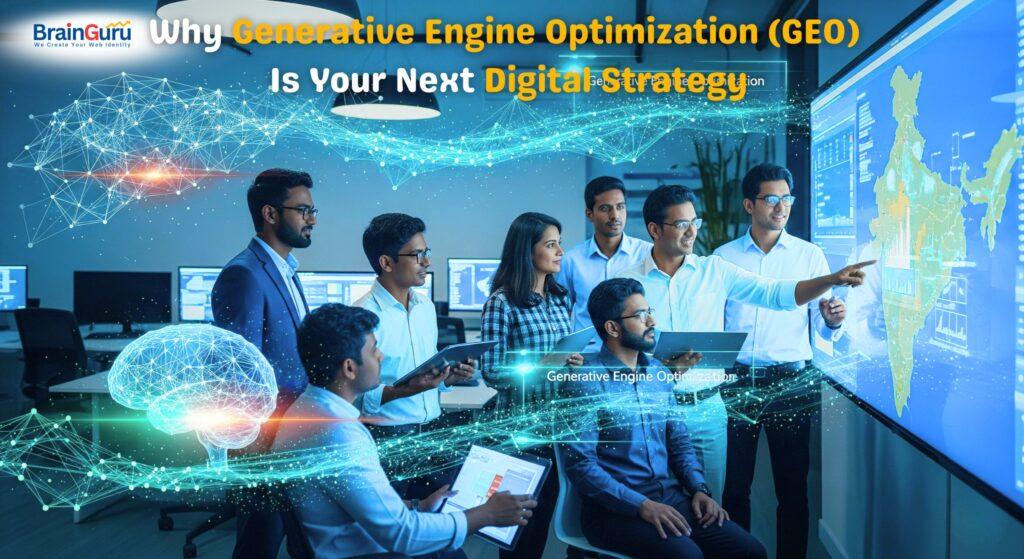
The Future of Search: Why GEO Services in India Is Your Next Digital Strategy
In the rapidly evolving search landscape, user preferences are shifting. AI-powered platforms like ChatGPT search, Perplexity, Meta AI, and Google AI Overviews are redefining how people discover information, delivering conversational, synthesized answers rather than traditional blue-link lists. If your brand isn’t already visible in these AI-driven summaries, you’re losing visibility, credibility, and revenue.
Generative Engine Optimization, or GEO, is the new frontier for businesses looking to future-proof their digital presence. Let’s explore why GEO matters and how Brainguru’s GEO services in India ensure you stay ahead.
What Is Generative Engine Optimization (GEO)?
GEO is the practice of optimizing your website and content for inclusion in AI-generated answers and overviews, like those found in GPT-based platforms, Google’s AI Overviews (formerly the Search Generative Experience, SGE), and others. Unlike traditional SEO, which prioritizes backlinks and keyword rankings, GEO focuses on being cited or summarized directly by generative models .
According to industry frameworks, GEO involves:
- Strategic use of schema markup and structured data
- Authoritative content formatted for AI readability
- Signals that influence citation likelihood in AI output .
This makes GEO particularly crucial for businesses aiming to appear in “zero-click” results where users get answers without visiting a website.
Why GEO Is Mission-Critical for Modern Brands
- Rising Dominance of AI-Powered Search
AI tools like ChatGPT, Perplexity, and Meta AI are no longer niche; they’re mainstream. These platforms generate direct summaries, shifting user attention away from traditional search results. Without GEO, your content risks invisibility .
- Shift from Ranking to Citation
Traditional SEO success meant being #1. GEO aims to have your brand included in AI answers. Metrics shift away from rankings to AI-specific visibility signals like citation frequency and summary inclusion .
- Enhanced Trust & Zero-Click Credibility
AI answers often carry weight as trusted sources. If your content appears in those summaries, your brand’s credibility grows, even if users don’t click through .
- Sustainable Long-Term Visibility
Search paradigms are evolving fast. Brands investing in GEO now will not only retain visibility but lead in the coming AI-first digital era.
Brainguru’s Comprehensive GEO Services
At Brainguru, we understand the nuances of AI-driven search. Our end-to-end GEO services ensure your brand is AI-ready and visible where it matters:
- AI-Friendly Content Creation
Crafting conversational, question-oriented content tailored for AI summarization and LLM inclusion .
- Structured Data & Schema Markup
Helping search engines understand and parse your content accurately .
- Voice & Conversational Search Optimization
Preparing your site for the growing number of voice and prompt-style queries .
- Multimodal Content Optimization
Making sure your videos, images, infographics, and textual content all speak the same AI-friendly language .
- Brand Authority Building
Strengthening trust via citations, content clustering, and third-party validations .
This combination ensures not just visibility but trust and authority in AI-driven search results.
What Distinguishes Brainguru from Other GEO Providers?
- Deep AI-Search Understanding
We’re not just SEO experts; we stay ahead of generative AI trends and craft strategies that align with evolving AI behavior .
- Tailored Strategies for Every Business
Whether you’re a startup or enterprise, our GEO services are customized to your goals and industry .
- Measurable AI Visibility Growth
Performance tracking is core to our approach: we monitor AI citations, zero-click visibility improvements, and traffic impact.
- Ongoing Optimization
As AI models evolve, so do our strategies, ensuring your content remains optimized and visible .
Industries We Elevate with GEO
Brainguru’s GEO expertise spans multiple vital sectors:
- Real Estate
- Healthcare & Digital Health
- Education & EdTech
- E-commerce & Retail
- BFSI (Banking, Financial Services & Insurance)
- Startups & Tech Innovators
No matter your industry, being included in AI-generated answers can dramatically boost trust, authority, and discoverability.
Why You Must Embrace GEO Now
- Search Is Already AI-First: Google’s AI Overviews are live, and generative AI tools are in widespread use .
- Declining Organic Clicks: As answer engines rise, reliance on link clicks diminishes .
- Strategic Advantage: Brands that adapt early will dominate AI citations and customer trust.
How to Get Started with Brainguru’s GEO Solutions
Ready to lead in the AI-powered search era? Visit our GEO services page to explore how Brainguru can help:
Discover Brainguru’s Generative Engine Optimization (GEO) Services in India
Whether you’re looking to optimize for ChatGPT search, Perplexity, Meta AI, or Google AI Overviews, our expert strategies deliver results.
Closing Thoughts
Generative Engine Optimization (GEO) isn’t just an upgrade to SEO; it’s a fundamental shift. In a world where AI-driven summaries increasingly dominate user behavior, inclusion matters more than rankings. Brainguru’s modern, customizable GEO services equip your brand for visibility, trust, and growth in this new era.
Ready to future-proof your digital presence? Let Brainguru lead your path to AI-powered visibility call or WhatsApp Now +91-8010010000.
How GEO Differs from SEO: A Detailed Comparison
Most businesses confuse GEO with a slight tweak to their SEO strategy. It is not. GEO is a fundamentally different discipline because it optimises for how large language models (LLMs) parse, synthesise, and cite content - not for how crawlers index and rank pages. Here is a side-by-side comparison of the two disciplines.
| Dimension | Traditional SEO | Generative Engine Optimization (GEO) |
|---|---|---|
| Primary Goal | Rank high in blue-link results | Be cited or summarised in AI-generated answers |
| Core Signal | Backlinks, keyword relevance, page authority | Factual accuracy, semantic clarity, citation-worthiness |
| Content Format | Long-form, keyword-optimised pages | Structured Q&A, clear definitions, cited data points |
| Success Metric | Organic traffic, SERP position | AI citation frequency, share of voice in AI answers |
| Technical Focus | Site speed, crawlability, meta tags | Schema markup, structured data, llms.txt, semantic HTML |
| User Intent | Transactional, informational, navigational | Conversational, research-heavy, comparative |
| Update Cycle | Monthly to quarterly | Continuous (AI models re-train constantly) |
| Key Tools | Ahrefs, Semrush, Google Search Console | Profound, Otterly.ai, BrandRank.ai, Peec AI |
The practical takeaway: GEO is not a replacement for SEO - it is an additional layer. Businesses that ignore GEO in 2026 will remain invisible to the fastest-growing segment of search traffic.
Top 7 GEO Optimization Techniques for 2026
1. Answer-First Content Structure
LLMs prefer content that gives the answer in the first 2-3 sentences. Flip the traditional long-form intro and put the conclusion up front. Use the inverted pyramid approach: answer, then context, then details.
2. Structured Data and Schema Markup
Use schema that matches your visible content, such as Product and Organization schema. It helps search engines understand a page, but Google says structured data isn't required for its generative AI features and no special schema is needed.
3. Entity Optimization
LLMs understand content through entities (people, places, products, concepts). Build content around well-defined entities and link them to authoritative sources like Wikipedia, Wikidata, and official brand pages. Mention your brand alongside recognised industry entities to strengthen association.
4. Citations and Original Research
AI engines prioritise sources that provide original data, statistics, and expert quotes. Publish industry reports, survey results, or proprietary benchmarks.
5. Conversational and Long-Tail Queries
Users ask AI assistants in natural, conversational language ("what is the best GEO agency in Delhi for a SaaS startup?"). Write content that mirrors this phrasing. Create dedicated sections for long-tail questions buried in your core topic.
6. Multi-Format Content (Text, Image, Video)
Generative engines increasingly pull from videos (YouTube transcripts), images (alt text and captions), and podcasts. Publishing a blog post alongside a YouTube video and a LinkedIn carousel multiplies your chances of being cited.
7. llms.txt and AI Crawler Access
An llms.txt file (a machine-readable summary of your key pages) is optional: Google says Google Search ignores such files. In robots.txt, allow the AI search crawlers you want to be cited by, such as OpenAI's OAI-SearchBot and PerplexityBot. Training crawlers such as GPTBot and ClaudeBot are separate settings; OpenAI says you can block GPTBot and still appear in ChatGPT search.
Tools to Track AI Search Visibility
Traditional SEO tools cannot measure GEO performance. A new category of tools has emerged specifically to track how your brand appears in AI-generated answers. Here are the leaders Indian businesses should evaluate.
- Profound (Enterprise pricing, typically USD 500+/month): The most advanced AI search analytics platform. Tracks mentions and citations across ChatGPT, Perplexity, Google AI Overviews, and Gemini. Shows share of voice versus competitors and sentiment analysis of AI-generated summaries.
- Otterly.ai (Starting around USD 29/month): A more accessible option for SMBs. Monitors prompts relevant to your industry and tracks which brands are cited. Offers alerts when your competitors start appearing in new AI responses.
- BrandRank.ai (Custom pricing): Focuses specifically on brand mentions in generative answers. Provides competitive benchmarking and weekly citation scorecards.
- Peec AI (Starting around EUR 90/month): European alternative with strong tracking for ChatGPT and Perplexity. Good UI for marketing teams new to GEO measurement.
- HubSpot AI Search Grader (Free tool): A basic starting point to see how AI engines describe your brand when asked directly.
For most Indian SMBs, starting with Otterly.ai or HubSpot's free grader is enough. Enterprises with significant brand equity should invest in Profound.
GEO for Different Industries in India
E-commerce and D2C Brands
AI shopping assistants now recommend products directly. D2C brands need GEO-optimised product pages with detailed ingredient lists, sourcing information, certifications, and comparison tables. Structured data for products, reviews, and offers is critical. Indian D2C brands should also focus on being cited in "best of" comparison queries like "best cold-pressed coconut oil brands in India".
SaaS and B2B Software
B2B buyers routinely use ChatGPT and Perplexity for vendor research. SaaS companies need feature comparison pages, transparent pricing, case studies with measurable outcomes, and integration documentation. Being mentioned in curated lists on G2, Capterra, and SoftwareSuggest feeds AI training data.
Healthcare and Digital Health
AI is extremely cautious about health content and prioritises authoritative sources. Healthcare providers must publish content reviewed by licensed doctors, use MedicalOrganization schema, cite peer-reviewed research, and ensure clear author credentials. EEAT (Experience, Expertise, Authoritativeness, Trust) is mandatory, not optional.
Real Estate
Indian property buyers use AI assistants for location research, builder credibility checks, and price comparisons. Real estate websites should publish detailed locality guides, transparent price histories, RERA registration details, and project-specific FAQ sections. Local schema (Place, LocalBusiness) is essential.
Education and EdTech
Students use AI for course research and career advice. EdTech platforms benefit from detailed curriculum pages, instructor credentials, placement data, and comparison content. Alumni reviews and outcome data carry heavy weight in AI citations.
How to Optimize Content for ChatGPT, Perplexity, and Gemini
For ChatGPT
ChatGPT relies heavily on its training data plus live web browsing. Content with clear headings, numbered lists, and concise paragraphs gets extracted best. Publishing on high-authority sites (Medium, LinkedIn, industry publications) helps your content reach training datasets. Maintain a consistent Wikipedia-style tone on your core informational pages.
For Perplexity
Perplexity performs live retrieval and cites sources inline. This is the single most important engine for real-time GEO wins. Focus on fresh content, recent dates, and clear citations. Perplexity favours pages with factual density - lots of statistics, named entities, and verifiable claims.
For Google AI Overviews and Gemini
Google's AI Overviews pull from pages that already rank well in traditional SERPs. Strong SEO remains the foundation. Google says no special schema or markup is needed for AI Overviews, so focus on featured snippet optimisation and People Also Ask-style Q&A blocks on your best-ranking pages.
Measuring GEO Success: Metrics and KPIs
Traditional metrics like organic traffic and keyword rankings are insufficient. Here is the KPI dashboard GEO-first brands should monitor.
- AI Citation Count: How often your brand is cited in AI-generated answers across major engines.
- Share of Voice in AI Results: Your citation percentage compared to competitors for key prompts.
- Prompt Coverage: The number of relevant prompts where your brand appears at all.
- Sentiment in AI Summaries: Are you described positively, neutrally, or negatively?
- Referral Traffic from AI Engines: Measurable via UTM parameters and server logs. Track traffic from chatgpt.com, perplexity.ai, and gemini.google.com separately.
- Brand Mention Frequency: Overall mentions of your brand name in AI responses, including when not explicitly cited as a source.
- Conversion Rate from AI Traffic: Visitors from AI engines typically have higher intent. Measure whether they convert at a different rate than traditional organic traffic.
Common GEO Mistakes to Avoid
- Mistake 1: Blocking AI search crawlers in robots.txt. Some businesses block AI crawlers out of fear of "content theft". Blocking a search crawler such as OAI-SearchBot or PerplexityBot can keep your pages out of that engine's answers, while blocking a training crawler such as GPTBot does not remove you from ChatGPT search. Fix: Allow the AI search crawlers you want to be cited by unless you have a specific legal reason to block them.
- Mistake 2: Stuffing content with keywords. AI models penalise unnatural language. Fix: Write for humans first, with clear, helpful explanations.
- Mistake 3: Ignoring factual accuracy. LLMs cross-check claims across sources. Inaccurate data kills your citation likelihood. Fix: Cite original sources, update statistics quarterly, and avoid speculative claims.
- Mistake 4: No author attribution. AI values content with clear expert authorship. Fix: Add author bios with credentials, LinkedIn links, and topical expertise.
- Mistake 5: Publishing once and forgetting. AI engines favour fresh content. Fix: Review and update top pages every 90 days.
- Mistake 6: Ignoring brand entity building. If your brand is not a recognised entity in knowledge graphs, AI engines struggle to cite you confidently. Fix: Build a Wikipedia page if eligible, maintain active LinkedIn and Crunchbase profiles, and get press mentions.
- Mistake 7: Treating GEO as a one-time project. GEO is continuous because AI models retrain continuously. Fix: Build GEO into your monthly marketing workflow, not as a quarterly campaign.
For businesses ready to implement a full GEO programme, explore our GEO services in India and SEO services.
Related Reading
Frequently Asked Questions
What is Generative Engine Optimization (GEO)?
GEO is the practice of optimizing your content to appear in AI-generated search results from platforms like Google AI Overviews, ChatGPT, Perplexity, and Gemini. It involves structuring content with clear answers, authoritative citations, and structured data.
How is GEO different from SEO?
SEO optimizes for traditional search engine rankings (blue links), while GEO optimizes for inclusion in AI-generated answers. GEO places more emphasis on factual accuracy, structured data, and clear Q&A formatting. Both are complementary strategies.
Do Indian businesses need GEO services?
Yes, Indian businesses should invest in GEO as AI search adoption grows rapidly. With Google AI Overviews rolling out in India and ChatGPT gaining millions of Indian users, businesses not optimized for AI search risk losing visibility.
Related Services
- Generative Engine Optimization (GEO) Services India
- Expert SEO Services Rank Higher & Grow Online
- AI SEO Automation | AI-Powered SEO Services India
- Best AI SEO Tools 2026 | Top 10 AI-Powered SEO Tools Reviewed
- Manual SEO vs AI SEO Automation | Which Is Better in 2026?
- Digital Marketing Solutions | GEO, SEO, SMM Company In India
Related Articles
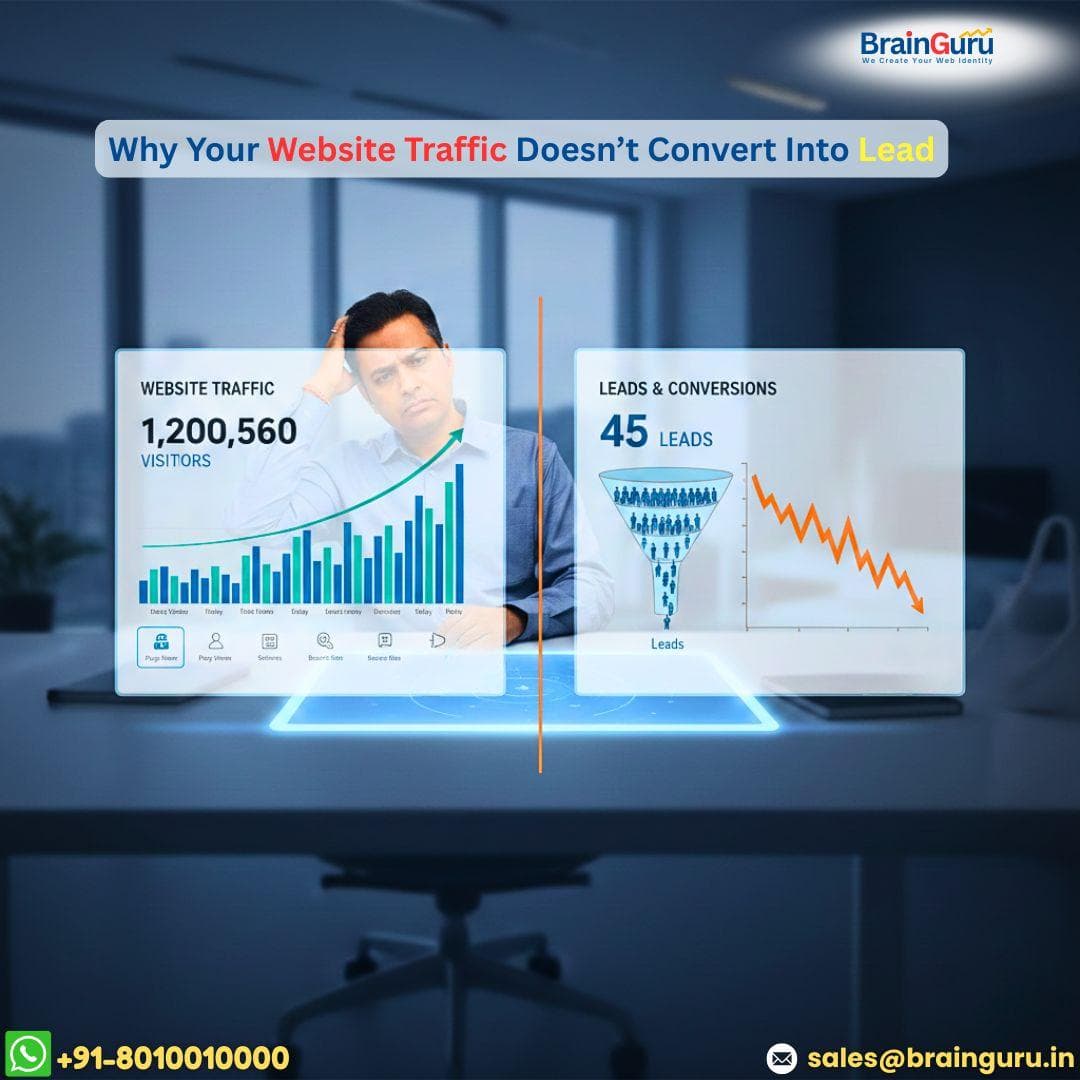
Why Your Website Traffic Doesn't Convert into Leads (and How to Fix It)
Why Your Website Traffic Doesn’t Convert Into Leads in India (And How to Fix It) You open your Google Analytics dashboard. Traffic is growing. Visitors are…
Read More
Discovered - Currently Not Indexed: What It Means and How to Fix It
Google has found your page but not crawled it. What the status really means, a real example from our own new pages, and what to do (and not do) to get indexed.
Read More
How to Track ChatGPT and AI Assistant Traffic in GA4 (2026)
Where visits from ChatGPT, Perplexity, Gemini and Copilot appear in Google Analytics 4, why the numbers undercount, and how to connect AI referrals to real enquiries.
Read More
Comments
Be the first to share your thoughts on this article.