In this article
- Why the Digital India shift matters for every business
- The building blocks of a digital-ready business
- Privacy, security, and trust: the other half of Digital India
- How AI is reshaping the digital landscape
- SEO vs paid ads: which channel, when?
- A simple roadmap to go digital
- Related Services
- Frequently Asked Questions
Digital India is no longer a slogan or a single event on a Silicon Valley stage; it is the everyday reality in which Indian businesses now operate, compete, and grow. Whether you run a manufacturing unit in Noida, a retail chain in Delhi NCR, or a software startup serving global clients, the questions are the same: how do you put your business online, reach customers where they already are, and turn a digital presence into measurable growth? This guide explains what the Digital India shift means for businesses and lays out a practical, evergreen roadmap you can act on today.
Digital India, in plain terms, is the long-running national movement to bring governance, commerce, payments, and everyday services online, and to make the internet the default channel through which Indians transact, learn, and connect. For businesses, it translates into one simple mandate: be discoverable, accessible, and trustworthy online, or risk being invisible to the customers you want.
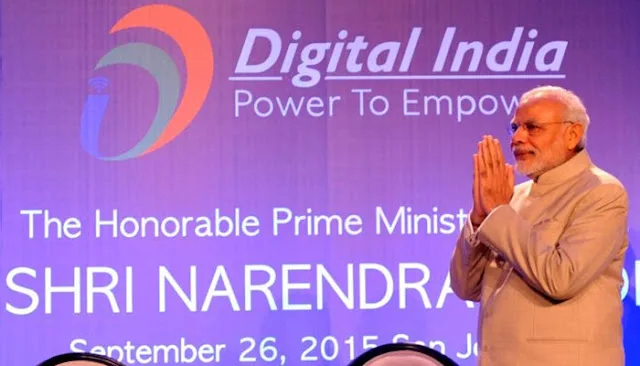
Editor's note: This article grew out of a 2015 post about Prime Minister Narendra Modi's "Digital India" address in Silicon Valley, where he urged global technology leaders to invest in India and framed the country's digital future. We have re-angled it into an evergreen guide on what going digital actually means for Indian businesses, because the underlying theme has only grown more relevant.
Why the Digital India shift matters for every business
The core idea behind Digital India still holds: more of everyday economic life now happens "online" rather than "offline." For a company, being online is no longer optional infrastructure; it is the storefront, the sales team, and the reputation desk rolled into one.
India's combination of affordable mobile data, widespread smartphone use, and digital payments means your customers research, compare, and buy on their phones. If your business cannot be found in a search, on a map, or on social platforms, a competitor that can be found will quietly take that customer instead.
- Discovery has moved online. Buyers search before they call, visit, or purchase, for both products and B2B services.
- Trust is built digitally. Reviews, a professional website, and an active social presence now stand in for word-of-mouth.
- Reach is no longer limited by geography. A Noida-based firm can serve clients across India and worldwide from day one.
- Data makes marketing accountable. Every rupee spent online can be measured, optimised, and scaled.
The building blocks of a digital-ready business
Going digital is not one project; it is a set of connected capabilities. You do not need all of them on day one, but you should know how they fit together so your investments compound instead of competing.
1. A modern, mobile-first website
Your website is the one digital asset you fully own. It should load fast, look credible on a phone, and make the next step obvious. A clear, well-structured site is also the foundation everything else depends on: search rankings, ads, and social campaigns all send people back to it. If your current site is dated or slow, start there; even great marketing struggles to convert visitors on a weak website. Our team's view on why your brand needs a modern, mobile-friendly website covers this in depth, and explains a common trap: why website traffic often doesn't convert into leads.
2. Search visibility (SEO)
Search Engine Optimization is the practice of helping your website rank for the terms your customers actually type. It is the highest-leverage, most durable channel for most Indian businesses because it compounds over time rather than stopping the moment you pause spending. A sound approach covers technical health, useful content, and credible links, all of it white-hat and guideline-compliant. If you are starting out, our complete SEO guide for Indian businesses is a practical place to begin, and SEO for startups breaks it into clear steps.
3. Getting found locally
For any business with a service area (a clinic, a showroom, a local agency), local discovery is decisive. Showing up in map results and "near me" searches, with accurate listings and genuine reviews, often drives more qualified enquiries than any other single tactic. As more searches happen by voice, voice search optimization is becoming part of the same playbook.
4. Paid reach when you need speed
SEO builds momentum over months; paid advertising buys visibility today. Used together, search and paid campaigns let you test demand quickly and then own it sustainably. The key is measurement and discipline rather than guesswork: our PPC and paid marketing guide and a side-by-side look at Google Ads vs Meta Ads explain where each channel fits.
5. Social media and reputation
Social platforms are where attention lives and where brands build familiarity before a purchase. A consistent presence, helpful content, and prompt responses turn followers into customers. Pair this with active reputation management so the story people find about you is the one you want them to find. See our social media marketing guide for Indian businesses and the fundamentals of digital reputation management.
Privacy, security, and trust: the other half of Digital India
The original Digital India vision placed real emphasis on data privacy, intellectual property, and cyber security, and that emphasis has aged extremely well. As your business moves more of its operations and customer relationships online, protecting that data is not a compliance checkbox; it is the foundation of customer trust.
- Secure your website and applications, and fix vulnerabilities before attackers find them.
- Handle customer data responsibly, with clear consent and sensible retention.
- Treat security as ongoing maintenance, not a one-time setup.
If this is new territory, start with a cyber security audit for your website and app and review the essentials of cybersecurity for Indian SMEs.
How AI is reshaping the digital landscape
The most significant change since the early Digital India years is artificial intelligence. AI now sits inside search itself: answering questions directly, summarising results, and changing how customers discover businesses. This makes visibility a moving target, but the underlying principle is unchanged: be genuinely useful, clearly structured, and trustworthy, so both people and AI systems can rely on you.
Forward-looking businesses are adapting their content so it can be surfaced by AI answer engines, a discipline often called Generative Engine Optimization. To understand the shift, see AI SEO vs traditional SEO and how to prepare for AI-driven search results.
SEO vs paid ads: which channel, when?
Most businesses ask whether to invest in organic search or paid advertising. The honest answer is "both, in the right balance." This comparison clarifies the trade-offs.
| Factor | SEO (organic) | Paid ads (PPC/social) |
|---|---|---|
| Speed to results | Builds over weeks and months | Visible almost immediately |
| Cost behaviour | Compounds; traffic continues after work slows | Stops when the budget stops |
| Best for | Durable, long-term visibility and trust | Launches, promotions, fast testing |
| Long-term value | Strong; an owned asset over time | Rented attention; great for momentum |
A practical approach is to use paid campaigns to learn what converts, then invest in SEO and content to own that demand sustainably.
A simple roadmap to go digital
- Fix the foundation. Ensure your website is fast, mobile-friendly, and clear about what you do and what to do next.
- Get discoverable. Invest in SEO and local listings so customers find you when they search.
- Add reach. Layer in social media and, where it makes sense, paid campaigns.
- Build trust. Manage reviews and reputation; secure your data and applications.
- Adapt for AI. Structure content so both people and AI search systems can use it.
- Measure and refine. Track what works, drop what doesn't, and scale the winners.
For the bigger picture across all of these channels, the complete guide to digital marketing services ties the pieces together.
Related Services
- Digital Marketing Solutions | GEO, SEO, SMM Company In India
- Technology Services & AI Solutions
- Election Management Solutions Brainguru Technologies
- Governance & Compliance Secure & Ethical Business
- Digital Marketing for Startups & New Businesses
- Web Development Services Custom & Scalable Solutions
Frequently Asked Questions
What does "Digital India" mean for a business owner?
For a business, Digital India means customers increasingly discover, evaluate, and buy online, primarily on mobile. In practice it means having a credible website, being findable in search and on maps, and building trust through reviews and a consistent online presence.
Where should a business start when going digital?
Start with your website, since every other channel sends people back to it. Make sure it loads fast, works well on phones, and makes the next step obvious. Then build search visibility and local listings so customers can actually find you.
Is SEO or paid advertising better for Indian businesses?
They serve different purposes. SEO builds durable visibility that compounds over time, while paid ads deliver fast, controllable reach. Most businesses get the best results by using paid campaigns to test demand and SEO to own it sustainably.
How is AI changing digital marketing in India?
AI is now built into search, often answering questions directly and changing how businesses get discovered. The winning response is to publish genuinely useful, well-structured content so both people and AI systems can rely on and surface your business.
Why does data security matter in a digital business?
As more of your operations and customer relationships move online, protecting that data becomes the foundation of customer trust. Regular security audits, responsible data handling, and ongoing maintenance reduce risk and protect your reputation.
Can a small business in Delhi NCR compete digitally?
Yes. Digital channels reduce the advantage of size by rewarding relevance, usefulness, and consistency. A focused small business with a solid website, good local SEO, and an active social presence can compete strongly, locally and well beyond.
Digital India is not a destination you arrive at once; it is a way of operating that keeps evolving. The businesses that thrive are the ones that start with a strong foundation and improve steadily. If you would like expert help turning a digital presence into real growth, our team in Noida works with businesses across India and abroad: talk to us or call +91-8010010000.
Related Articles
Digital India: What It Means for Businesses Going Online
Digital India turned connectivity into the default for an entire economy. Here is what the programme set out to do and how your business can thrive online.
Read More
Digital India: How Connectivity Powers Business Growth
Digital India made fast, affordable internet the foundation of modern commerce. Learn how connectivity helps Indian businesses reach customers and grow online.
Read More
Cloud Telephony for Business Communication: A Practical Guide
Cloud telephony lets businesses run calls, IVR, recording and toll-free lines over the internet. Learn how it works, its benefits, and how to choose the right setup.
Read More
Comments
Be the first to share your thoughts on this article.