
In this article
- Key takeaways
- What Internet Marketing Covers Today
- SEO vs SEM: Organic and Paid, Side by Side
- How Search Engine Marketing Works
- Search Engine Marketing in India: What Is Different
- Choosing Campaign Types
- Planning an SEM Budget
- Running SEM In-House or With a Partner
- Social Media Marketing and Optimisation
- Content and Link Building Done the White-Hat Way
- Internet Marketing in the Age of AI Search
- Building a Plan You Can Measure
- Conclusion
- Frequently Asked Questions
Internet marketing is how a business gets found, chosen and paid online. This guide explains what it covers today, how search engine marketing (SEM) sits beside SEO, social media and content, what is different about paid search in India, and how to plan a channel mix you can measure in qualified leads and sales.
Put simply, internet marketing is promoting a business, its products and its services through digital channels, such as search engines, websites, social media, email and paid ads, to attract the right visitors and turn them into customers. It was once treated as an add-on to print and events. For many B2B and B2C firms it is now the main source of new enquiries.
Editor's note: this article was first published in 2013 as a short services overview. It was rewritten in 2026 as a guide to internet marketing and search engine marketing. The channels and practices below reflect current platform rules, not those of 2013.
What Internet Marketing Covers Today
The term is an umbrella for several disciplines that work best together. A plan that relies on one channel is fragile: a change to one platform can cut off most of your leads overnight. The strongest plans combine organic and paid effort so each supports the other. The main parts are:
- Search engine optimisation (SEO): earning unpaid visibility on Google and AI-assisted search so the right people find you without paying per click.
- Search engine marketing (SEM): paid search ads that appear at the top of results for searches with clear buying intent, often the fastest route to leads.
- Pay-per-click (PPC) management: the daily work of bidding, targeting and improving paid campaigns on Google, Meta and other platforms.
- Social media marketing and optimisation: building reach, community and brand recall on the platforms your buyers already use.
- Content marketing: the articles, landing pages, videos and guides that answer customer questions and feed every other channel.
- Email and remarketing: staying in touch with people who already know you, so they come back and buy.
Our guide to digital marketing services shows how these parts fit a real budget, and the key benefits of internet marketing sets out the business case in plain terms.

SEO vs SEM: Organic and Paid, Side by Side
People often confuse SEO and SEM or treat them as a choice of one or the other. They work best together. SEO is a long-term asset that builds over time. SEM is a tap you can turn on for quick, controllable traffic. Most healthy plans run both.
| Factor | SEO (organic) | SEM (paid search) |
|---|---|---|
| How visibility is earned | Relevant content, technical health and reputation | Bidding on keywords in an ad auction |
| Time to results | Weeks to months, building steadily | Almost immediate once ads are live |
| Cost pattern | Effort up front; clicks cost nothing directly | You pay per click for as long as ads run |
| Best for | Lasting demand and trust | Fast leads, launches, seasonal pushes and testing |
| When you stop | Visibility fades slowly | Traffic stops when the budget stops |
A sensible approach is to use paid search to learn which keywords and messages convert, then put SEO effort into winning those terms organically over time. Our comparison of AI SEO and traditional SEO looks at where organic effort is heading.
How Search Engine Marketing Works
Search engine marketing places your business in the paid positions on a results page. When someone types a commercial search, an auction runs in a fraction of a second and decides which ads show and in what order. The bid matters, but so do the quality of the ad and the page it leads to.
The Building Blocks of a Paid Search Campaign
- Keyword and intent research: target the words a ready-to-buy customer would type, not just high-volume phrases that bring browsers.
- Tight ad groups and copy: match each ad to what the searcher wants. Google rates keywords on expected clickthrough rate, ad relevance and landing page experience, and its help page says Quality Score is a diagnostic tool, not an input in the ad auction. Use it to find weak spots, not as a target.
- Landing pages that convert: the page must deliver what the ad promised and make the next step obvious. Our guide to landing pages that convert more visitors covers the details.
- Measurement and improvement: track conversions, not just clicks, and move budget toward what works.
Running this well takes steady attention. Our PPC and paid marketing guide covers campaign structure and budgeting, and Google Ads vs Meta Ads helps you choose a platform for your goal.
Search Engine Marketing in India: What Is Different
The principles of paid search are the same everywhere, but campaigns for Indian buyers have their own practical details.
- Phones first: StatCounter put mobile at 84.21% of the web traffic it tracked in India in October 2026, against 15.17% for desktop. Call assets, click-to-call buttons, location assets and fast mobile pages matter more than long desktop-style forms.
- Languages: many buyers search in Hindi or another Indian language, or mix English with a regional language. Google's list of languages available for ad language targeting includes Hindi, Bengali, Gujarati, Kannada, Malayalam, Marathi, Punjabi, Tamil, Telugu and Urdu. Test separate ad groups with ads and landing pages written in the target language rather than relying on machine translation.
- Location precision: service businesses usually do better targeting the cities, districts or radius they can actually serve than all of India. Exclude places that send enquiries you cannot fulfil.
- Lead quality: cheap leads from broad targeting often include wrong numbers and casual enquiries. Count qualified leads from your CRM, not just form fills, before you scale a campaign.
- GST on ad spend: Google's tax help page says advertisers billed by Google Asia Pacific are charged GST of 18% unless they provide a valid GSTIN. Those billed by Google India pay GST as 9% CGST plus 9% SGST, or 18% IGST, depending on the bill-to state. The same page says a GSTIN is mandatory for business accounts. Add it under the India tax information in your payments profile, and confirm the treatment with your accountant.
Choosing Campaign Types
| Campaign type | Where ads appear | Best for |
|---|---|---|
| Search | Google search results for chosen keywords | Reaching people already looking for your service |
| Performance Max | Search, YouTube, Display, Discover, Gmail and Maps from one campaign | Businesses with solid conversion tracking and enough data to learn from |
| Demand Gen | YouTube, Discover, Gmail, Maps and the Google Display Network | Creating interest before people search |
| Local and call-focused setups | Search and Maps with call and location assets | Clinics, showrooms and service firms with a local catchment |
The channel lists come from Google's help pages on Performance Max and Demand Gen. Most Indian SMEs should start with tightly targeted Search campaigns, then add Performance Max or Demand Gen once conversion tracking is reliable. Automated campaign types learn from your conversion data, so feeding them unqualified form fills teaches them to find more unqualified leads.
Planning an SEM Budget
Work backwards from the business goal: how many qualified leads or sales you need, your likely conversion rate and the cost per click in your category. Start with a test budget large enough to collect useful data on your main keywords, run it for a few weeks, then decide whether to scale, restructure or stop. Keep any management fee separate from the media budget so you can see what each costs. The ads budget calculator helps you model the numbers, and SEO or Google Ads first covers how to split money between paid and organic search.
Running SEM In-House or With a Partner
Whoever runs the campaigns, a few rules protect the business:
- Account ownership: the Google Ads, Analytics and Tag Manager accounts should be in your business's name, with any partner given access, never the other way round.
- Tracking before spend: conversion tracking for calls, forms and WhatsApp clicks should be tested before campaigns go live.
- Clear reporting: ask for spend, conversions, cost per qualified lead and the search terms that triggered ads, not just impressions and clicks.
- Regular search-term review: add irrelevant searches as negative keywords every week in the early months.
Social Media Marketing and Optimisation
Social media marketing and optimisation build the reach and trust that make other channels work better. Done well, social does three jobs: it keeps your brand in mind, it sends engaged visitors to your site, and it creates the visible proof buyers look for before they enquire.
The aim is genuine engagement, not bought followers, likes or views, which damage credibility and break platform rules. Focus on consistent, useful posts and real conversation. Our social media marketing guide for Indian businesses sets out a repeatable plan, and shops and service firms with a local catchment can add a social media strategy for local businesses.
Content and Link Building Done the White-Hat Way
Content is the fuel for every channel: it answers questions, earns rankings, gives ads somewhere useful to land and gives people a reason to share. Pair it with honest link building, which means earning mentions from relevant, reputable sites through useful resources, digital PR and real partnerships.
Avoid the old shortcuts. Bought links, link farms and spun articles break Google's spam policies, and our article on the Google Penguin update and link spam explains how Google treats them now.
- Quality links: from relevant, trusted sites, given freely and lasting.
- Spammy links: bulk, irrelevant or paid to pass ranking; likely to be ignored or to trigger action.
For planning the content itself, see our content marketing strategy that drives growth.
Internet Marketing in the Age of AI Search
Search itself is changing. Google's AI Overviews and AI assistants now answer many questions directly, so brands also want to be cited inside those answers, not only listed in the classic results. This work is often called generative engine optimisation (GEO).
You do not need to start again. Clear, accurate, well-organised content that answers real questions remains the base. Read how businesses can prepare for AI-driven search and what Google AI Overviews mean for Indian businesses.
Building a Plan You Can Measure
A channel is only useful if it moves a business number. Tie every activity back to revenue and the question stops being "SEO or ads?" and becomes "which mix brings the most qualified customers for our budget?"
- Set a clear goal: leads, sales, calls or bookings, defined so you can count them.
- Fix the foundation: a fast, mobile-friendly website built to convert. Traffic is wasted if the site does not turn visits into enquiries, as our piece on why traffic doesn't convert into leads explains.
- Choose the mix: paid search for quick intent capture, SEO for lasting demand, social for reach and trust.
- Measure closely: track conversions and cost per acquisition by channel, then put more into what works.
- Keep testing: steady, repeated improvement beats one-off campaigns.
Our framework for measuring internet marketing ROI goes further into tracking and attribution.
Conclusion
Internet marketing works best as a mix. Paid search brings quick, measurable demand and shows you which words and offers convert. SEO and content turn those lessons into lasting visibility, and social media builds the trust that makes both cheaper. For Indian campaigns, plan for phones, languages, tight location targeting and GST from the start, and judge every channel by qualified leads and sales rather than clicks.
Frequently Asked Questions
What is internet marketing?
Internet marketing is promoting a business and its products or services through digital channels, such as search engines, websites, social media, email and paid ads, to attract the right visitors and turn them into customers. It combines organic work like SEO and content with paid channels like search and social ads.
What is the difference between SEO and SEM?
SEO earns unpaid visibility through relevant content, technical health and reputation, and builds slowly over time. SEM uses paid search ads that can appear almost at once for searches with buying intent. SEO is a long-term asset and SEM gives fast, controllable traffic, so most effective plans use the two together.
How long does internet marketing take to show results?
Paid search can bring traffic and leads almost as soon as campaigns go live, provided tracking and landing pages are ready. SEO and content usually take several weeks to months before they show steady results, but the visibility lasts. Running both gives quick wins while the long-term work builds up.
How much should an Indian business spend on search engine marketing?
There is no single right figure. Estimate it from the number of qualified leads you need, your conversion rate and the cost per click in your category, then start with a test budget large enough to learn from. Keep management fees separate from media spend so each can be judged on its own.
Is GST charged on Google Ads in India?
Yes, in most cases. Google's tax help page says Google Asia Pacific charges 18% GST unless you give a valid GSTIN, while Google India charges 9% CGST plus 9% SGST or 18% IGST, depending on your bill-to state. A GSTIN is mandatory for business accounts. Confirm the treatment with your accountant.
Read next
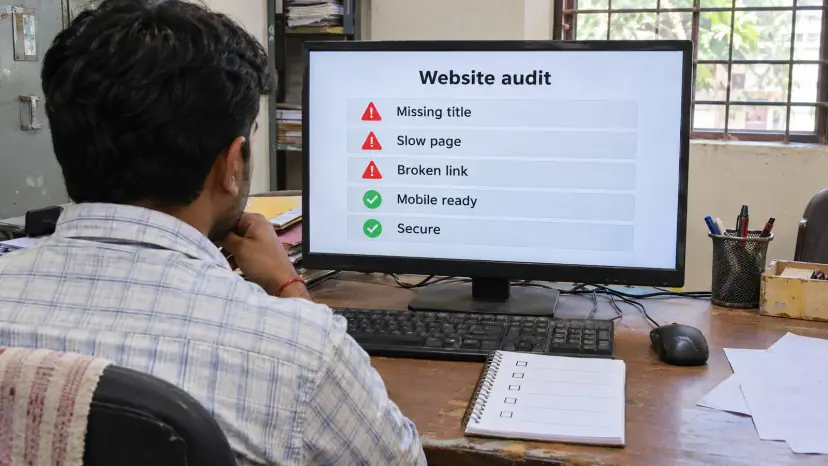
Top 5 SEO Mistakes Indian Businesses Still Make and How to Fix Them
Wrong-intent keywords, no page per service, copied text, no local setup and no lead tracking: why each hurts and the fix for each one.
Read article
How to Manage Your Digital PR Service: A Practical Guide
Plan campaigns around original data or real milestones, pitch only stories that fit each journalist's beat, earn links rather than buy them, and measure against a baseline.
Read article
How to Track ChatGPT and AI Assistant Traffic in GA4 (2026)
Where ChatGPT, Perplexity, Gemini and Copilot visits appear in GA4, why the numbers undercount, and how to link them to real enquiries.
Read article
Comments
Be the first to share your thoughts on this article.