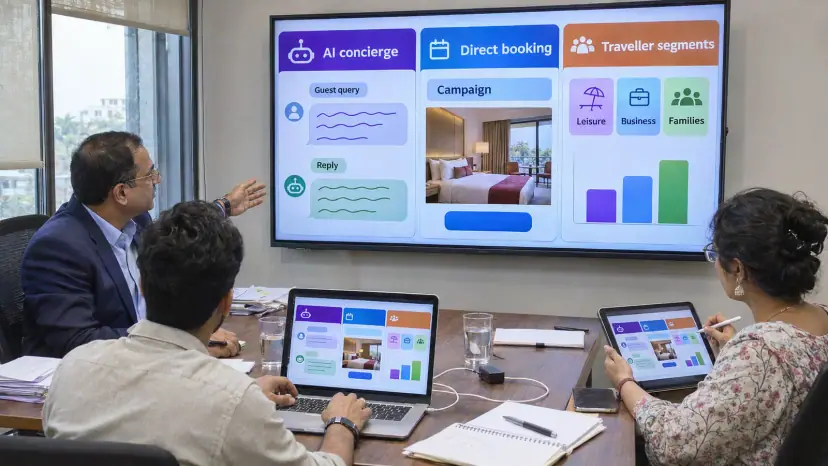
AI marketing for travel and hospitality helps hotels, resorts, tour operators and travel agencies reach the right travellers, win more direct bookings and keep guests coming back. Brainguru plans this work from your real inventory, rates and cancellation terms, because a hotel, a tour operator and a booking platform each need a different plan.
A crowded market for every booking
Travellers compare options across online travel agencies, metasearch sites, maps, social media and hotel websites before they book. Each of those channels can bring a guest, and each takes a share of the margin. The aim of good marketing is not to abandon third-party channels but to make the direct channel strong enough that guests have a real choice.
Demand is growing in India. According to IBEF, foreign tourist arrivals stood at around 9.15 million in 2025, and foreign exchange earnings from tourism totalled US$ 31.69 billion that year. IBEF also cites World Travel and Tourism Council projections that the sector's contribution to India's GDP will rise from US$ 256 billion in 2024 to US$ 523 billion in 2034.
Reviews shape those choices. In BrightLocal's Local Consumer Review Survey 2026, 89% of consumers said they expect business owners to respond to reviews, and templated or generic replies made 50% unlikely to choose a business. For a hotel, a thoughtful reply to a disappointed guest is visible to every future guest reading the page.
What AI marketing for travel and hospitality covers
Direct booking journey: A fast, clear booking path on your own website, with room or package descriptions, inclusions and availability matching the booking engine. AI can spot where people drop off, but slow pages and failed payments need fixing first.
Rate and offer communication: Revenue managers set rates; marketing explains them. AI can help draft offers for quieter dates and highlight the value of booking direct, such as flexible cancellation or included breakfast, without fake urgency. Our AI for pricing optimization page covers the pricing side.
Personalised recommendations: Suggesting room types, packages or experiences based on what a traveller has viewed or booked before, on the website and in email. Keep recommendations clearly separate from confirmed inclusions.
Review management: Reviews from Google, TripAdvisor, booking platforms and social media gathered in one place, with themes highlighted and draft replies for staff to approve and personalise. Recurring complaints go to operations, not just into a reply.
Seasonal demand planning: Past bookings, search trends and local event calendars help decide when to launch campaigns and which segments to target: business stays, holidays, weddings or groups. Forecasts are planning inputs; they cannot promise occupancy.
Social media and content: Destination guides, short videos and posts built from real photos and accurate operating information. AI helps plan, draft and schedule; your team supplies the substance.
Booking abandonment follow-up: When a traveller who has agreed to hear from you leaves a booking unfinished, a reminder by email or WhatsApp with the dates and room they viewed. Keep it helpful and infrequent. Our AI for email marketing page explains how to set such sequences up.
Reducing dependence on online travel agencies
Online travel agencies bring reach, especially for new properties and international guests, and their commission pays for that. The goal for most hotels is a healthier mix. Practical steps include:
- Make direct easy: A booking engine that works well on phones, with clear prices and no surprise fees at the last step.
- Give a reason: Benefits that only direct guests get, such as a flexible policy or a small inclusion, stated honestly.
- Own the relationship: Collect guest preferences, with their agreement, and use them to welcome returning guests.
- Be findable: An accurate Google Business Profile with a direct booking link and current photos.
- Measure net revenue: Compare channels after commission and cancellations, not on gross bookings.
Guest data and consent
Bookings carry names, contact details, travel dates and sometimes identity documents. India's Digital Personal Data Protection Act, 2023 applies to this data, and its main duties start on 13 May 2027 under rules notified in the Gazette of 13 November 2025. Keep identity documents out of marketing tools, keep promotional messages for guests who agreed to them, and consider the GDPR when marketing to travellers in Europe.
A workflow for a hotel or travel business
This is a planning outline for reservations, revenue and marketing staff. It is not a case study and promises no results.
- Booking discovery: Keep descriptions, inclusions and availability aligned with the booking system, and draft destination content from reviewed operating information.
- Direct bookings: Connect campaigns to the direct reservation journey, and investigate failed payments, slow steps and unavailable dates before blaming the audience.
- Seasonal planning: Compare enquiries with availability and booking lead time, separating segments that genuinely exist in your records.
- Measurement: Track completed stays, net booking revenue and cancellation rates, with direct and third-party bookings counted separately.
For a first conversation, bring your approved rooms or packages, how bookings and enquiries are handled today, a summary of the guest and booking data you hold, and the name of the person who checks content.
What affects the cost?
Each engagement is quoted after a free consultation. Cost depends on the number of properties or products, the markets and languages targeted, the channels used, the volume of photo and video content, and the integrations needed with a booking engine, channel manager or property management system.
Questions to ask a travel marketing provider
- Revenue: Will you report net booking revenue after commission and cancellations?
- Reviews: Who approves replies, and how do you avoid templates?
- Data: Which guest data will your tools see, and where is it stored?
- Ownership: Who owns the ad accounts, content and guest lists at the end?
Local Travel and Hospitality Planning Guides
Choose a city for official local references, enquiry information and a reviewed workflow. Each guide covers travel and hospitality businesses we serve from Noida; we do not run branch offices in these cities.