In this article
- What Google PageRank Actually Was
- Why Google Retired the Public PageRank Score
- Does Link Authority Still Matter? Yes, Here's How
- What to Measure Instead of Toolbar PageRank
- How to Build Real Authority the White-Hat Way
- PageRank vs Modern Authority: The Key Differences
- Related Services
- Frequently Asked Questions
Google PageRank shaped how an entire generation of SEOs and webmasters thought about links, authority, and ranking, and yet the green toolbar number that everyone once obsessed over no longer exists. If you still wonder whether PageRank matters, the honest answer is that the public metric is gone, but the idea behind it (that high-quality links signal a trustworthy, important page) is very much alive inside Google’s ranking systems. This article explains what PageRank actually was, why Google retired the visible score, and the modern, white-hat way to build and measure link authority that genuinely moves rankings today.
Editor’s note: this post was originally published in 2015, when SEOs were debating whether the Google Toolbar PageRank score would survive the year. Google publicly confirmed the toolbar PageRank display was being removed in 2016. We have updated the article to reflect how link authority works today, while preserving the original question that prompted it.
In one sentence: PageRank is Google’s original algorithm for scoring a page’s importance based on the quantity and quality of links pointing to it; the public 0–10 toolbar score was retired, but link-based authority remains a core ranking signal.
What Google PageRank Actually Was
PageRank was named after Google co-founder Larry Page, and it was one of the foundational ideas that made early Google so much better than its competitors. The concept is simple but powerful: every link from one page to another acts a little like a vote of confidence. A page that earns many links, especially from pages that are themselves well-linked, is treated as more important and more likely to deserve a high position in search results.
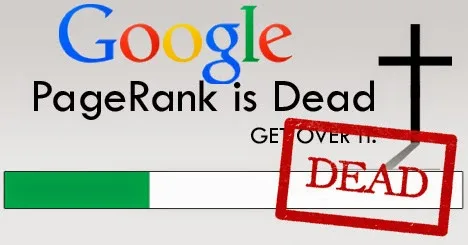
For years, Google exposed a simplified version of this through the Google Toolbar PageRank score: a number from 0 to 10 that gave a rough, public estimate of a page’s authority. Website owners and SEO providers chased that number relentlessly, because a higher score was seen as proof of a healthy site and a predictor of better rankings.
The Original Signals People Optimized For
The early link-building mindset focused on a handful of crude metrics. The original version of this post listed three, and they are still a useful starting point, with important modern caveats:
- Total inbound links: how many external pages link to yours. Volume alone is no longer enough; relevance and trust matter far more.
- Outbound links: the links your page sends out. Today these should point to genuinely useful, trustworthy sources, not be sold or stuffed.
- Quality of backlinks: the single signal that has stood the test of time. One editorial link from a respected, relevant site is worth more than hundreds of low-value ones.
Why Google Retired the Public PageRank Score
The toolbar PageRank number had two big problems. First, it was updated only occasionally, so the figure people saw was often months out of date and a poor reflection of a site’s real standing. Second, and more damaging, it fuelled an entire grey market of buying and selling links purely to inflate a score, which is exactly the manipulative behaviour Google’s guidelines work against.
Google gradually stopped updating the public number and then confirmed it was removing the toolbar PageRank display from public view. The internal signal did not disappear; Google simply stopped handing webmasters a number that was being gamed. For anyone practising ethical, sustainable SEO, this was a healthy change: it pushed the industry away from chasing a vanity metric and toward earning real authority.
Does Link Authority Still Matter? Yes, Here’s How
The disappearance of the visible score led many people to ask whether links still count at all. They absolutely do. Google has repeatedly confirmed that links remain one of its important ranking signals, even as the algorithm has grown far more sophisticated than the original PageRank formula. What has changed is how links are weighed.
Modern link evaluation considers relevance (does the linking site relate to your topic?), trust and reputation of the source, the editorial context around the link, anchor-text naturalness, and whether the link looks earned rather than placed. A thousand spammy directory links can now hurt you, while a handful of genuine mentions from authoritative, relevant publications can lift an entire site. This is the heart of modern SEO services: earning authority, not manufacturing it.
What to Measure Instead of Toolbar PageRank
Because Google no longer shows a public authority number, the SEO industry relies on third-party estimates and on Google’s own free tools. None of these are PageRank, and you should treat them as directional indicators rather than absolute truth.
| Approach | What it tells you | How to use it |
|---|---|---|
| Third-party authority scores (e.g. domain/page authority style metrics) | A relative estimate of a site’s link strength versus competitors | Compare yourself to rivals; track the trend over time, not the exact figure |
| Google Search Console | Your real clicks, impressions, queries and which sites link to you | The authoritative, free source for your own performance |
| Organic traffic & conversions | Whether your authority is translating into business outcomes | The metric that actually matters to your bottom line |
The lesson is to stop optimizing for a single score and start optimizing for outcomes. If you are unsure whether your authority is converting into customers, our guide on why website traffic doesn’t convert into leads is a useful next read.
How to Build Real Authority the White-Hat Way
The most durable way to earn the authority PageRank once tried to measure has not changed in spirit: be genuinely worth linking to. The tactics that work today are about substance, not shortcuts.
Create content people want to reference
Original research, clear how-to guides, useful tools and well-explained answers naturally attract links and mentions. Strong content is also the foundation of ranking in AI answer engines. If writing is a bottleneck, you can hire a content writer in India to produce link-worthy material consistently. For a strategic view, see our content marketing strategy that drives growth.
Earn relevant, editorial links
Focus on links you would be proud to show Google: guest contributions on respected industry sites, digital PR, partnerships, and being cited as a source. Avoid buying links, link farms, or any scheme that promises instant authority; these are exactly the patterns Google’s spam systems target.
Get the technical and on-page foundations right
Authority cannot flow into a site that is slow, hard to crawl, or poorly structured. A fast, responsive website with clean internal linking helps Google understand and distribute authority across your pages. For the bigger picture, our complete SEO guide for Indian businesses walks through the full modern checklist.
Think beyond traditional search
Search itself is changing. Google’s AI Overviews and generative answer engines now surface and cite sources directly, which means authority increasingly means being a trusted, citable resource. Our explainers on AI SEO vs traditional SEO and Generative Engine Optimization (GEO) services cover how to stay visible as search evolves.
PageRank vs Modern Authority: The Key Differences
| Old PageRank thinking | Modern authority thinking |
|---|---|
| Chase a single public 0–10 number | Track real rankings, traffic and conversions |
| More links is better | Relevant, trusted, editorial links are better |
| Links as a transaction | Links as earned endorsements |
| Optimize for the toolbar | Optimize for users and citable expertise |
Related Services
- Expert SEO Services Rank Higher & Grow Online
- Local SEO Services
- E-Commerce SEO Services
- SEO-Friendly Web Design Brainguru Technologies
- Best AI SEO Tools 2026 | Top 10 AI-Powered SEO Tools Reviewed
- Search Engine Marketing Services (SEM)
Frequently Asked Questions
Does Google PageRank still exist in any form?
The public Google Toolbar PageRank score no longer exists. Google stopped updating it and removed the public display. However, the underlying concept of ranking pages by the quantity and quality of their links remains part of how Google evaluates pages internally.
Why did Google remove the public PageRank score?
The visible number was updated infrequently, gave an inaccurate picture of a site, and was widely abused by people buying and selling links to inflate it. Removing the public score reduced this manipulation and pushed SEO toward earning genuine authority.
Do backlinks still matter for SEO?
Yes. Google has confirmed that links remain an important ranking signal. What matters now is the relevance, trustworthiness and editorial quality of those links rather than raw quantity.
What should I use to measure my site’s authority now?
Use Google Search Console for your own real performance data, and use third-party authority estimates only as directional, competitor-relative indicators. Ultimately, organic traffic and conversions are the metrics that matter most.
How do I build link authority safely today?
Create genuinely useful content that people want to cite, earn editorial links through digital PR and industry relationships, and keep your site technically sound. Avoid paid link schemes and link farms, which violate Google’s guidelines and can lead to penalties.
Is link building still worth it for Indian businesses?
Absolutely. For most Indian B2B and local businesses, a focused, white-hat approach to authority and content delivers compounding visibility over time, and increasingly helps you get cited in AI-powered search results too.
The green PageRank toolbar is gone, but the principle it represented (that trustworthy, well-linked, genuinely useful pages deserve to rank) is stronger than ever. If you want a clear, ethical strategy to build lasting search authority for your business, the team at Brainguru Technologies can help. Get in touch with us or call +91-8010010000 to talk through your goals.
Related Articles
Guest Post Link Building: Google's Rules Explained
Guest post link building still works when it follows Google's rules. Learn what counts as spam, the warning signs, and how to earn safe, white-hat backlinks.
Read More
Visual Search & Image-Based Product Discovery for Shopping
Visual search lets shoppers find products from a photo. Learn how image-based product discovery works and how to optimise your store to show up in it.
Read More
How to Submit a URL to Google and Get Your Page Indexed
Learn how to submit a URL to Google today, request indexing in Search Console, use sitemaps, and fix pages that won't get indexed in search.
Read More
Comments
Be the first to share your thoughts on this article.