In this article
- Why the shift from COD to digital payments matters
- The modern digital payment mix for Indian eCommerce
- How payment choices affect conversion rate
- COD vs prepaid digital payments: a quick comparison
- Building a checkout customers trust
- Driving prepaid orders with smart marketing
- Related Services
- Frequently Asked Questions
Digital payments and cashless checkout have moved from a convenience to a baseline expectation for every online business in India. Whether a customer is buying groceries, electronics, or a SaaS subscription, the way they pay now shapes whether the sale completes at all. In this guide you will learn how the shift from cash-on-delivery (COD) to UPI, cards, and mobile wallets affects eCommerce conversions, what a modern payment mix should look like, and how to design a checkout that earns trust and reduces drop-offs.
Editor's note: This article was originally published in December 2016, just after India's demonetization announcement, when many shoppers and eCommerce companies were suddenly forced toward cashless payment. We have updated it into an evergreen guide on digital payments for online businesses. The 2016 context is preserved below for background, but figures and product states from that period are not presented as current.
Digital payments are electronic money transfers between a buyer and a seller (through UPI, debit or credit cards, mobile wallets, net banking, or buy-now-pay-later options) completed without exchanging physical cash. For an online store, getting this layer right is just as important as product quality or marketing spend.
Why the shift from COD to digital payments matters
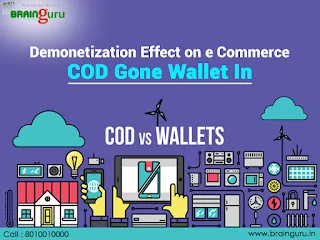
For years, cash on delivery was the default for Indian online shoppers; it lowered the trust barrier for first-time buyers who were nervous about paying upfront. But COD carries real costs for merchants: higher return-to-origin rates, cash-handling fees, delayed working capital, and reconciliation headaches.
Digital payments solve much of that. Money is collected at the point of purchase, refunds are traceable, and orders that are prepaid are far less likely to be refused at the door. For a growing store, every percentage point shifted from COD to prepaid improves cash flow and reduces logistics waste.
What demonetization revealed in 2016
The 2016 demonetization period was a stress test for cashless commerce. Almost overnight, businesses from vegetable vendors to large industrialists had to accept electronic payment, and many eCommerce companies temporarily paused or reduced their COD option because handling and depositing cash became difficult. Mobile wallets saw a sharp surge in adoption during this window. The lasting lesson was not about any single policy event; it was that customers will adopt digital payment quickly when the experience is simple, and that businesses prepared for cashless checkout recover faster from disruption.
The modern digital payment mix for Indian eCommerce
There is no single "best" payment method; the goal is to offer the few that your specific customers actually use, without cluttering checkout. A practical mix for most Indian online businesses includes:
- UPI: Now the dominant everyday method in India, fast and low-friction for mobile-first shoppers.
- Debit and credit cards: Still important for larger purchases and EMI options.
- Mobile wallets: Convenient for repeat, low-value purchases and loyalty-driven buyers.
- Net banking: A reliable fallback, especially for customers who prefer their bank's interface.
- Buy now, pay later / EMI: Useful for higher-ticket items to reduce sticker shock.
- COD (selectively): Still worth offering in regions or categories where prepaid trust is low, but consider partial prepayment or COD verification to cut returns.
How payment choices affect conversion rate
Checkout is where intent turns into revenue, and payment friction is one of the biggest causes of abandoned carts. A shopper who can't find their preferred method, hits an extra redirect, or faces a failed transaction often leaves and rarely returns.
A few principles consistently help conversions:
- Show the right methods first. Surface the options your audience uses most, in order of popularity.
- Minimise steps. Fewer form fields and fewer redirects mean fewer drop-offs.
- Handle failures gracefully. Offer an easy retry and an alternate method when a transaction fails.
- Reassure on security. Visible trust signals at the payment step reduce hesitation.
If your store gets traffic but not enough completed orders, the checkout and payment flow is one of the first places to investigate. Our guide on why website traffic doesn't convert into leads walks through the most common conversion leaks and how to fix them.
COD vs prepaid digital payments: a quick comparison
| Factor | Cash on Delivery (COD) | Prepaid Digital Payment |
|---|---|---|
| Cash flow | Delayed until delivery | Collected at purchase |
| Return-to-origin risk | Higher (orders refused at door) | Lower (committed buyer) |
| Operational cost | Cash handling and reconciliation | Payment gateway fee |
| Buyer trust barrier | Lower for first-time buyers | Higher; needs trust signals |
| Refund traceability | Harder | Fully traceable |
Building a checkout customers trust
Trust is the deciding factor in whether a shopper will prepay. A modern, mobile-friendly storefront with a clean checkout signals legitimacy before the payment step even appears. If your site feels dated or loads slowly on phones, customers default to caution, which often means COD or no purchase at all.
Invest in the fundamentals: a fast, responsive design that works well on mobile, clear product and pricing information, transparent shipping and return policies, and a secure checkout. A well-built store, supported by professional web development and UI/UX design, removes the doubts that push buyers toward cash. For more on this, see our piece on why your brand needs a modern, mobile-friendly website.
Security and reputation go together
Customers will only enter card and UPI details on a site they believe is safe. Visible HTTPS, a trusted payment gateway, and good data-handling practices all matter. Periodic checks such as a cyber security audit for your website and app help you catch vulnerabilities before they become incidents, and protect the reputation that makes people comfortable paying online.
Driving prepaid orders with smart marketing
Payment infrastructure gets customers to the finish line, but marketing brings them there in the first place, and can nudge them toward prepaid. Small incentives like a modest prepaid discount or free shipping on prepaid orders can shift the mix away from COD. Beyond that, sustainable growth for an online store comes from being found and trusted across channels.
Strong eCommerce SEO brings qualified buyers who are ready to purchase, while a coordinated digital marketing strategy keeps your brand visible across search and social. For a structured plan, our eCommerce marketing and growth guide ties together SEO, paid media, and conversion improvements for online sellers.
Related Services
- Retail & eCommerce Solutions AI & Digital Growth
- AI Solutions for Ecommerce
- BFSI Technology Solutions Brainguru Technologies
- AI Marketing for Fintech | Compliant Growth
- Ecommerce Web Design Boost Online Sales
- AI Marketing for Ecommerce & Online Stores
Frequently Asked Questions
What are digital payments in eCommerce?
Digital payments are electronic ways for a customer to pay an online store, including UPI, debit and credit cards, mobile wallets, net banking, and buy-now-pay-later. The money moves electronically at the point of purchase instead of as physical cash at delivery.
Is cash on delivery still worth offering in India?
Yes, selectively. COD lowers the trust barrier for first-time buyers and still works well in regions or categories where prepaid confidence is low. Many stores keep it available while using partial prepayment, order verification, or prepaid incentives to reduce returns and shift customers toward digital payment over time.
How do digital payments improve eCommerce conversions?
Offering the payment methods your customers already use, with fewer steps and reliable transactions, reduces checkout abandonment. Prepaid orders are also less likely to be refused at delivery, which improves both conversion quality and cash flow.
What payment methods should an Indian online store accept?
For most Indian stores, a practical mix is UPI, cards, mobile wallets, and net banking, with EMI or buy-now-pay-later for higher-ticket items and COD offered selectively. The aim is to cover the methods your audience actually uses without cluttering the checkout.
How can I get more customers to prepay instead of choosing COD?
Build trust with a fast, secure, mobile-friendly checkout, show clear return and shipping policies, and offer small prepaid incentives such as a discount or free shipping. A professional, well-designed store reassures buyers that prepaying is safe.
What does demonetization have to do with digital payments today?
The 2016 demonetization period accelerated digital payment adoption in India and showed that shoppers will go cashless quickly when the experience is simple. The durable takeaway is to build an online business that is ready for cashless checkout, regardless of any single policy event.
A smooth, trustworthy digital payment experience is now a core part of selling online in India, and it works best when paired with a fast website and marketing that brings in ready-to-buy customers. If you want help building or optimising your eCommerce store and its checkout, talk to our team. Call us at +91-8010010000 or get in touch for a consultation.
Related Articles
Digital Payments for Small Vendors: A Practical Guide
Digital payments for small businesses are now essential for India's vendors. Learn how to adopt UPI and e-commerce tools without falling into the cash-flow trap.
Read More
How Online Reviews Affect Hotel Bookings
Online reviews now shape where travelers stay. Learn how review management and responses turn guest feedback into more confirmed hotel bookings.
Read More
Ecommerce Development in India (2026): Platform Choice, Cost and What Breaks
Shopify, WooCommerce, Magento or custom - how to choose an ecommerce platform for an Indian business, what drives build cost, and the operational realities that decide success.
Read More
Comments
Be the first to share your thoughts on this article.