In this article
- What Sparked India's Shift to Digital Payments
- The Core Benefits of Digital Payments for Your Business
- Discounts, Cashback, and Incentives: Why They Still Work
- Common Digital Payment Methods in India
- How to Turn Digital Payments into a Growth Advantage
- Security and Trust: Non-Negotiables for Cashless Business
- Related Services
- Frequently Asked Questions
Digital payments have moved from a convenience to a core business requirement for almost every Indian merchant, from a neighbourhood store to a fast-scaling online brand. Whether you sell on a website, a marketplace, or across the counter, the way you accept money now shapes how many customers you win, how quickly you get paid, and how well you understand your own sales. In this guide you will learn what digital payments are, why discounts and incentives helped drive their adoption in India, the concrete benefits they offer a business, how to choose the right payment methods, and how to turn cashless transactions into a genuine growth advantage for your ecommerce operation.
Editor's note: This article was first published in December 2016, around the time of India's demonetisation announcement, when the government introduced temporary discounts on certain digital payments (such as fuel, rail tickets, and insurance bought through public-sector channels) to encourage cashless transactions. Those specific 2016 offers were time-bound and are no longer current. The article below has been rewritten as an evergreen guide to the lasting benefits of digital payments for businesses.
A digital payment is any transaction in which money moves from a payer to a payee electronically (through UPI, cards, net banking, mobile wallets, or QR codes) without the physical exchange of cash. For a business, adopting digital payments means giving customers fast, secure, recorded ways to pay while reducing the friction, risk, and cost of handling cash.
What Sparked India's Shift to Digital Payments
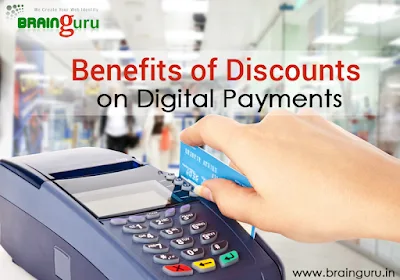
India's large-scale move toward cashless transactions accelerated sharply in late 2016. To nudge people away from cash, the government and public-sector companies rolled out short-term discounts and reward incentives on digital payments for things like fuel, railway tickets, and insurance premiums. These early incentives did two important things: they removed the perception that digital payment was complicated, and they gave first-time users a tangible reason to try it.
While those specific introductory offers were temporary, the behaviour change endured. Customers discovered that paying digitally was faster than queuing for cash, safer than carrying notes, and often came with cashback, reward points, or loyalty benefits from banks and apps. For businesses, that shift created a permanent expectation: today, most Indian buyers simply expect a digital option at checkout, online and offline alike.
The Core Benefits of Digital Payments for Your Business
Accepting digital payments is no longer about keeping up with a trend; it directly affects revenue, efficiency, and customer trust. The most meaningful benefits include the following.
1. More Completed Sales and Fewer Abandoned Carts
When a customer is ready to buy, every extra step is a chance to lose them. Offering quick, familiar payment options (UPI, cards, wallets, and net banking) reduces friction at the most critical moment. For online stores in particular, a smooth checkout is one of the biggest levers for conversion, which is why so many businesses look closely at why website traffic doesn't convert into leads and fix it at the payment stage.
2. Faster Payments and Healthier Cash Flow
Digital payments settle far faster than cash deposits or cheques, which improves working capital and reduces the time spent reconciling accounts. Instant confirmation also means you can dispatch orders sooner, an advantage that compounds for high-volume ecommerce sellers.
3. A Complete, Searchable Record of Every Transaction
Every digital payment is logged automatically. That record simplifies bookkeeping, GST filing, refunds, and dispute resolution, and it gives you reliable sales data you can actually analyse. Clean transaction data is the foundation for smarter marketing decisions across your digital marketing efforts.
4. Lower Cash-Handling Cost and Risk
Cash has hidden costs: counting, storing, transporting, theft risk, and human error. Digital payments cut most of that overhead and reduce the security risk of holding cash on the premises.
5. Reach Beyond Your Local Area
Cash limits you to people physically present. Digital payments let you sell to customers anywhere, a prerequisite for any business that wants to grow online and tap into India's expanding ecommerce market.
Discounts, Cashback, and Incentives: Why They Still Work
The early government discounts of 2016 are gone, but the underlying principle remains one of the most powerful tools in commerce: a small, well-timed incentive changes behaviour. Today that incentive comes from banks, payment apps, and merchants themselves rather than from a one-off government scheme.
- Cashback and reward points encourage repeat purchases and larger basket sizes.
- Payment-method-specific offers (for example, an extra discount on UPI or a particular card) can steer customers toward lower-cost or faster settlement methods.
- First-purchase incentives lower the barrier for new customers to try your store.
- Loyalty programmes tied to digital payments build a durable relationship and give you permission to market again.
Used thoughtfully, incentives are a marketing investment, not a giveaway. The key is to design them around profitability and lifetime value, something a structured approach to ecommerce marketing and growth can help you get right.
Common Digital Payment Methods in India
Different customers prefer different methods, so offering a sensible mix matters. Here is how the main options compare for a typical business.
| Method | Best for | Key advantage |
|---|---|---|
| UPI & QR codes | Quick payments, all ticket sizes | Instant, low/no cost, very widely used in India |
| Debit & credit cards | Higher-value purchases | Familiar, supports EMI and rewards |
| Mobile wallets | Repeat small purchases | Fast checkout, cashback ecosystems |
| Net banking | Customers without cards/UPI | Direct bank-to-bank, broad reach |
For an online store, integrating a reliable payment gateway that bundles these methods is usually the simplest path. The integration sits inside a well-built site, so it pays to invest in solid web development and a checkout designed around real UI/UX design principles.
How to Turn Digital Payments into a Growth Advantage
Accepting digital payments is the starting point; using them strategically is where the growth comes from. A practical playbook looks like this.
- Offer every popular method at checkout so you never lose a sale over a missing option.
- Make the checkout fast and trustworthy: minimal steps, clear pricing, visible security cues.
- Use the data from transactions to identify best-sellers, repeat buyers, and drop-off points.
- Layer in incentives (cashback, loyalty, first-order offers) that protect your margins.
- Drive qualified traffic to that smooth checkout through SEO and targeted campaigns.
This is exactly where digital payments and digital marketing meet. The cleaner your payment experience and the better your data, the more effective your internet marketing becomes, and the more an investment in ecommerce SEO translates into actual orders rather than just visits.
Security and Trust: Non-Negotiables for Cashless Business
As more money moves online, customer trust depends on how seriously you treat security. Use a reputable payment gateway, never store card data yourself, keep your platform updated, and display clear refund and privacy information. Building this trust is part of your brand, and it connects directly to broader practices around protecting customer information, a good reason to understand data protection for SMEs as your transaction volume grows.
Related Services
- BFSI Technology Solutions Brainguru Technologies
- AI Marketing for Fintech | Compliant Growth
- Retail & eCommerce Solutions AI & Digital Growth
- AI Solutions for Ecommerce
- Fintech Software Development in Dubai
- AI Pricing Optimization & Dynamic Pricing
Frequently Asked Questions
What are digital payments?
Digital payments are transactions where money moves electronically between a payer and a payee (through UPI, cards, net banking, mobile wallets, or QR codes) without physically exchanging cash. For businesses, they offer faster settlement, automatic records, and wider reach.
Why did digital payments grow so quickly in India?
Adoption accelerated around late 2016, when demonetisation and short-term government incentives encouraged people to try cashless options. The convenience, speed, and security kept users coming back, and today most Indian customers expect a digital payment option both online and in person.
What are the main benefits of digital payments for a business?
The biggest benefits are more completed sales, faster cash flow, automatic transaction records for accounting and GST, lower cash-handling cost and risk, and the ability to reach customers anywhere rather than only those physically present.
Do discounts and cashback on digital payments actually help?
Yes, when designed around profitability. Well-timed incentives like cashback, loyalty points, and first-purchase offers encourage repeat buying and larger orders. Today these incentives typically come from banks, payment apps, and merchants rather than from any one-off government scheme.
Which digital payment methods should an online store offer?
A sensible default is UPI and QR codes, debit and credit cards, mobile wallets, and net banking, usually bundled through a single payment gateway. Offering a familiar mix reduces abandoned carts because customers can pay the way they prefer.
How can a business get the most value from digital payments?
Offer all popular methods, keep checkout fast and secure, analyse the transaction data, add margin-friendly incentives, and drive qualified traffic to the store through SEO and targeted marketing so the smooth checkout converts.
Digital payments are no longer optional for businesses that want to grow; they are the backbone of a modern, trusted, and scalable customer experience. If you want help building a fast online store, a frictionless checkout, or a marketing engine that turns cashless customers into repeat buyers, talk to our team or call us at +91-8010010000 for a free consultation.
Related Articles
GA4 Setup for Indian eCommerce (2026): Step-by-Step Configuration, Ecommerce Events + Consent Mode V2
Complete 2026 GA4 setup for Indian eCommerce - GA4 ecommerce events, consent mode V2, and Shopify/WooCommerce configuration with copy-paste code.
Read More
Digital Payments & Cashless Checkout for Indian eCommerce
Digital payments are now essential for online stores in India. Learn how to move from COD to UPI, cards and wallets, cut checkout drop-offs and win more prepaid orders.
Read More
Mobile Wallet : A Boon or a Curse
What Is a Mobile Wallet? A mobile wallet is a type of payment service through which businesses and individuals can receive and send money via mobile devices.…
Read More
Comments
Be the first to share your thoughts on this article.