In this article
- What internet marketing covers today
- SEO vs SEM: organic and paid, side by side
- How search engine marketing actually works
- Social media marketing and optimization
- Content and link building done the white-hat way
- Internet marketing in the age of AI search
- Building an internet marketing plan that delivers ROI
- Related Services
- Frequently Asked Questions
Internet marketing is how modern businesses get found, get chosen, and get paid online, and it has matured far beyond the simple “web promotion” of a decade ago. In this guide you’ll learn what internet marketing actually covers today, how search engine marketing (SEM) fits alongside SEO, social media and paid ads, and how to build a channel mix that produces measurable return on investment (ROI) for an Indian business competing both locally and globally.
Internet marketing is the practice of promoting a business, its products and its services across digital channels (search engines, websites, social media, email and paid advertising) to attract qualified visitors and convert them into customers. Where the early web treated it as an add-on, it is now the primary growth engine for most B2B and B2C companies.
Editor’s note: this article was first published in 2013 as a short services overview. It has been rewritten as an evergreen guide to internet marketing and search engine marketing; the channels, tactics and best practices below reflect current, guideline-compliant practice rather than the 2013 landscape.
What internet marketing covers today
The phrase “internet marketing” is an umbrella for several disciplines that work best together. A campaign that relies on only one channel is fragile; the strongest programmes coordinate organic and paid effort so each reinforces the other. The core pillars are:
- Search Engine Optimization (SEO): earning organic visibility on Google and AI-powered search so the right people find you without paying per click.
- Search Engine Marketing (SEM): using paid search ads to appear at the top of results for high-intent queries, often the fastest route to leads.
- Pay-Per-Click (PPC) management: the day-to-day discipline of bidding, targeting and optimising paid campaigns across Google and Meta.
- Social media marketing and optimization (SMM/SMO): building reach, community and brand recall on the platforms your audience already uses.
- Content marketing: the articles, landing pages, videos and guides that answer customer questions and feed every other channel.
- Email and remarketing: nurturing the audiences you have already attracted so they convert and return.
For a practical end-to-end overview, our complete guide to digital marketing services walks through how these pieces fit a real budget, and the key benefits of internet marketing explains the business case in plain terms.
SEO vs SEM: organic and paid, side by side
People often confuse SEO and SEM, or treat them as either/or. They are complementary. SEO is a long-term asset that compounds; SEM is a tap you can turn on for immediate, controllable traffic. Most healthy programmes run both.
| SEO (organic) | SEM (paid search) | |
|---|---|---|
| How visibility is earned | Relevant content, technical health and authority | Bidding on keywords in an ad auction |
| Time to results | Weeks to months; builds steadily | Almost immediate once live |
| Cost behaviour | Effort up front; clicks are “free” over time | You pay per click for as long as ads run |
| Best for | Durable, compounding demand and trust | Fast lead flow, launches, seasonal pushes, testing |
| What happens when you stop | Visibility persists for a while | Traffic stops when the budget stops |
The smart play is to use search engine marketing to learn which keywords and messages convert, then invest in SEO services to win those terms organically over time. If you want a deeper comparison of where each rupee performs best, see AI SEO vs traditional SEO.
How search engine marketing actually works
Search engine marketing places your business in the paid positions of a search results page. When someone searches a commercial query, an auction runs in milliseconds and decides which ads show and in what order, based not only on bid but on ad relevance and landing-page quality.
The building blocks of a paid search campaign
- Keyword and intent research: target the terms a ready-to-buy customer would type, not just high-volume vanity phrases.
- Tight ad groups and copy: match the ad to the searcher’s intent so quality scores stay high and cost-per-click stays low.
- Conversion-ready landing pages: the page must deliver on the ad’s promise and make the next step obvious.
- Measurement and optimisation: track conversions, not just clicks, and reallocate budget toward what works.
Running this well is a specialist job. Many teams choose to hire a dedicated PPC expert rather than let budget leak on poorly structured campaigns. Our PPC and paid marketing guide covers structure and budgeting in detail, and Google Ads vs Meta Ads helps you choose the right platform for your goal.
Social media marketing and optimization
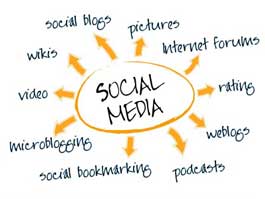
Social media marketing (SMM) and social media optimization (SMO) build the reach and trust that make every other channel more efficient. Done well, social does three jobs: it keeps your brand top-of-mind, it sends engaged traffic to your site, and it creates the social proof buyers look for before they enquire.
The goal is genuine engagement and brand building, not buying followers, likes or views, which damages credibility and breaks platform rules. Focus instead on consistent, useful content and real community. Social media optimization and Facebook marketing services can help you do this systematically, and our social media marketing guide for Indian businesses lays out a repeatable plan. For shops and service businesses with a physical catchment, pair it with a social media strategy for local businesses.
Content and link building done the white-hat way
Content is the fuel for internet marketing: it answers questions, earns rankings, powers ads and gives people a reason to share. Pair strong content with ethical link building: earning citations from relevant, reputable sites through genuinely useful resources, digital PR and partnerships.
Avoid the old shortcuts: bought links, link farms and spun articles now invite penalties rather than rankings. Quality beats quantity every time, as the comparison below shows.
- Quality links: from relevant, trusted sites; editorially earned; sustainable.
- Spammy links: bulk, irrelevant, paid-for-PageRank; high risk of penalty; short-lived.
If producing this content in-house is a stretch, you can hire a content writer in India or follow our content marketing strategy that drives growth.
Internet marketing in the age of AI search
Search itself is changing. Google’s AI Overviews and AI assistants increasingly answer questions directly, which means brands now need to be visible inside AI-generated answers, not just in the classic blue links. This emerging discipline, generative engine optimization (GEO), is becoming part of any serious internet marketing plan.
You don’t need to overhaul everything; the fundamentals of clear, authoritative, well-structured content still apply. To get ahead, read how businesses can prepare for AI-driven search and what Google AI Overviews mean for Indian businesses. When you’re ready, explore AI marketing solutions and GEO services.
Building an internet marketing plan that delivers ROI
A channel is only useful if it moves a business metric. Tie every activity back to revenue, and the question stops being “SEO or ads?” and becomes “what mix gets us the most qualified customers for our budget?”
- Set a clear goal: leads, sales, calls or bookings, defined and measurable.
- Fix the foundation: a fast, mobile-friendly, conversion-focused website. Traffic is wasted if the site doesn’t convert. See why traffic doesn’t convert into leads.
- Choose the mix: SEM for fast intent capture, SEO for compounding demand, social for reach and trust.
- Measure relentlessly: track conversions and cost per acquisition, then double down on what works.
- Iterate: internet marketing rewards consistency and testing over one-off campaigns.
Businesses in Delhi NCR and across India can lean on a full-service digital marketing agency in Noida to run this end to end, or assemble it from focused digital marketing solutions.
Related Services
- Search Engine Marketing Services (SEM)
- Expert SEO Services Rank Higher & Grow Online
- Digital Marketing Solutions | GEO, SEO, SMM Company In India
- Social Media Optimization (SMO) Services India
- Hire Dedicated PPC Expert in India
- Digital Marketing Agency in Noida | SEO, PPC & AI
Frequently Asked Questions
What is internet marketing?
Internet marketing is the practice of promoting a business and its products or services across digital channels (search engines, websites, social media, email and paid advertising) to attract qualified visitors and turn them into customers. It is now the primary growth engine for most businesses.
What is the difference between SEO and SEM?
SEO earns organic (unpaid) visibility through relevant content, technical health and authority, and compounds over time. SEM uses paid search ads to appear instantly for high-intent queries. SEO is a long-term asset; SEM gives fast, controllable traffic. Most effective programmes use both together.
How long does internet marketing take to show results?
Paid search (SEM/PPC) can drive traffic and leads almost as soon as campaigns go live. SEO and content marketing typically build over several weeks to months but produce durable, compounding results. A blend gives you quick wins while the long-term asset matures.
Is buying followers, likes or views a good idea?
No. Buying engagement breaks platform rules, damages credibility and rarely produces real customers. Sustainable social media marketing focuses on consistent, useful content and genuine community that earns engagement and trust.
Does internet marketing still matter with AI-powered search?
Yes, arguably more than ever. AI Overviews and assistants change how answers appear, so brands now also optimise to be cited inside AI-generated results through generative engine optimization (GEO). The fundamentals of clear, authoritative, well-structured content remain essential.
How do I measure the ROI of internet marketing?
Define a clear goal (leads, sales, calls or bookings), track conversions rather than just clicks, and measure cost per acquisition by channel. Then reallocate budget toward the channels and campaigns that deliver the lowest-cost qualified customers.
Whether you need fast lead flow from paid search, durable organic growth, or a coordinated programme across every channel, Brainguru Technologies can help you build an internet marketing plan that actually delivers ROI. Call us at +91-8010010000 or get in touch for a tailored strategy.
Related Articles
Top 5 SEO Mistakes Indian Businesses Still Make in 2025 - and How to Fix Them
The digital landscape in India is changing faster than ever. With growing internet penetration, rising competition across industries, and a huge shift toward…
Read More
What Do You Want the Best Digital Marketing Agency?
What Internet Marketing Agencies Do Internet marketing agencies adopt various form the digital marketing advertising mediums such as radio, television,…
Read More
How to Manage Your Digital PR Service: A Practical Guide
Digital PR builds brand trust through earned media, links and social conversation. Learn how to plan, manage and measure a digital PR service that drives growth.
Read More
Comments
Be the first to share your thoughts on this article.