In this article
- Key takeaways
- What Is an MVP?
- Why MVP Development in India Matters for Startups
- Key Benefits of an MVP
- The MVP Development Process
- Types of MVP You Can Build
- Examples of MVPs From India
- What Drives MVP Development Cost in India
- Startup India Recognition and Your MVP
- Choosing Who Builds Your MVP
- Common MVP Mistakes to Avoid
- Final Thoughts
- Frequently Asked Questions
MVP development in India gives founders a way to test an idea with real users before spending on a full product. A minimum viable product covers only the features needed to solve one core problem, often within weeks. This guide explains what an MVP is, the steps to build one, what drives cost and the mistakes to avoid.
Building the complete product first is a costly way to find out whether people want it. Ola, Zomato and Flipkart all started with something much smaller than the businesses they became. The aim of an MVP is the same: learn as much as possible from real users while spending as little as possible.
What Is an MVP?
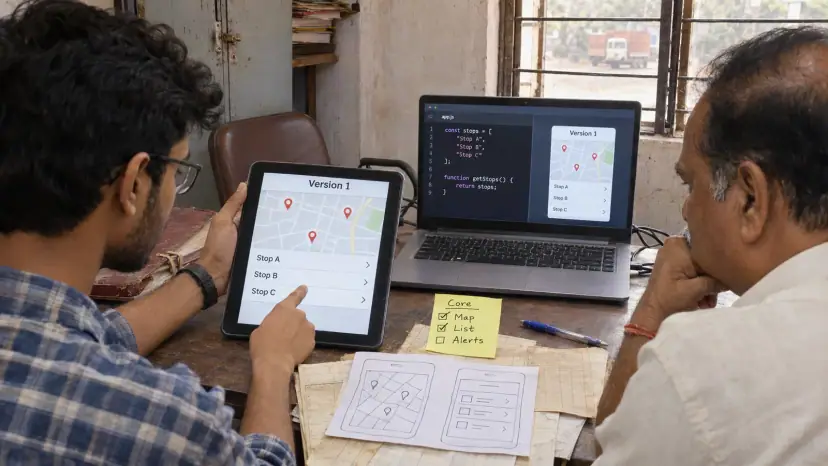
A minimum viable product (MVP) is the simplest version of your product that can be released to test the core idea with real users. Instead of building every feature, it focuses on the must-haves that solve one main problem for your target audience.
The idea comes from the Lean Startup method, which describes a build-measure-learn feedback loop: work out the problem to solve, build an MVP to start learning quickly, measure how customers respond, then decide whether to keep going or change direction. Think of the MVP as the skeleton of your idea: enough to show its value and test your assumptions, but not so complex that it drains your time and money.
An MVP is not the same as a proof of concept. A POC tests whether something can be built; an MVP tests whether people want it. If you are unsure which you need, our guide on POC vs MVP explains how to decide.

Why MVP Development in India Matters for Startups
India's startup base is large and still growing. The Ministry of Commerce said the government recognised more than 55 thousand startups in FY 2025-26, and that the total recognised under Startup India had crossed 2 lakh 23 thousand, as All India Radio News reported in April 2026. With that many new companies competing in fintech, edtech, SaaS and e-commerce, timing and focus matter.
- Faster validation: consumer preferences change quickly. An MVP lets you test assumptions in weeks rather than months and answer two key questions: do customers want this, and will they pay for it?
- Lower spending: by building only the most important features, you keep early costs down while budgets are tight.
- Less risk: many startups fail because they build products without checking demand. An MVP shows what works and what does not before you scale.
- Investor interest: investors usually prefer businesses that can show real users and early traction. A working MVP gives you evidence rather than a pitch alone.
- A diverse market: needs differ between cities and towns, and between regions and languages. Testing an MVP shows which segments respond, so you can adapt before you grow.
Key Benefits of an MVP
- Speed: launch your idea in weeks, not months.
- Affordability: keep upfront cost low while testing demand.
- Feedback loop: collect real-world insight directly from users.
- Market readiness: get in front of customers before competitors do.
- A base to grow on: build on validated feedback rather than guesses.
The MVP Development Process
- Identify the problem. What core problem does your startup solve, and for whom? Define your value proposition and target market clearly.
- Research and validate. Test your assumptions through surveys, interviews and competitor analysis. Understanding user pain points is the foundation of the whole process.
- Prioritise key features. Choose only the must-have features that solve the core problem. Leave everything else for later.
- Build a prototype. Create a wireframe or clickable prototype to show how the product will look and collect early feedback.
- Develop the MVP. Build the simplest working version, with attention to performance, usability and your core value.
- Launch quickly. Release it to real users in your target market so feedback arrives sooner.
- Collect feedback and analyse. Measure usage, engagement and comments to see what resonates and what needs work.
- Iterate or pivot. Refine the product, change direction, or scale up with confidence.
For the tools Indian founders use at each of these stages, see our post on how Indian startups use MVP tools.
Types of MVP You Can Build
An MVP does not always have to be software. Choose the simplest form that tests your riskiest assumption.
- Landing page MVP: a page that describes the product and asks people to sign up or pre-order. It tests interest before anything is built.
- Concierge MVP: you deliver the service by hand to a few customers. It tests whether the outcome is valuable before you automate it.
- Manual back-end MVP: customers use a simple front end while your team does the work behind it. It tests demand without complex systems.
- Single-feature MVP: one feature, built properly, that solves the core problem. This is what most people mean by an MVP.
- No-code MVP: built with no-code or low-code tools. It is quick to launch, though you may need to rebuild it as you grow.
Examples of MVPs From India
- Ola: began as an online cab-booking service connecting riders with drivers, which showed demand for organised cab booking before it grew into a much larger mobility business.
- Zomato: began as Foodiebay, a basic restaurant listing site where people could see menus and reviews. Food delivery and other services came later.
- Flipkart: started as an online bookstore with limited features. Other product categories came later.
These stories show that an MVP does not need to be fancy. It needs to solve a real problem well enough that people use it.
What Drives MVP Development Cost in India
There is no standard price for an MVP, because cost follows scope. The main drivers are:
- Number of features: each one adds design, development and testing time.
- Platforms: web, Android and iOS are separate builds unless you use a cross-platform approach.
- Integrations: payments, maps, messaging, banking or government systems add work.
- Design depth: a simple clean interface costs less than custom animation and branding.
- Data and AI features: models need data collection, cleaning and testing.
- Compliance and security: fintech and health products carry extra requirements from day one.
- Team model: in-house hires, freelancers and agencies price and manage work differently.
Our guide to MVP scope, cost and timeline for Indian startups works through these drivers in more detail.
Startup India Recognition and Your MVP
Many founders apply for DPIIT recognition under Startup India around the time they build an MVP. The Startup India portal sets out the eligibility rules. The startup should be a private limited company, partnership firm, LLP or cooperative society, with turnover of less than INR 200 crore in any of the previous financial years (INR 300 crore for DeepTech startups). An entity counts as a startup for up to 10 years from incorporation (20 years for DeepTech). It should also be working on innovation or improvement of products, services or processes. Check the portal for the current rules and the documents needed.
Choosing Who Builds Your MVP
You can build in-house, hire freelancers or work with a development firm. Whichever you choose, ask the same questions:
- Have they built products of a similar type, and can you see them working?
- Will they help you cut scope to the core problem, or do they push extra features?
- Who owns the code, design files and accounts? It should be your company.
- How often will you see working software? Ask for regular demos rather than long gaps.
- How will testing, bug fixes and support after launch be handled?
Common MVP Mistakes to Avoid
- Building too much: adding features "just in case" delays launch and blurs what you are testing.
- Skipping validation: writing code before talking to potential users.
- No success measure: decide before launch what result would tell you to continue, change or stop.
- Ignoring quality: minimum does not mean broken. A buggy MVP tests patience, not demand.
- Launching without a plan to reach users: an MVP nobody sees teaches nothing. Our post on growth marketing for startups in the MVP stage covers this.
Final Thoughts
For founders in India, a successful startup begins with testing the idea properly. An MVP is a fast, low-cost way to reduce risk, reach the market and learn from real users. Start with one clear problem, build only what tests it, measure what users do, and let the results decide your next step. Whether you are a first-time founder or a growing startup, that discipline matters more than the size of the first release.
Frequently Asked Questions
What is a minimum viable product (MVP)?
An MVP is the simplest version of your product that can be released to test the core idea with real users. It includes only the must-have features that solve one main problem for your target audience. You then use feedback and usage data to decide whether to improve it, change direction or scale.
Why does MVP development matter for startups in India?
Indian markets move fast and customer preferences change quickly, so an MVP lets startups test assumptions in weeks rather than months. It also keeps early spending low by focusing only on the most important features, which helps founders with limited budgets learn what works before investing more.
What are the first steps in building an MVP?
Start by identifying the core problem your startup solves and who has it. Then validate your assumptions through surveys, interviews and competitor analysis. After that, choose only the must-have features and create a wireframe or clickable prototype to collect early feedback before full development begins.
Which Indian companies started with an MVP?
Ola began as an online cab-booking service, Zomato began as a basic restaurant listing and review site called Foodiebay, and Flipkart began as an online bookstore with limited features. Each started small, proved that people wanted the service, and then grew into a much larger business over time.
What affects the cost of MVP development in India?
Cost depends on scope. The main drivers are the number of features, the platforms you need, integrations such as payments or banking, design depth, data and AI work, compliance requirements and the team model you choose. Keeping the MVP focused on one core problem is the surest way to control cost.
Want help with this?
Talk to our team about MVP development.
Read next
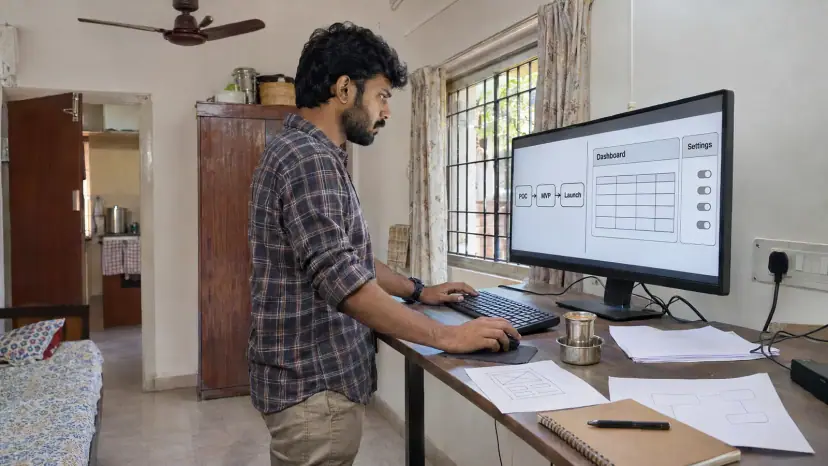
Cost-Effective MVP and POC Strategy for SaaS Startups
Prove feasibility with a POC, test demand with an MVP, and keep both small with MoSCoW, prototypes and cheap demand tests before a full build.
Read article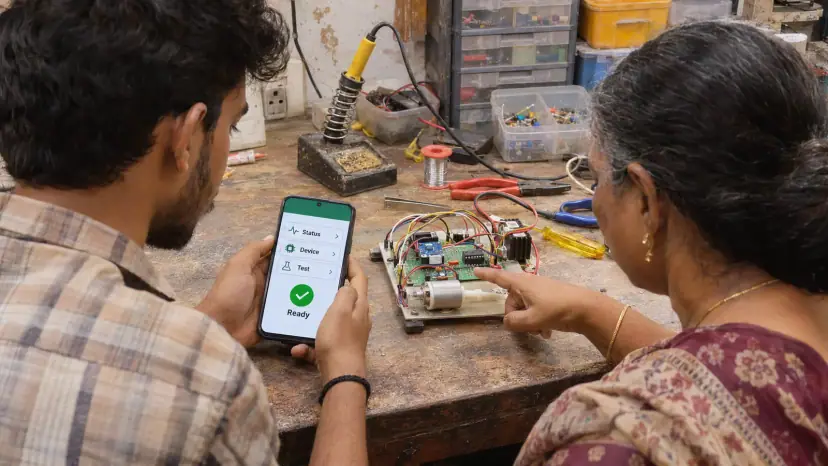
POC vs MVP: What’s the Right Approach for Your Startup?
A POC tests whether an idea can be built; an MVP tests whether customers want it. Start with whichever risk is bigger for you.
Read article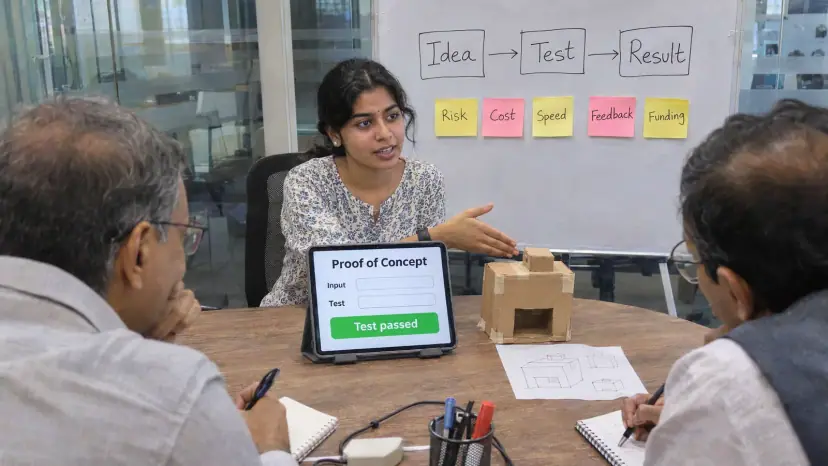
Top 5 Benefits of Building a POC for Your Startup Idea
A proof of concept shows your idea can work before you spend heavily: it cuts risk, wins investors, speeds up launch and focuses the team.
Read article
Comments
Be the first to share your thoughts on this article.