In this article
In today’s digital landscape, staying ahead in search engine rankings demands more than just keywords and backlinks. Artificial Intelligence (AI) is redefining how SEO strategies are planned, executed, and optimized. At Brainguru, we’ve been at the forefront of implementing AI-driven SEO solutions that deliver measurable results.
Nine Ways AI Is Changing SEO
1. Smarter Keyword Research
AI-powered tools analyze user intent, competitor strategies, and trending phrases in real-time. Platforms like SEMrush and SurferSEO use AI to:
• Suggest long-tail keywords
• Predict search volume trends
• Identify gaps in competitor content
This allows SEO professionals to go beyond surface-level optimization and align content with user behavior.
2. Content Optimization & Creation
With tools like ChatGPT and Jasper AI, content creation has become faster and more strategic. AI can:
• Suggest topic clusters based on user intent
• Identify readability issues
• Optimize headers, meta tags, and semantic structure
At Brainguru, we use AI-assisted writing tools to maintain SEO best practices while creating human-centered content.
3. Enhanced Search Intent Analysis
Modern SEO isn’t about stuffing keywords; it’s about understanding what the user really wants. AI helps decode:
• Navigational, informational, and transactional intent
• Related queries and voice search phrases
• Behavioral patterns from analytics data
This leads to more accurate content targeting and higher engagement.
4. Voice & Visual Search Optimization
With the rise of smart devices and image-based search (like Google Lens), AI is critical in:
• Structuring content for voice queries
• Optimizing images with ALT text and descriptive file names
• Leveraging AI to analyze visual search behavior
Future-ready SEO strategies must embrace these growing trends.
5. Predictive SEO & Rank Forecasting
AI uses historical data, algorithm patterns, and competitive analysis to predict:
• Which keywords are likely to perform
• How SERP features might change
• What type of content has ranking potential
This predictive insight helps in proactive SEO planning rather than reactive updates.
6. AI in Technical SEO Audits
Site crawlers like Screaming Frog and Sitebulb, used alongside AI tools, can:
• Detect broken links, slow-loading pages, and mobile issues
• Provide data-driven recommendations
• Prioritize fixes based on SEO impact
This streamlines the optimization process and improves website health quickly.
7. Hyper-Personalized User Experiences
AI enables real-time personalization by analyzing user location, behavior, and preferences. For example:
• Dynamic content based on device or region
• Tailored calls-to-action
• AI-powered chatbots integrated with SEO landing pages
Engaged visitors are more likely to stay, return and enquire, and AI can help keep them engaged.
8. Automated Reporting & Performance Tracking
AI tools provide smart dashboards that:
• Auto-generate performance insights
• Detect ranking fluctuations
• Recommend adjustments
This allows SEO teams to focus more on strategy and less on manual data handling.
9. Real-Time Algorithm Adaptation
Google updates its algorithm constantly. AI helps SEO professionals:
• Analyze the impact of updates instantly
• Adjust strategies dynamically
• Identify what’s working across different industries
At Brainguru, we use AI tools that keep pace with algorithm shifts to ensure continued visibility and performance.
AI Search Changes the Target, Not Just the Tools
Everything above is about using AI to do SEO. The bigger change is that AI now sits inside search itself. Google's AI Overviews and AI Mode, ChatGPT search and Perplexity answer many questions directly, citing a handful of sources instead of listing ten blue links. Visibility increasingly means being one of those cited sources.
Google has been clear that there are no special requirements or tricks for its AI features: a page has to be indexed and eligible for a snippet, and the usual fundamentals decide the rest. What helps in practice:
- Specific, verifiable answers near the top of the page, written in plain language.
- A clear identity: who you are, what you offer and where, stated consistently across your site and listings.
- Original information such as first-hand experience, worked examples and data you own, which generic AI-written pages cannot copy.
- Structured data that matches the visible content, never markup describing things the page does not show.
Our generative engine optimization services focus on this shift, and our article on Google AI Overviews in India covers what it means for local businesses.
What Google Says About AI-Generated Content
Google's position, published in 2023 and reinforced since, is that it cares about quality, not about how content was produced. Helpful, original content that shows experience and expertise can rank whether or not AI helped write it. What breaks its spam policies is using automation mainly to manipulate rankings. In 2024 Google added a scaled content abuse policy aimed at publishing large numbers of low-value pages, whether the pages come from AI, from people or from both. The practical line is simple: AI can help you produce content, but it cannot be the reason the content exists.
A Practical AI-Assisted SEO Workflow
- Research with AI, confirm with data. Use AI tools to explore topics and questions, then check real demand and current rankings in Google Search Console.
- Write the brief yourself. Define the audience, the question the page must answer, the angle and the sources to use.
- Draft with AI. Let the tool produce a first version from the brief.
- Edit as an expert. Add first-hand examples, check every fact and figure, and cut generic filler that could appear on any website.
- Optimize the page. Title, headings, internal links and structured data that reflect what the page really contains.
- Publish, measure and refine. Watch impressions, clicks and the queries the page attracts, and improve it on a schedule.
For where automation fits and where it should stop, compare manual SEO and AI SEO automation, or see our AI SEO automation service.
Where AI Goes Wrong in SEO
- Invented facts. AI tools confidently produce statistics, quotes and sources that do not exist. Anything unverified should not be published.
- Near-duplicate pages at scale. Dozens of pages that differ only by a city or keyword are exactly what the scaled content abuse policy describes.
- Content without experience. Pages that summarize what is already on the web give search engines and AI answers no reason to cite you.
- Automated link building. Generated outreach and link schemes break Google's spam policies just as manual ones do.
- Publishing without review. Every page should have a person accountable for whether it is accurate.
- Careless data handling. Pasting customer or confidential business data into public AI tools creates privacy and compliance risks.
Frequently Asked Questions
Does Google penalize AI-generated content?
Not for being AI-generated. Google's published guidance is that it rewards helpful, reliable content however it is produced, and that using automation mainly to manipulate rankings breaks its spam policies. Its scaled content abuse policy targets mass-produced pages that add little value, whether they were made by AI, by people or by both.
How can a business appear in Google's AI Overviews?
Google says there are no additional requirements or special optimizations for AI Overviews or AI Mode: a page has to be indexed and eligible to show a snippet in Search. From there, the same fundamentals apply (clear, specific answers, well-organized pages, accurate information about your business and content that reflects real experience).
Will AI replace SEO professionals?
AI replaces a lot of repetitive SEO work, such as first drafts, reporting and routine audits. It does not replace strategy, technical diagnosis, judgment about what to publish or accountability for whether content is true. The SEO role is shifting toward directing AI tools and verifying their output.
Which SEO tasks should be automated first?
Start with tasks that are repetitive and easy to check: performance reporting, ranking and traffic anomaly alerts, crawl audits, keyword grouping and first drafts of meta descriptions. Keep strategy, final content, link decisions and anything customers will read under human review.
Final Thoughts
AI is not replacing SEO; it’s elevating it. From strategy to execution, AI empowers businesses to be faster, smarter, and more targeted in their SEO efforts. At Brainguru, we leverage AI-driven insights to help brands dominate their digital presence with cutting-edge SEO solutions.
Ready to transform your SEO with AI?
Get in touch with Brainguru for tailored strategies that deliver results.
Also Read
- Generative Engine Optimization GEO Services in India
- How Businesses Can Prepare for AI-Driven Search Results
- AI Automation Services in India
Related Services
Related Articles
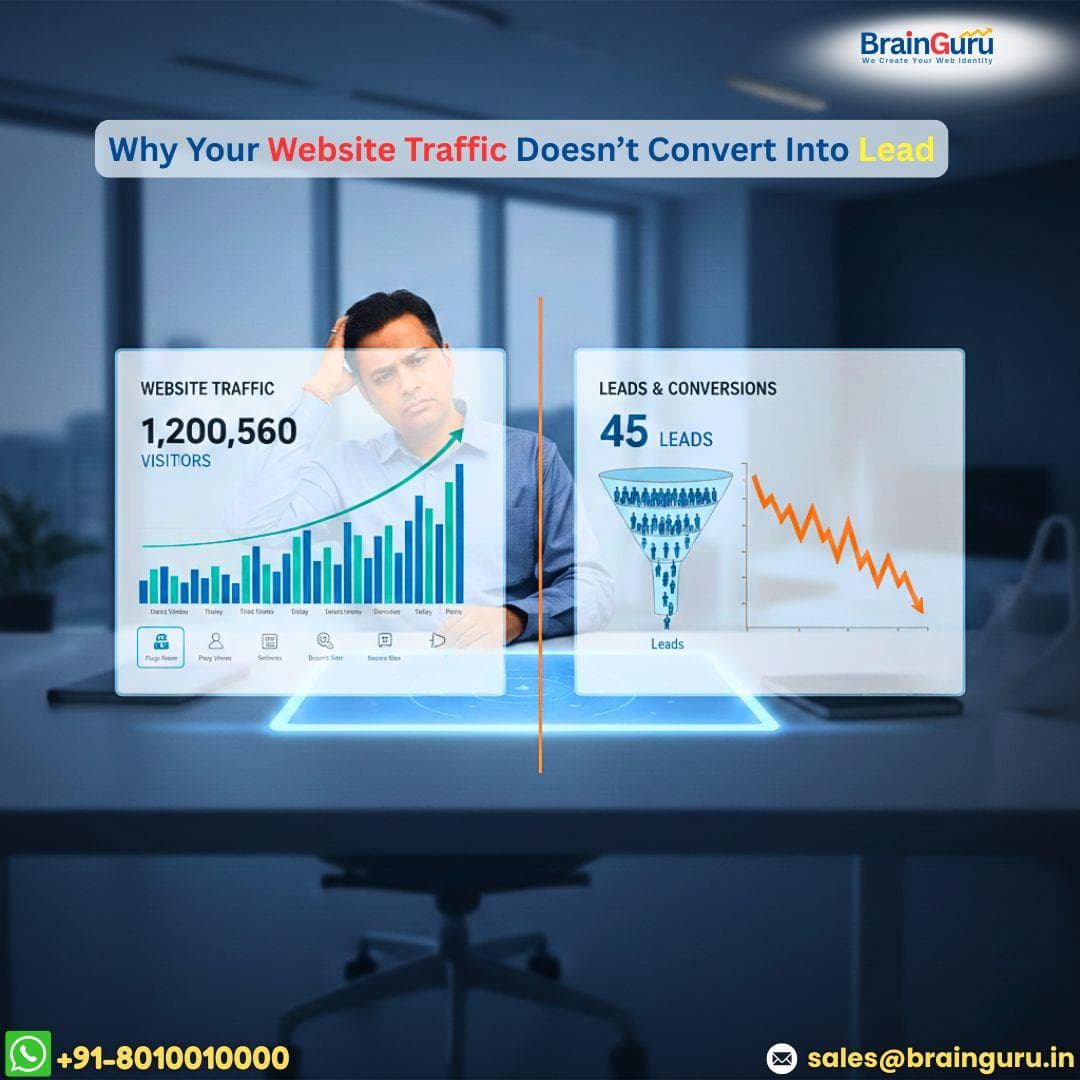
Why Your Website Traffic Doesn't Convert into Leads (and How to Fix It)
Why Your Website Traffic Doesn’t Convert Into Leads in India (And How to Fix It) You open your Google Analytics dashboard. Traffic is growing. Visitors are…
Read More
Top 5 SEO Mistakes Indian Businesses Still Make in 2025 - and How to Fix Them
The digital landscape in India is changing faster than ever. With growing internet penetration, rising competition across industries, and a huge shift toward…
Read More
SEO Strategies for Indian Businesses in 2026
SEO Strategies for Indian Businesses in 2026: Stay Ahead in Digital Marketing Digital marketing in India is evolving at a rapid pace. With over 850 million…
Read More
Comments
Be the first to share your thoughts on this article.