Proving product claims and measuring repeat purchase for Delhi D2C brands
This guide is for D2C teams selling into Delhi who must prove what they say about a product and measure whether customers truly buy again. It covers what to collect, which local source to check, what an assistant can do and where a person must approve the next step. Every workflow here is a planning example, and none is a reported Brainguru client result. Any D2C service is scoped around your brand, your data and your permissions.
Delhi addresses are not NCR addresses
Delhi and the wider NCR are separate scopes, and Noida and Gurugram fall under other state administrations, so never mix their addresses with Delhi ones. The Revenue Department’s district resources show which office goes with a real Delhi address.
Begin with the Delhi Revenue Department. It gives you administrative context and nothing more: it does not show market demand, commercial availability or support for any private brand. On each D2C record, note the Delhi district and locality, and give NCR locations their own entries. Next, check that location against your approved business record. When the two disagree, a reviewer settles it before any page or assistant offers directions, coverage details or an appointment instruction.
Building the enquiry brief for a Delhi D2C product
A national offer with Delhi typed beside it tells a shopper very little, so work from the fields below as a brief. Each statement should point back to its source and its reviewer. Log any missing detail and pass it to a person so the model never guesses.
- Product and variant: Name the exact item and variant, plus the Delhi district and locality it concerns, listing NCR locations separately. Go by the real operating address, not the audience your ads target.
- Approved benefit/ingredient evidence: Note which benefit or ingredient claim is approved for this product, how far it goes and which reference is current.
- Delivery and return limits: Write down what the brand can promise on delivery and returns here, so an answer can be checked. Anything unconfirmed stays open for review.
- Customer preference/permission: Record what the customer has agreed to hear about, with the current version of that evidence. A photograph or a city name does not count as permission.
- Support or replenishment enquiry: Log whether the customer wants help or a refill and what is needed to act, setting aside unsupported or misrouted requests.
- Brand/fulfilment reviewer: Name who in brand or fulfilment confirms the answer or action before anyone offers the next step.
Before anyone suggests a commercial or professional next step, a sample Delhi request has to clear both the location check and the benefit or ingredient evidence check. If either fails, the handoff marks it unresolved, giving the receiving team a specific question instead of a lead that only looks qualified.
Where AI helps and where your D2C team stays in charge
Start each enquiry by matching the claimed benefit to the actual product and to the question this buyer is allowed to ask. AI can sort catalogue discovery, prepare copy for review and flag support requests that are still open. Count acquisition, first paid order, fulfilled order and repeat purchase as four separate things. Replenishment reminders must follow what the customer has asked for: one past order does not justify an endless run of promotions.
Connect only what the business has authorised, meaning an approved knowledge pack, the relevant operational system and, if needed, a CRM or intake route. Note the source version behind each ingredient answer. Test access permissions and editing rights before live customer data goes in. Drafts, predictions and extracted fields help the reviewer, but none of them commits the brand commercially on its own.
Walk one claim through. A product page says a moisturiser is gentle on sensitive skin. The brand manager asks for the evidence behind that sentence: a test report, an ingredient list or nothing. If there is a report, it goes into the evidence file with its date and the product version it covered, and the assistant may answer questions about the claim using only that file. If there is nothing, the sentence is removed or reworded until there is. A shopper who asks whether it suits their skin type is told what the file supports and is offered the support team for anything more.
What D2C copy must not claim
Never make up health benefits, sustainability credentials, celebrity endorsements or review counts. Fake countdowns and unexplained subscription sign-ups are out. Judge repeat purchase after cancellations and returns, and never count an ad click as loyalty.
Hindi and English, local search and the numbers to watch
Where the audience needs Hindi and English, competent speakers should check terminology, locality names and the proposed next step. Assess these languages with the brand; they are not a claim that every Delhi customer uses them or that we provide every translation. Keep the real address and one contact route consistent across the page and business records, and do not set up extra offices or profiles to look more local.
Keep two locations apart: where the Delhi audience is and where the requested service is fulfilled. Product pages and enquiry routing should describe the approved serviceable area and no more. Measure each stage on its own: product enquiry, delivery or product check, paid order, fulfilled order and permitted repeat purchase. Rejected, cancelled and unsupported requests stay in the evaluation, because a click or a chat is not revenue.
Run four test cases: a changed formulation, a negative fit question, a cancelled subscription and a customer who declines further promotions. Set the reviewed outcomes against the brand’s own baseline before spending more. Where search queries show mismatched intent, improve the product answer or the handoff. We do not guarantee D2C rankings, AI-answer placement, lead volume or return on investment.
In the first weeks, check which claims draw the most questions that the evidence file cannot answer. Those are the claims to fix or drop first, and the plan should change if the strongest selling line turns out to be the least supported.
Keep the evidence file next to the copy, not in a shared folder nobody opens. When a pack is reformulated or the supplier changes, the old report no longer covers the new product, and whoever edits the copy should see that straight away.
Where to go from here
The D2C Brands solutions page sets out the industry scope, and GA4 Setup for Indian eCommerce (2026): Step-by-Step Configuration, Ecommerce Events + Consent Mode V2 gives implementation detail. That article describes a related workflow and is not evidence of any Delhi client engagement.
Related planning tasks in Delhi sit under E-Commerce and Logistics & Supply Chain. The Delhi and other city guides let you compare supported information and official references.
When you come for a free consultation, bring the actual product and variant, your approved benefit or ingredient evidence, approved source material and the reviewer who decides the next step. We work from our Noida office, and we do not claim a Delhi branch. On-site work, integrations and scope are agreed separately for each brand.
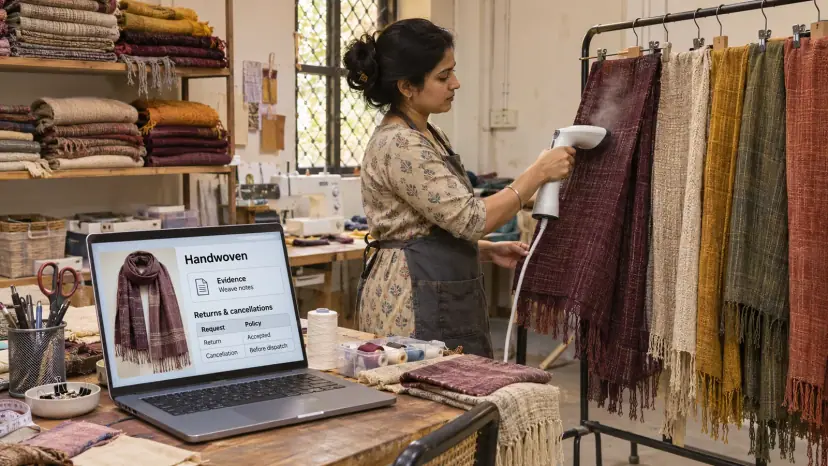
Local and sector resources were last checked on 5 October 2026, so recheck current instructions before changing a campaign. The photographs illustrate the topic and are not verified images of local offices, shoppers or facilities.