In this article
- What the Google and ASI heritage project taught marketers
- What is a 360-degree virtual tour?
- Why 360-degree imagery matters for your business
- Which businesses benefit most from virtual tours
- How to create a 360-degree virtual tour
- How virtual tours fit into a wider digital strategy
- Related Services
- Frequently Asked Questions
Google Street View and 360-degree virtual tours have quietly become one of the most powerful ways for Indian businesses to let customers explore a place before they ever visit. What began as a way to map roads and, in a landmark collaboration, to bring India's national monuments online, has grown into a practical marketing tool that any showroom, hotel, clinic, restaurant or campus can use today. In this guide you'll learn what 360-degree imagery is, why it matters for visibility and trust, and how to put immersive virtual tours to work for your brand.
A 360-degree virtual tour is an interactive, panoramic experience that lets viewers look in every direction and "walk through" a real location from their phone or computer, the same technology that powers Google Street View and Google Maps imagery.
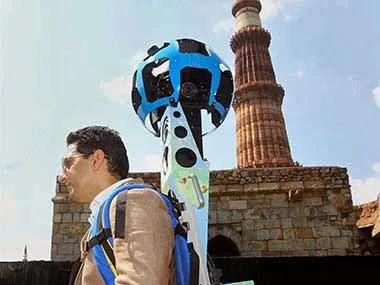
Editor's note: This article grew out of a 2014 announcement, when Google India and the Archaeological Survey of India (ASI) published 360-degree Street View imagery of Indian heritage monuments such as the Taj Mahal, Red Fort, Humayun's Tomb and Qutub Minar. That project showed how immersive imagery could bring a place to a global audience; below we focus on the durable, evergreen lesson for businesses rather than the specifics of that launch.
What the Google and ASI heritage project taught marketers
When Google India and the ASI put 360-degree views of Indian monuments online, they proved a simple point: people will explore a place in detail if you make it easy and immersive. A visitor in another country could "stand" inside Fatehpur Sikri or look up at the Qutub Minar without leaving home. That same instinct, the desire to see before you go, is exactly what drives customers when they research a business online.
The evergreen takeaway is that immersive, high-quality imagery builds trust and curiosity. For a business, the "monument" is your storefront, office, factory floor, restaurant interior or hotel lobby, and the audience is every potential customer searching for you on Google.
What is a 360-degree virtual tour?
A 360-degree virtual tour stitches together panoramic photos so the viewer can pan, zoom and move between viewpoints, creating the feeling of being physically present. You have almost certainly used the consumer version of this through Street View in Google Maps.
For businesses, the same technology appears in two main forms:
- Google-hosted imagery that shows up directly in your Google Business Profile and on Google Maps, helping people preview your premises.
- Website-embedded virtual tours that live on your own site, giving visitors a richer, branded walk-through experience.
Why 360-degree imagery matters for your business
Immersive imagery is not a gimmick; it directly supports discovery, trust and conversion. Here is why it earns its place in a modern marketing plan.
It builds trust before the first visit
Customers are more comfortable choosing a business they can actually see inside. A clean, welcoming interior, modern equipment or a spacious showroom does a lot of persuading on its own, and a virtual tour lets that work happen before anyone walks in or picks up the phone.
It strengthens your local search presence
Rich media on your Google Business Profile helps your listing stand out in local results and Google Maps. Pairing imagery with a well-optimised profile is a core part of any local SEO strategy, and it works hand in hand with broader SEO services that improve how you rank for the searches that matter.
It keeps visitors engaged on your website
An interactive tour gives people a reason to stay and explore, which is good for engagement signals and for your brand. If your site already attracts visitors but few of them act, immersive content is one way to add interest, though it works best alongside clear messaging and strong calls to action, a theme we cover in why website traffic doesn't convert into leads.
It supports voice and AI-driven discovery
As more people search by voice and through AI answer engines, complete, media-rich business information becomes easier for these systems to surface. A thorough profile with photos and tours complements the work described in voice search optimization and preparing for AI-driven search.
Which businesses benefit most from virtual tours
Almost any business with a physical space can use 360-degree imagery, but the impact is strongest where the environment is part of the decision.
- Hotels, resorts and banquet halls where guests want to picture the experience.
- Restaurants and cafes showing off ambience and seating.
- Retail showrooms and dealerships letting buyers browse the floor.
- Clinics, hospitals and salons reassuring people about cleanliness and comfort.
- Gyms, co-working spaces and schools where facilities are a major selling point.
- Real estate and property developers showcasing layouts and amenities.
How to create a 360-degree virtual tour
You do not need a film crew to get started. The practical path looks like this.
- Plan the route. Decide which spaces best represent your business and the order a visitor should "walk" through them.
- Capture quality panoramas. Use a 360-degree camera or a professional photographer; lighting and tidiness matter as much as the gear.
- Publish to Google. Add the imagery to your Google Business Profile so it appears on Maps and in your listing.
- Embed on your website. Place the tour on a relevant page so it supports your own conversion goals.
- Keep it current. Refresh imagery after renovations or rebranding so customers always see the real, present-day space.
Because a virtual tour usually lives on your website, it pays to have a fast, mobile-friendly site to host it. If your pages feel dated, a refresh through professional web development and thoughtful UI/UX design will make the experience shine, and our take on why your brand needs a modern, mobile-friendly website explains the foundations.
How virtual tours fit into a wider digital strategy
Immersive imagery is one piece of a larger picture. It performs best when it sits inside a coherent plan that covers search, social media and content. A 360-degree tour gives people something memorable to share, which complements your social media optimization efforts, and it gives your overall digital marketing a richer, more credible story to tell.
| Aspect | Standard business photos | 360-degree virtual tour |
|---|---|---|
| Viewer experience | Static, fixed angle | Interactive, explore freely |
| Sense of space | Limited | Strong, true to scale |
| Trust impact | Moderate | High, shows the real place |
| Effort to produce | Low | Moderate |
| Best use | Quick highlights | Walk-throughs of premises |
Related Services
- Local SEO Services
- Travel Solutions for Seamless Journeys AI & Tech
- Expert SEO Services Rank Higher & Grow Online
- Digital Marketing Solutions | GEO, SEO, SMM Company In India
- Entertainment Solutions AI & Digital Innovation
- YouTube Marketing Services | Boost Engagement
Frequently Asked Questions
What is a 360-degree virtual tour?
It is an interactive, panoramic experience that lets viewers look in every direction and move through a real location online. It uses the same technology that powers Google Street View and the imagery you see in Google Maps.
How does a virtual tour help my business get found online?
Adding 360-degree imagery to your Google Business Profile makes your listing richer and more engaging, which helps it stand out in local search and Google Maps. It works best as part of a broader local SEO and digital marketing plan.
What kinds of businesses should use 360-degree imagery?
Any business where the physical space influences the decision benefits most, such as hotels, restaurants, showrooms, clinics, gyms, schools and real estate. If customers care about what your premises look like, a tour helps.
Do I need special equipment to create a virtual tour?
You need a 360-degree camera or a professional photographer who has one. Good lighting and a tidy, well-presented space matter just as much as the camera itself.
Where should the virtual tour appear?
Publish it to your Google Business Profile so it shows on Maps and in your listing, and embed it on a relevant page of your own website so it supports your conversion goals.
Is a 360-degree tour worth it for a small business?
Yes. Even a single well-made tour can build trust and set you apart from competitors who only show a few flat photos. The key is to keep it current and pair it with clear contact details and calls to action.
If you want to bring your business to life online with immersive imagery, stronger local visibility and a website that converts, the team at Brainguru Technologies can help you plan and execute the whole strategy. Call us at +91-8010010000 or get in touch for a free consultation.
Related Articles
Visual Search Optimization: Pinterest & Google Images Guide
Visual search optimization helps your products surface on Pinterest, Google Images and Google Lens. Learn how image discovery works and how to optimise for it.
Read More
Celebrate Independence with Digital Freedom
Independence Day Offer 2025 - Flat 25% OFF on All Brainguru Technologies Services! Every year on 15th August , we commemorate India’s Independence Day, a…
Read More
Building a Website for Your Small Business: A Practical Guide
A website for small businesses is now essential. Learn what a modern site needs, how it works with your Google Business Profile, and how to build one that wins leads.
Read More
Comments
Be the first to share your thoughts on this article.