In this article
- Why QA Can No Longer Be an Afterthought
- The Real Gap: Two Teams, One Goal, Different Timelines
- How to Bridge the Gap Between QA and Development
- Types of Testing Every Web Application Needs
- Modern Practices That Make Collaboration Real
- How Smaller Companies Can Compete on Quality
- Related Services
- Frequently Asked Questions

Web application development succeeds or fails on one thing that teams still get wrong: how closely quality assurance (QA) works with the developers building the product. When testing is treated as a final checkpoint instead of a shared responsibility, business-critical web applications ship with defects that surface in front of customers, partners, and employees. This article explains how to bridge the gap between QA and development so that the web applications your organization depends on stay reliable, fast, and secure.
In simple terms, web application development is the process of designing, building, testing, and maintaining software that runs in a browser and is delivered over the internet rather than installed on a device. Today these applications are not optional add-ons; they are the front door to your business, which is exactly why quality can no longer be an afterthought.
Editor's note: this post was originally published in 2013 and argued that QA should be united with development earlier in the project. That argument has only grown more relevant. The guidance below has been modernized to reflect current practice such as DevOps, continuous integration, and automated testing.
Why QA Can No Longer Be an Afterthought
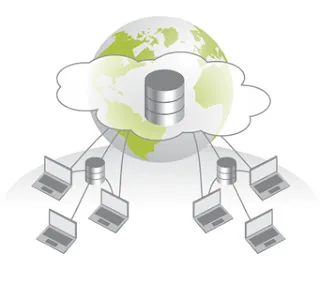
Successful organizations rely on web applications as everyday points of contact with customers, partners, and employees, and as a way to reduce internal costs. A web application is at work when a customer submits a response form, when a salesperson files a purchase order from a mobile device, or when a finance team approves an invoice in a browser. These are revenue-bearing, reputation-bearing moments.
In the past, QA was sometimes squeezed for time and budget. That trade-off no longer makes sense. A web application that goes down, loads slowly, or displays incorrect data does measurable damage to trust and to the bottom line. The question is no longer whether to test thoroughly before going live, but how early and how systematically testing is built into the development cycle.
The Real Gap: Two Teams, One Goal, Different Timelines
The classic friction is structural. Developers are measured on shipping features; QA is measured on catching defects. When QA only sees the product near the end, problems that were cheap to fix during planning become expensive to fix at release. The web administrator who must keep the application running, and the QA professional who must vouch for its quality, are both set up to fail when testing is bolted on at the end.
The original challenge still stands: QA professionals are far better positioned to help when functional and load testing methods are introduced earlier, not after the code is "done." Closing the gap means treating quality as a property the whole team owns from day one.
Signs the Gap Is Hurting You
- Bugs are routinely discovered in the last week before launch.
- QA receives requirements that are vague, late, or untestable.
- Load and performance testing happen only after functional testing passes, if at all.
- Releases slip because "it works on the developer's machine" but not in production.
- The same categories of defects reappear release after release.
How to Bridge the Gap Between QA and Development
Bridging the gap is less about tools and more about timing and shared ownership. The practices below move quality upstream, where defects are cheapest to prevent.
1. Involve QA in the Planning Stage
Bring QA into requirements and design reviews before a line of code is written. When testers help define acceptance criteria, ambiguous requirements become clear, testable specifications. This is the single highest-leverage change most teams can make.
2. Shift Testing Left
"Shift left" means starting testing early and running it continuously rather than saving it for the end. Unit tests written alongside features, integration tests in the build, and exploratory testing each sprint catch issues while context is still fresh.
3. Automate the Repetitive, Reserve Humans for Judgment
Automated regression and smoke tests free your QA team from re-checking the same paths by hand, so their attention goes to usability, edge cases, and risk-based exploratory testing where human judgment matters most.
4. Make Quality Everyone's Metric
When developers and testers share goals (release stability, defect-escape rate, time-to-fix), the adversarial dynamic fades. Quality becomes a team outcome, not a department's burden.
Types of Testing Every Web Application Needs
"Testing" is not one activity. A robust web application is validated across several dimensions before and after it goes live.
| Test type | What it checks | Why it matters |
|---|---|---|
| Functional testing | Features behave as specified | Confirms the app does what users expect |
| Load & performance testing | Behavior under real and peak traffic | Prevents slowdowns and crashes at scale |
| Security testing | Vulnerabilities and data exposure | Protects customer data and reputation |
| Compatibility testing | Browsers, devices, screen sizes | Ensures a consistent cross-device experience |
| Usability testing | Ease of completing real tasks | Reduces drop-off and support load |
| Regression testing | Old features still work after changes | Stops new code from breaking existing flows |
Functional and load testing deserve special emphasis. A web application can pass every feature test and still buckle when hundreds of users hit it at once. Performance and security testing should be planned from the start, not discovered as gaps after launch. For data-handling applications, pair this with a proper cyber security audit for your website and app so vulnerabilities are caught before attackers find them.
Modern Practices That Make Collaboration Real
The 2013 wish for QA to be "more closely united with development" is now standard practice under names like DevOps and CI/CD. The principles are durable even as the tooling evolves.
Continuous Integration and Continuous Delivery (CI/CD)
Code is merged frequently and automatically built and tested. Defects surface within minutes of being introduced, while the developer still remembers the change, not weeks later during a release crunch.
Test Environments That Mirror Production
Many "works on my machine" failures come from environments that differ from production. Staging environments that closely match live infrastructure remove a whole class of late surprises.
Clear, Shared Documentation
Test plans, acceptance criteria, and bug reports written in shared language keep developers and testers aligned. Good documentation is also what lets a new team member contribute quickly. If you need help producing it, our content writers in India can support technical and product documentation.
How Smaller Companies Can Compete on Quality
One of the original questions was how small- and mid-size companies can prepare their web applications to compete with larger organizations. The encouraging answer is that quality is no longer gated by big budgets. Open-source testing frameworks, cloud-based load testing, and managed CI/CD pipelines put enterprise-grade discipline within reach of lean teams.
For SMEs in Delhi NCR, Noida, and across India, the practical path is to start small and stay consistent: write tests for your most critical user journeys first, automate them, and expand coverage over time. Partnering with an experienced team can accelerate this. Explore our web app development and broader application development services, and if you are building for mobile, our mobile app development team applies the same quality-first approach. A reliable application is also the foundation for everything downstream, including why website traffic doesn't always convert into leads when the experience is buggy or slow.
Related Services
- Custom Web Application Development in India
- Web App Development Services Brainguru Technologies
- QA & Testing Services Ensure Software Quality
- Quality Engineering Solutions Software Excellence
- Automation Testing Services Brainguru Technologies
- Functional Testing Services
Frequently Asked Questions
What is web application development?
Web application development is the process of designing, building, testing, and maintaining software that runs in a web browser and is delivered over the internet. It covers everything from the user interface to the server logic, databases, and the testing that keeps the application reliable.
Why is QA important in web application development?
Web applications are business-critical points of contact with customers, partners, and employees. QA ensures the application does not crash, slow down, or display incorrect data, protecting both revenue and reputation. Skipping or rushing QA usually costs far more later than doing it well from the start.
How can teams bridge the gap between QA and development?
Involve QA in the planning and requirements stage, shift testing earlier in the cycle ("shift left"), automate repetitive regression tests, and make release quality a shared metric for both teams. The goal is for quality to be owned by everyone, not handed off at the end.
What types of testing does a web application need?
At minimum, plan for functional, load and performance, security, compatibility, usability, and regression testing. Functional and load testing are especially important because an application can work correctly yet still fail under real-world traffic.
Can small businesses afford proper web application testing?
Yes. Open-source testing frameworks, cloud-based load testing, and managed CI/CD pipelines make disciplined testing affordable for small and mid-size companies. Starting with automated tests for your most critical user journeys delivers strong returns without a large budget.
What is shift-left testing?
Shift-left testing means starting testing activities early in the development cycle and running them continuously, rather than treating testing as a final phase. Finding defects sooner makes them cheaper and faster to fix.
Ready to build a web application your customers can rely on? Brainguru Technologies helps Indian businesses design, develop, and rigorously test web and mobile applications that hold up under real-world demand. Call us at +91-8010010000 or get in touch with our team to discuss your project.
Related Articles

Big Boost for Mobile Banking by RBI
RBI Clears 11 Entities to Set Up Payments Banks If you've read recent leading dailies, you must have seen most of their front page coverage about payments…
Read More
QA and Software Testing in India (2026): What to Test and What to Automate
How to build a testing approach that catches real defects - what belongs in automation, what does not, how to decide coverage, and why test suites so often become a maintenance burden.
Read More
Cloud-Based HRMS for Indian Businesses (2026): Payroll, Compliance and What to Look For
What a cloud HRMS should cover for an Indian business - statutory payroll, attendance, leave and onboarding - plus how to evaluate platforms and when a custom build makes sense.
Read More
Comments
Be the first to share your thoughts on this article.