In this article
- Key takeaways
- Why Campus Placement Matters for IT and Digital Companies
- How a Well-Structured Campus Drive Works
- What Employers Look For in Fresh Graduates
- How Students Can Prepare for a Campus Placement
- What Happens After an Offer
- Why Local Institute Partnerships Pay Off
- From First Job to a Long-Term Tech Career
- Conclusion
- Frequently Asked Questions
A campus placement is the hiring process in which a company visits a college to test, interview and recruit final-year students or recent graduates. This guide explains how a placement drive at an IT or digital company usually runs, what recruiters look for in freshers, how students can prepare, and why steady ties with institutes help both sides.
Editor's note: this article was first published in 2012 as a short campus placement notice. It was rewritten in 2026 as a general guide to campus recruitment and early IT careers. The names of candidates in the original notice have been removed for privacy.
Why Campus Placement Matters for IT and Digital Companies
For a technology company, people are the biggest input into the quality of its work. Whether the job is a website, a mobile app or a long-running marketing campaign, the result depends on people who learn quickly and grow with the business. Hiring from campus lets a company shape that talent early, before habits set and while energy is high.
For students, a campus drive is often the first structured look at how a company hires. It brings the employer to the student, gives a clear set of stages to prepare for, and allows a comparison of several employers in one season.
Recruiting from campus also has practical advantages for employers in technology hubs such as Noida, Ghaziabad and the wider Delhi NCR region:
- A fresh, motivated talent pool drawn from engineering, computer applications and management programmes.
- Less hiring friction, because students are assessed in groups through one organised process.
- Early fit with the team, since trainees learn the company's standards and tools from the start of their careers.
- Stronger institute relationships that, year after year, become a dependable route to new hires.

How a Well-Structured Campus Drive Works
A serious campus drive is not one interview. It is a series of filters that test both knowledge and applied skill. Most drives at IT and digital firms move through four stages.
Pre-Placement Coordination
The company and the institute's placement cell agree on eligibility rules, the roles on offer and the schedule. Many companies also give a short pre-placement talk about the work, the training and what a first year looks like. Clear communication here means the right students turn up and expectations are realistic on both sides.
Written and Aptitude Tests
Most drives begin with a written or online test covering aptitude, logical reasoning and core technical basics. This stage rewards students who understand the basics rather than those who have memorised answers, and it lets the hiring team shortlist fairly from a large group.
Practical and Technical Assessment
Good employers do not stop at theory. They test practical knowledge by asking candidates to reason through a real problem, write or read code, or explain how they would handle a live task. A careful hiring team reviews this round closely, because a hasty decision here leads to mismatches later.
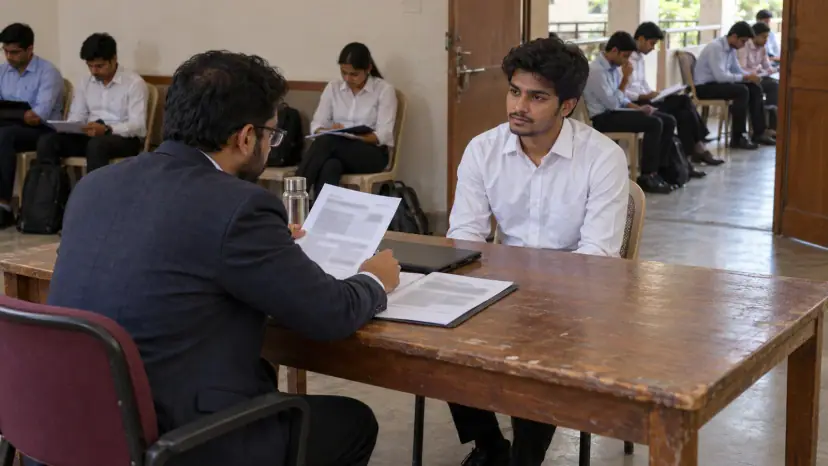
Personal Interview
The final interview looks at communication, attitude to problems and willingness to learn. For early-career roles, attitude and the ability to be trained often matter as much as current skill, because the tools change quickly and the best hires keep up.
What Employers Look For in Fresh Graduates
Students often assume only marks matter. In practice, hiring teams at IT and digital firms weigh a wider set of signals. The table below compares what candidates often stress with what recruiters tend to value more.
| What candidates stress | What recruiters value more |
|---|---|
| Academic percentage alone | Clear basics plus the ability to apply them |
| Long lists of technologies | Real depth in one or two relevant areas |
| Memorised definitions | Reasoning through an unfamiliar problem |
| Generic resumes | A small project they can explain in detail |
| Confidence in theory | Curiosity and a habit of learning on their own |
Core Skills Worth Building Early
Whether a graduate aims for a development role or a digital marketing role, a few abilities help in almost every drive:
- Strong basics in programming logic, databases and how the web works, for technical roles.
- Communication and writing, which matter in engineering and marketing teams alike.
- A working idea of how websites earn visibility, including the basics of search engine optimisation and how campaigns are measured.
- Comfort with new tools, including the AI assistants now common in coding, content and marketing work.
How Students Can Prepare for a Campus Placement
Preparation is the biggest factor a candidate controls. These steps help in a competitive drive:
- Master the basics of your core subject instead of skimming many topics.
- Build one or two real projects you can show and discuss in depth, and know every decision you made in them.
- Practise aptitude and reasoning regularly, since most drives start there.
- Prepare to explain your thinking, not just your answers, because interviewers test how you reason.
- Research the company so you know whether it builds websites, makes apps or runs marketing campaigns, and shape your answers to that work.
Common Mistakes to Avoid
- Listing tools on a resume that you cannot use when asked.
- Copying a project from a tutorial without being able to explain or change it.
- Arriving without knowing what the company does or what the role involves.
- Giving up on a problem in the technical round instead of talking through an approach.
- Ignoring the written test because the interview feels more important.
Students drawn to the marketing side of technology can start with our guide to starting an SEO career as a fresher, and read about the benefits of internet marketing to see the kind of work entry-level hires support.
What Happens After an Offer
An offer letter is the start of a process, not the end. Read it carefully. Check the role, the joining date, the location, the training period and any bond or service agreement. Ask the placement cell or HR team about anything that is unclear before you sign, and keep copies of every document you receive.
The first months are usually a training period. Freshers learn the company's tools, coding or writing standards and review process, often under a mentor. Treat it as part of the job: ask questions, take notes and finish small tasks well before asking for bigger ones.
Students who do not get an offer on campus still have routes into the industry. Graduates can look for apprenticeships on the government's National Apprenticeship Training Scheme portal, run under the Ministry of Education, where the government pays its share of the stipend through direct benefit transfer. Off-campus drives, internships and well-documented personal projects also lead to first jobs.
Why Local Institute Partnerships Pay Off
Campus drives work best as a relationship, not a one-off event. When a company returns to the same institutes year after year, faculty learn what it needs and guide students accordingly, and students see a local employer worth preparing for. For firms in Noida and Delhi NCR, these ties become a steady source of new talent for development, design and marketing teams.
Employers can strengthen the relationship in simple ways: share feedback with the placement cell after each drive, explain which skills candidates lacked, and offer guest talks or short projects during the year. Institutes can help by sharing accurate student data, keeping schedules and letting companies see the syllabus. Our article on hiring trends in the AI and startup space looks at the skills employers are asking for now.
From First Job to a Long-Term Tech Career
A campus placement is a starting point, not a finishing line. The graduates who do well keep learning after they join and pick up new skills as the industry changes. Today that includes understanding how search itself is changing, such as the rise of AI-driven search visibility. Early-career staff who stay curious tend to grow into the specialists and team leads companies need most.
Conclusion
A campus placement works when both sides prepare. Companies should run a clear, staged drive that tests basics, practical skill and attitude, and return to the same institutes year after year. Students should master their core subject, build a project they can explain, practise aptitude and research each employer. An offer is the start of the work, and the habit of learning matters long after joining.
Frequently Asked Questions
What is a campus placement?
A campus placement is a hiring process in which a company visits a college to assess and recruit final-year students or recent graduates directly. It usually combines a written or aptitude test, a practical or technical round and a personal interview, and it is arranged with the institute's placement cell.
What do IT companies look for in fresh graduates?
Beyond marks, IT companies look for clear basics, the ability to apply them to real problems, good communication and a willingness to keep learning. For entry-level roles, attitude and the ability to be trained often matter as much as current skill, along with one or two projects the candidate can explain.
How can a student prepare for a campus drive?
Master the basics of your core subject, build one or two real projects you can explain, practise aptitude and reasoning regularly, and research the company before the interview. Being able to explain how you reached an answer is worth more than memorised answers, especially in the technical round.
Why do companies in Delhi NCR and Noida recruit from local institutes?
Local campus hiring gives technology companies access to a fresh, motivated group of graduates, a simpler group assessment process and lasting ties with institutes. When a company returns each year, faculty learn what it needs and prepare students for it, which makes the route more dependable over time.
Do digital marketing roles also hire freshers through campus drives?
Yes. Digital marketing teams hire freshers for SEO, content, social media and paid campaign roles. A basic understanding of how websites earn visibility, good writing and some practice with analytics or ad tools give candidates a clear advantage, even when their degree is not in marketing.
Want help with this?
Talk to our team about startup solutions.
Read next

Hiring Trends in the AI and Startup Space: A Founder's Guide
Startups now hire for narrow AI skills, test people through internships and paid tasks, and use fractional roles. Ten shifts and the mistakes to avoid.
Read article
India Digital Economy: A Guide for Indian Businesses
The 2017 $1 trillion goal was a target, not a size. The government's 2025 estimate, the sectors that lead, and the steps that let a business grow with it.
Read article
Digital Skilling in India: Building an Employable Workforce
Skills only pay off when employers can find them. How government schemes, online profiles, small-business training and light apps fit together.
Read article
Comments
Be the first to share your thoughts on this article.