Nagpur startups: promote only the pilot you can show working
Prospective customers need to know what they can test today, and an early-stage Nagpur product team has to say so plainly. Talking broadly about AI capabilities will not help a buyer tell a functioning prototype from a proposed feature. This guide concentrates on pilot readiness and evidence, particularly for founders preparing business demonstrations alongside local ecosystem discussions. We support product pages, measurement and enquiry workflows from Noida.
InFED as an independent ecosystem resource
InFED offers an incubation and community resource associated with IIM Nagpur, and its About InFED page gives institutional background. To confirm eligibility and application instructions, rely on the current programme information and organisation contacts and not on an old prospectus.
Founders can use these resources to prepare questions about incubation. An enquiry page must not suggest admission, investment or institute endorsement, though. The commercial pilot brief should stand apart from any ecosystem application, and a university or programme logo stays out of promotional material unless permission has been given. We do not claim an InFED partnership or the ability to obtain a grant.
Keep the roles in a small team clear. In a small early team one founder may sell, build and answer support. That is workable, but write down who does each of these jobs in a pilot: who talks to the buyer, who checks the technical fit, who holds the demonstration data, and who signs off a statement before it appears on the page. When one person does all four, a claim can reach the page without anyone having tested it. If there are two founders, split the roles so that the person who writes a claim is not the only person who approves it.
Draw the line around the demonstration
Write down the user role, the task, the demonstration data permitted and what the prototype supports today. If a pilot involves a business workflow, name the customer owner who can approve access and evaluate the result. Prepare synthetic or authorised demonstration material; a prospective customer's private files should not go into an unapproved model service.
On the page, make clear which screenshots show a working feature and which are design mockups. Tell trial users what they can do, which integrations are simulated and how to report a problem. One completed demonstration does not make a proof of concept production-ready, so avoid saying it does. Security, reliability and operational support each need their own evaluation.
Take a worked example, for planning only. A retailer in the city says it would like to test demand forecasting on three months of its own sales sheet. In the first call, the founder records the task and the sheet, then sends a one-page scope that lists what the prototype does today and what it does not. The retailer's owner confirms in writing that the sheet may be used. The pilot runs on that sheet only. At the review, the founder and the retailer's owner look at where the forecasts matched the sheet and where they did not, and record three possible outcomes: continue, change the scope, or stop. The founder keeps the review notes, because they are the only evidence the pilot produced.
From interest to a reviewed pilot request
Here is an illustrative handoff. A buyer describes a document-processing problem, and the assistant records the document type, intended output and review owner, then flags permission and integration questions for the founder. It should make no promise about an accuracy threshold, a fixed delivery date or access to the buyer's systems. Whether the requested pilot fits the current product is for a technical reviewer to decide.
A mentor conversation, an investor enquiry and a customer pilot are different things. Give each its own response path and its own success metric. Let contacts choose the purpose of follow-up, and do not turn a programme mailing list into an advertising audience without a suitable basis and permission.
A frequent mistake is to report mailing list sign-ups and event conversations as pilot interest. It happens because a number looks encouraging. Interest in an incubation programme, interest in a product and a signed pilot are different things, so count them in separate columns. Language also matters in Nagpur conversations. Buyers may talk in Marathi or Hindi and read English documents, so keep one list of terms for the product's features, used the same way in every language, and ask a competent speaker to review it before it is used on the page.
Checks before a pilot page or assistant goes live
Settle these points in writing first. Is every screenshot labelled as a working feature or a mockup? Is the demonstration data synthetic or approved by its owner, and who approved it? Does the form that collects enquiries say what the details will be used for, in line with the DPDP Act 2023? Has someone with legal knowledge read the pilot terms before a buyer sees them, including who owns the results and what happens to shared data when the pilot ends? Keep a simple pilot log with the dates, the approvals and the owner for each.
Nothing here needs a large team. It needs one person who is allowed to say no. If that person is also the founder who wrote the claim, ask an adviser or mentor to review the high-risk pages, such as anything that mentions accuracy, security or savings.
What to watch in the first weeks
Read the pilot requests before counting them. Ask whether each one names a task you can test, a buyer who can approve data access and a date for a review. If most do not, the page is attracting curiosity and not pilots, and the first change is a clearer description of what the prototype does now. If scoped pilots keep stalling at data permission, the problem is the buyer's process, and you may need a lighter version of the pilot that uses synthetic data first. If pilots finish but the buyer does not continue, listen to the review notes before changing the product page. They tell you whether the gap is the product, the scope or the buyer's priorities.
Check the evidence before widening reach
Note whether the pilot request fits the intended task, whether a responsible buyer takes part and whether the agreed task gets completed. Collect failure examples and missing prerequisites along with the positive screenshots. A small pilot can shape a product change, but it cannot support a general performance claim for all customers.
For implementation, see proof-of-concept development, startup AI growth and technical readiness. To a free consultation, bring the prototype, approved demo data and pilot boundaries. We review scope case by case and promise no Nagpur branch, incubation admission or customer outcome.
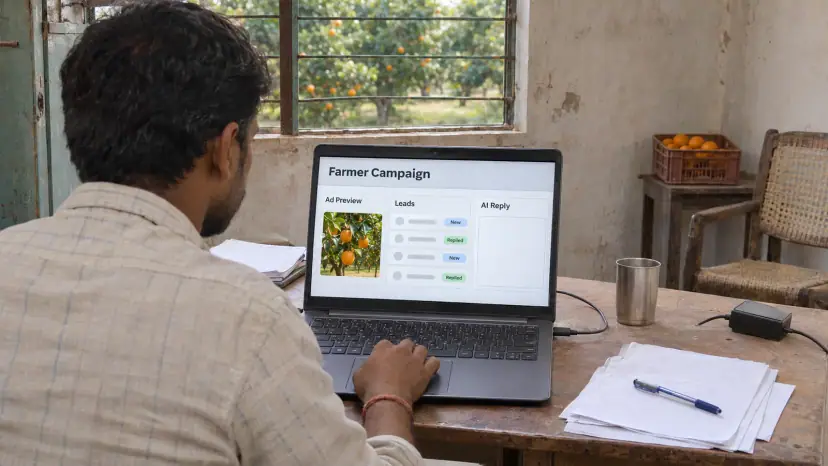
Local resources were checked on 5 October 2026. Recheck source instructions before using them in a campaign, and review local links quarterly. Photography is illustrative and is no evidence of a local office or client.
When a pilot ends, write a one-page summary for the buyer and keep a longer note for yourselves. The buyer's page should say what task was tested, on whose data, over what period, what worked, what did not and what was agreed next. Your own note should add the failures, the manual steps a founder had to do behind the scenes, and the questions the buyer asked that you could not answer. Those manual steps are the part most likely to be forgotten, and they decide whether the product can run for a second customer without a founder in the room.