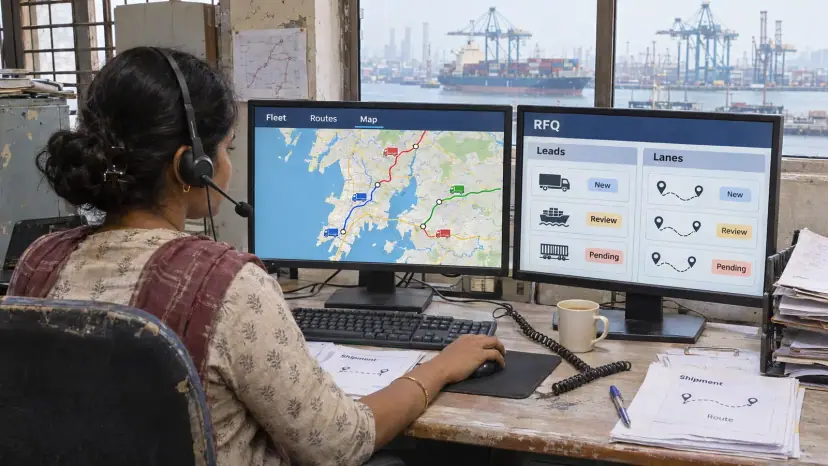
RFQs by lane and operations-approved serviceability for Mumbai logistics teams
"Mumbai" could mean many different pickup points, and a quote built on the wrong one wastes everybody’s time. Logistics and Supply Chain teams serving the city can use this guide to handle lane-specific RFQs and have serviceability reviewed by operations. It describes the information to gather, the local source to consult, the part an assistant can play and where a person approves the next step. Everything is a planning example and not a reported Brainguru client result. Each service is scoped from your actual business, data and permissions.
Which Mumbai? City district, suburb or metropolitan region
A separate district administration runs Mumbai City. The district portal should not be used as a directory for each location marketed as Mumbai Metropolitan Region. Confirm the actual suburb or district first, then attach any civic contact or property record to a Mumbai campaign.
Begin your checks at Mumbai City district. The source supports local administrative context, and it does not establish market demand, commercial availability or endorsement of a private carrier. Record whether the address sits in Mumbai City, the suburbs or the wider metropolitan area, then match it with the approved business record. If they conflict, a reviewer must fix that before the page or assistant gives directions, coverage information or an appointment instruction.
Six fields in a Mumbai lane enquiry brief
Your page should not just print the city beside an unrelated national offer. Collect these fields as a working brief, and make sure each statement has a source and a reviewer. A missing value gets recorded and goes to a person, so the model cannot fill it by assumption.
- Actual pickup and delivery locations: Say exactly where cargo starts and ends, marking the address as Mumbai City, suburban or wider metropolitan from the operating record.
- Cargo type, quantity and handling needs: Set out the goods, the volume and the handling they need, as a quote without them is only a guess.
- Requested lane/service mode: Write down which lane and mode were asked for; if something is unclear, leave it as a review question.
- Verified operating capability and constraints: Store current proof of what can be handled and what cannot, because a truck photo or a city name proves neither.
- RFQ versus shipment-status enquiry: Separate a request to quote from a question about an existing shipment, and note what each needs next.
- Operations/quotation reviewer: Assign the person in operations or quotations who signs off the answer before a next step goes out.
Our sample Mumbai request is only illustrative, yet the rule holds: location and cargo type, quantity and handling needs must both be checked before a commercial or professional next step is put forward. Anything failing a check moves on unresolved. The receiving team has a clear query to answer and no false lead to waste time on.
How the assistant supports the quotation desk
A city landing page does not show that every route, hazardous cargo type or storage requirement is supported. So logistics marketing should start from the actual pickup and delivery locations, cargo and service requirements. AI can extract RFQ fields and flag gaps in handling information, while operations confirms the lane and capacity. Treat an indicative enquiry, an accepted quote, a booking and a completed shipment as four separate things.
Give access only to authorised sources and systems: an approved knowledge pack, the relevant operational system and an intake route or CRM when required. Keep a log tying each answer to its source version. Permissions and revision rights should be tested before any live customer data appears. Drafts, predictions and extracted fields help the reviewer and make no automatic commercial commitment to a shipper.
Walk through one enquiry for planning. A shipper writes asking for a price on pallets of packaged goods from a pickup in Mumbai to a distant city, and gives a total weight but no pallet count. The assistant does not quote. It lists what is missing: the number of pallets, the packing, the pickup site type (factory gate, warehouse or yard) and the delivery address. It asks the shipper for them in one message. Once the fields are in, the quotation reviewer checks the lane and capacity and replies with a price or a decline. If the shipper writes again about the booking he made last week, the message goes to the status desk and not into the quote queue.
What Mumbai freight pages cannot state without proof
Transit times, customs approvals, temperature-control capability and carrier partnerships must not be made up. Freight estimates must state their assumptions and go through the responsible quotation process. Tracking information should come from an authorised operational source and never from a status guessed during a marketing conversation.
A common mistake is a page that says the carrier covers everything from Mumbai. The word covers hides a lot: some cargo types, some delivery points, some days. Replace it with a short list of lanes and cargo types that operations has approved, with a date, and let the assistant say outside the list that operations will have to check.
Marathi, Hindi and English, search and booking stages
When the audience needs Marathi, Hindi and English, competent speakers review terminology, locality names and the proposed next step. Decide on these options with the business, as they imply neither that each customer uses them nor that we supply every translation. Carry the actual address and a consistent contact route on the page and in the business records. Fake offices or profiles have no place in local search.
Mark the Mumbai audience separately from the place where a job gets fulfilled. Write pages and route enquiries according to the approved serviceable area. Each of these stages is tracked independently: lane enquiry → cargo/serviceability review → quote → accepted booking → operational completion. Hold rejected, cancelled and unsupported requests in the evaluation, because neither clicks nor conversations are revenue.
Put an unsupported lane, an incomplete cargo declaration, a temperature requirement and a status enquiry mistaken for a sales lead through the workflow. Compare results after review with the business’s own baseline, and do so before you increase spend. When search queries show mismatched intent, change the answer or handoff involved. Mumbai carriers should not look to us for a guarantee of ranking, AI-answer inclusion, leads or return on investment.
Next for Mumbai logistics teams
Find the scope of our logistics work in Logistics & Supply Chain solutions. Demand Forecasting for Indian Distributors: Data Requirements and Pilot Evaluation gives implementation detail for a related workflow, though it says nothing about a Mumbai client engagement.
Planning tasks for Manufacturing and E-Commerce are also available in this city. Check Mumbai and other city guides if you would like to compare information and official references.
Plan to bring the actual pickup and delivery locations, the cargo type, quantity and handling needs, approved source material and your deciding reviewer to a free consultation. Our Noida office handles delivery, and there is no Mumbai branch that we claim. Conversations about scope, integrations and on-site work depend on each case.
We looked over local and sector resources on 5 October 2026. Current instructions should be rechecked ahead of campaign changes. Photographs act as topic illustrations and are not verified pictures of offices, customers or facilities in the city.