In this article
- Why Demographics Should Drive Your Social Media Strategy
- How Audiences Differ Across the Major Platforms
- Matching Age Groups to Platforms and Content
- Building a Demographic-Led Social Media Plan
- Social Media Advertising: Targeting the Right People
- How AI Is Reshaping Social Media Targeting
- Related Services
- Frequently Asked Questions
- Put Your Audience at the Centre of Your Strategy
Understanding social media demographics is the single most useful skill for any business that wants its marketing budget to actually reach buyers instead of disappearing into the feed. Different age groups gravitate toward different platforms, behave differently once they are there, and respond to different kinds of content and advertising. In this guide you will learn how to read the demographic make-up of the major social networks, how to map your audience to the right platform, and how to build a social strategy that holds up year after year rather than chasing the platform of the moment.
Editor's note: this article was first published in 2015 as a forecast of social-media user trends for 2016. The original platform-by-platform predictions are now historical, so the piece has been rewritten into an evergreen framework for understanding social media audiences. The specific figures from the original forecast have been removed; the durable principle (match your strategy to where your audience actually is) remains.
Social media demographics are the measurable characteristics (age, life stage, location, device habits and content preferences) of the people who use a given social platform. Knowing them lets you choose channels, craft messages and place ads where the people most likely to buy from you already spend their attention.
Why Demographics Should Drive Your Social Media Strategy
Most businesses pick social platforms by habit or hearsay: a competitor is on one network, a founder personally enjoys another, so that is where the budget goes. This is backwards. The right question is not "which platform is popular?" but "where does my audience spend its time, and in what frame of mind?"
When you start from the audience, three things improve at once. Your content fits the platform's native style, so engagement rises. Your ad spend reaches relevant people, so cost per result falls. And your message lands when the audience is receptive, so more attention converts into enquiries and sales. A demographic-led approach is the foundation of every campaign our team builds, whether it is organic social media optimization or paid promotion.
How Audiences Differ Across the Major Platforms
No two networks attract the same crowd or reward the same behaviour. Rather than memorise numbers that change every year, learn the durable character of each platform so you can re-check current data before each campaign.
Facebook remains the broadest mass-market network, with strong reach across older and middle age groups and a mature, sophisticated advertising platform. It is well suited to local awareness, community building, event promotion and detailed audience targeting. If your customers are families, homeowners, professionals over 35 or local consumers, Facebook usually belongs in your mix. Our Facebook marketing services are built around this kind of precise, intent-aware targeting.
Instagram and Visual-First Networks
Instagram and similar visual platforms skew younger and reward strong imagery, short video and aspirational, lifestyle-led storytelling. They work well for retail, food, fashion, travel, beauty, interiors and any brand with a visual product. Discovery-driven feeds also make these networks powerful for reaching new audiences who do not yet follow you.
X (formerly Twitter)
Fast-moving, text-led and conversation-driven, X suits real-time updates, customer service, thought leadership and reaching younger, news-aware professionals. It rewards timely, opinionated content and active participation more than polished campaigns.
Pinterest behaves more like a visual search engine than a social feed. Users arrive with intent (planning a wedding, a renovation, a recipe, a purchase), which makes it valuable for home, craft, fashion, food and DIY brands targeting planners and decision-makers.
LinkedIn and Professional Networks
For B2B, recruitment and high-consideration services, professional networks reach decision-makers in a business mindset. Content that educates, demonstrates expertise or shares industry insight performs far better here than overtly promotional posts.
Matching Age Groups to Platforms and Content
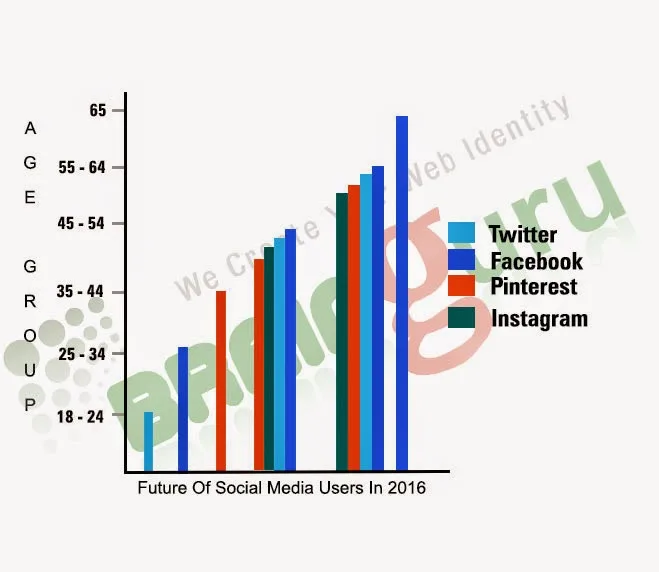
Age and life stage strongly shape platform choice and content appetite. The exact share of each platform shifts every year, so treat the table below as a directional planning tool and verify with current platform data before you commit budget.
| Audience | Tends to favour | Content that works |
|---|---|---|
| 18–24 | Visual and short-video platforms, fast-moving feeds | Trends, short video, authentic and entertaining content |
| 25–34 | Broad-reach networks plus visual platforms | Lifestyle, product discovery, reviews, community |
| 35–44 | Mass-market networks and intent-led visual search | Practical how-to, planning, family and home themes |
| 45–54 | Mass-market networks, moderate spread across others | Clear value, trust signals, local and service content |
| 55+ | Mass-market networks, especially established communities | Straightforward messaging, news, community groups |
The pattern that endures: younger audiences adopt newer, more specialised and more visual platforms first, while broader mass-market networks retain the widest cross-generational reach. Use this to decide where to invest, not as a rule set in stone.
Building a Demographic-Led Social Media Plan
Turning audience knowledge into results follows a repeatable sequence. These steps apply no matter which platforms dominate in a given year.
- Define your customer. Write down age range, location, life stage, what they want and what would stop them buying. Use your existing customer data, not assumptions.
- Check current platform demographics. Before each campaign, confirm where that audience actually is today using up-to-date platform and industry data.
- Choose two or three platforms. Depth beats spread. It is better to be excellent on a couple of well-chosen networks than mediocre everywhere.
- Match content to the platform. Adapt format and tone to each network's native style instead of cross-posting identical content.
- Layer in paid promotion. Use each platform's targeting to put your best content in front of look-alike and intent-rich audiences.
- Measure, then reallocate. Track engagement, leads and cost per result, and move budget toward what works.
This is the same framework behind a well-run digital marketing programme, and it sits naturally alongside search. For the bigger picture, our social media marketing guide for Indian businesses walks through campaign planning in detail, while the social media strategy for local businesses guide is ideal if your customers are nearby.
Social Media Advertising: Targeting the Right People
The real power of modern social platforms is targeted advertising. You can reach people by age, location, interests and behaviour, and run geo-targeted local campaigns that are especially valuable for retail, dining, hospitality and other location-based businesses. The principle is timeless even as the tools evolve: relevance is what makes social advertising cost-effective.
Two practices keep your spend efficient. First, start narrow and expand: a tightly defined audience teaches the platform who converts before you scale. Second, give each platform content in its native format, because an ad that looks like it belongs gets cheaper attention. If you are weighing channels, our comparison of Google Ads versus Meta Ads explains where each tends to win.
How AI Is Reshaping Social Media Targeting
Platforms increasingly use machine learning to decide who sees what, which means clear creative and well-structured audiences now matter more than manual micro-targeting. AI also helps marketers plan content, test variations and read performance faster. To use these tools well rather than blindly, see our overview of AI tools for performance marketing and the broader shift covered in how AI is transforming digital strategies. The constant remains the same: know your audience first, and let the tools amplify a sound plan.
Related Services
- Social Media Optimization (SMO) Services India
- AI for Social Media Marketing & Content
- Facebook Marketing Services Maximize Engagement & Growth
- Best AI Social Media Tools 2026
- Hire Dedicated SMO Expert in India
- YouTube Marketing Services | Boost Engagement
Frequently Asked Questions
Why do social media demographics matter for my business?
Demographics tell you which platforms your likely customers actually use and how they behave there. Targeting the right people on the right network lowers your cost per result and raises the share of attention that turns into enquiries and sales.
Which social media platform is best for my business?
There is no single best platform; the best one is wherever your specific audience spends its time. Define your customer first, then choose the two or three networks that match their age, interests and intent rather than spreading effort everywhere.
How many social media platforms should a business be on?
For most businesses, two or three well-chosen platforms outperform a presence on every network. Concentrating effort lets you publish consistently and tailor content to each platform's native style, which is what drives engagement.
Do younger and older audiences use different platforms?
Generally yes. Younger audiences tend to adopt newer, more visual and short-video platforms first, while broad mass-market networks retain the widest reach across all age groups. Always confirm with current data before planning a campaign.
How often should I review my social media audience data?
Platform demographics shift every year, so review current data before each major campaign and at least once a year for your overall strategy. This keeps your channel mix aligned with where your audience has actually moved.
Can social media advertising target people by age and location?
Yes. The major platforms let you target by age, location, interests and behaviour, and support geo-targeted local campaigns. This precision is what makes social advertising cost-effective for both local and national businesses.
Put Your Audience at the Centre of Your Strategy
Platforms rise and fall, but the discipline of starting from your audience never goes out of date. Decide who you want to reach, confirm where they are today, and build content and advertising around them. If you would like expert help turning audience insight into a results-driven social plan, talk to the Brainguru Technologies team on our contact page or call +91-8010010000.
Related Articles
Social Media Can Make or Break Your Brand's Reputation
Online reputation management lives on social media. Learn how sentiment spreads, how a reputation crisis unfolds, and how to build lasting brand trust.
Read More
Social Media Power: How It Shapes Public Opinion
Social media power shapes public opinion faster than traditional media. Learn how persuasion works on social platforms and how to use it ethically for your brand.
Read More
LinkedIn Marketing for B2B Indian SaaS in 2026: The Founder-Led Playbook + ABM Stack
The 2026 LinkedIn playbook for B2B Indian SaaS founders: founder-led content, ABM with Sales Navigator, LinkedIn Ads, AI-assisted content ops. With benchmarks and case study (60% of pipeline).
Read More
Comments
Be the first to share your thoughts on this article.