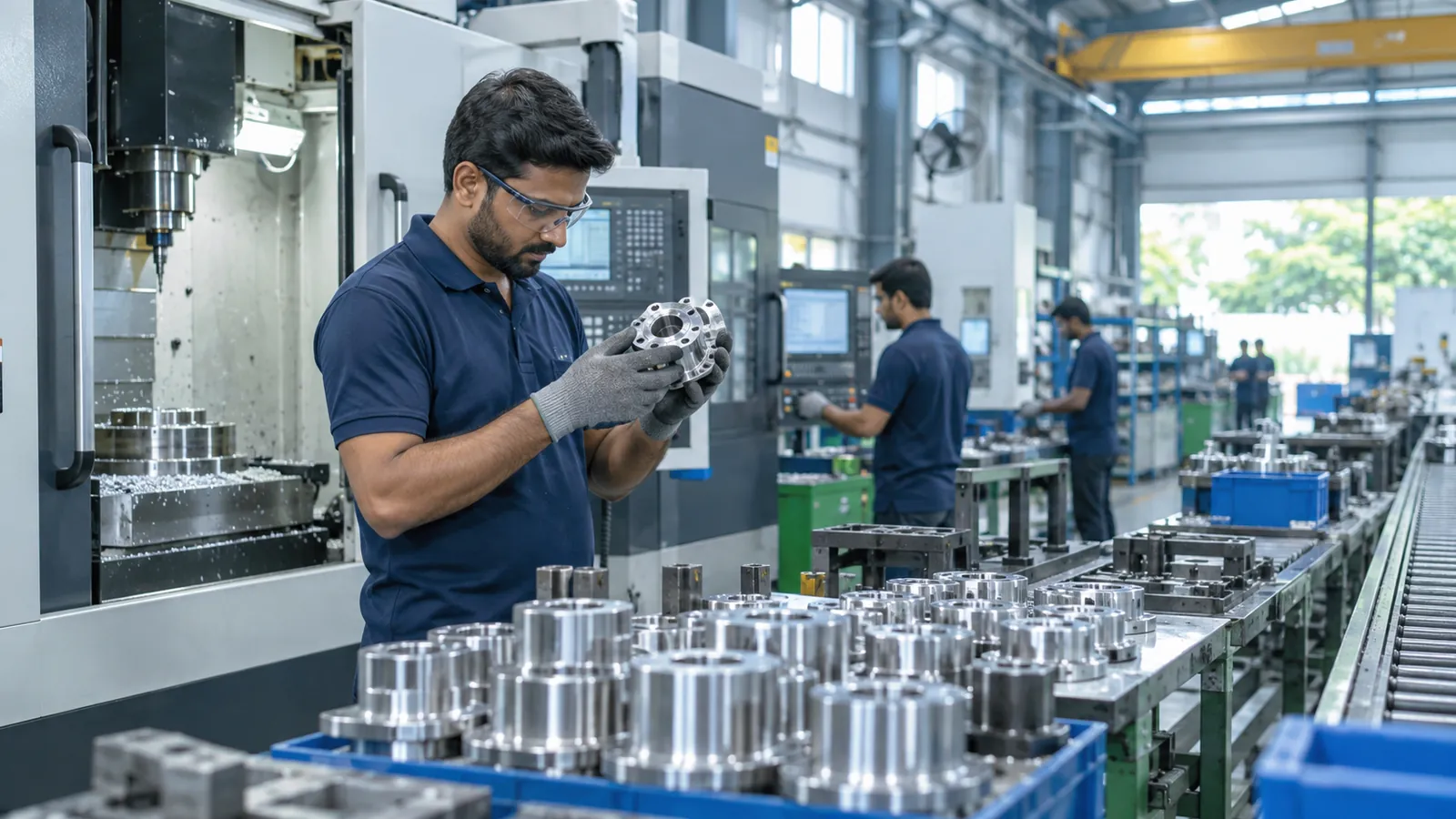
Manufacturing marketing grounded in Ahmedabad's industrial context
A campaign for an Ahmedabad manufacturer should explain the actual production capability and the information needed to quote. A general city landing page cannot distinguish a custom component enquiry from an equipment purchase, a distributor request or a job application. Those distinctions matter more than the number of enquiries a campaign produces.
Verified industrial-estate references
The Gujarat Industrial Development Corporation's estate list groups Naroda, Vatva and Sanand under Ahmedabad. That provides a verifiable geographic reference for a manufacturing brief. It does not establish which industries are present at every site, make those businesses Brainguru clients or imply a partnership with GIDC. No plot prices, estate counts or local market-size estimates are used here.
Confirm the plant address, service area and transport constraints supplied by the manufacturer. If a capability is provided from an estate in the Ahmedabad region, explain that operational fact accurately. Do not create separate estate pages that repeat the same offer unless the operation or information really changes.
Organise content by capability and buying requirement
A procurement team needs to know what the manufacturer can produce. Use an approved capability sheet to describe the material, process, application and constraints. Add tolerances, production capacity, certifications or testing information only when the manufacturer provides evidence and approves publication. AI can help organise the specification; it should not fill missing technical facts with plausible numbers.
Separate capabilities that lead to different buying decisions. For example, a buyer seeking a custom machined component needs a different enquiry route from a buyer requesting a standard stocked product. These are planning examples rather than claims about a particular Ahmedabad client's work. The relevant page should make the difference clear without forcing the buyer through a generic contact form.
Make an RFQ useful to the sales team
- Capture the requested product or process and the intended application.
- Ask for quantity, delivery destination and the buyer's required schedule.
- Provide an approved secure route for drawings or specifications where needed.
- Identify the staff member who checks technical feasibility and follows up missing details.
- Record whether the enquiry becomes a quotation, a qualified opportunity or an order.
Do not request confidential drawings through an uncontrolled advertising workflow. A company name and location can help route an enquiry, but they do not establish creditworthiness or purchase intent. Technical staff should approve capability matches and commercial staff should approve the final quotation.
Use regional context without confusing it with demand
Industrial-estate names can help a prospect understand a plant's location and delivery context. They should not replace an explanation of the product. Use the manufacturer's verified customer profile to define which buying organisations and applications fit. Avoid assuming that every business in Naroda, Vatva or Sanand is part of the same buyer segment.
For an account-based campaign, the planning input is a relevant organisation list that the business can justify using, together with an approved contact process. For search campaigns, prioritise technical problem and capability queries. Compare campaign spend with quoteable RFQs and orders, and keep recruitment and supplier solicitations out of the sales-lead total.
Start with evidence the business already owns
Bring approved capability sheets, the plant and fulfilment information, the existing RFQ process and an anonymised description of how enquiries progress. Keep your own data as the baseline instead of borrowing an unsourced city benchmark. The manufacturing AI marketing guide covers the broader workflow. Brainguru's office is in Noida; we can discuss Ahmedabad requirements remotely without implying a local branch. Request a free consultation to agree a scope.