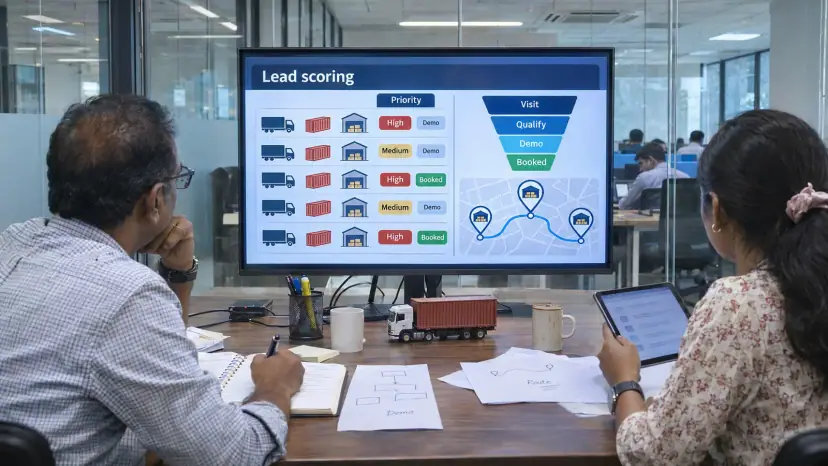
Gurugram RFQs by lane, with serviceability confirmed by operations
Shippers ask if you can move a given load on a given lane, and the honest answer comes from your operations desk. Logistics and Supply Chain teams serving Gurugram can use this guide to capture RFQs properly and get them reviewed. It shows the information to collect, the local source to use, what an assistant can do and where a person approves. Read these workflows as planning examples, not reported Brainguru client results. Scope follows your real business, data and permissions.
One set of premises, whether records say Gurugram or Gurgaon
Gurugram is the official district name, while older business records may use Gurgaon. Tie both to the same documented premises, because duplicate customer or branch records cause confusion. Keep the actual locality when you refer to a Gurugram district resource.
Use Gurugram district as your source of administrative context. It tells you nothing about freight demand or commercial availability, and it does not endorse a private carrier. Enter the Gurugram locality and the Gurgaon variant, then match the location to the approved business record. When the two disagree, a reviewer fixes it before the page or assistant gives directions, coverage details or an appointment instruction.
The RFQ brief your Gurugram desk should see
Use these fields, not a city name set beside an unrelated national offer. Every statement about a lane or load needs a source and a reviewer. A blank goes on the record and on to a person, as the model should not assume what the cargo or lane is.
- Actual pickup and delivery locations: Record the true pickup and delivery points, with the Gurugram locality and Gurgaon variant, and ignore where the advertising reached.
- Cargo type, quantity and handling needs: Set out what is moving, how much and how it must be handled, with limits and a current reference.
- Requested lane/service mode: Note the lane and service mode asked for, and keep any missing requirement as a question for review.
- Verified operating capability and constraints: Hold approved, current evidence of what you can run and where you are constrained, because a photograph or city name shows neither.
- RFQ versus shipment-status enquiry: Tell quote requests apart from status questions, log the next step needed and separate anything unsupported or misrouted.
- Operations/quotation reviewer: Give the name of the operations or quotation colleague who signs off the lane or price before the shipper hears a next step.
A sample request from Gurugram should pass the location check and the cargo, quantity and handling check before anyone proposes a commercial or professional next step. A failed check stays unresolved in the handoff, leaving your planners with a concrete question and no falsely qualified lead to chase.
Extraction by AI, lane and capacity decisions by operations
Logistics marketing has to establish the actual pickup and delivery locations, the cargo and the service requirements. AI can pull out RFQ fields and flag missing handling information, and operations confirms the lane and capacity. An indicative enquiry is different from an accepted quote, a booking and a completed shipment, so record each one apart. A city landing page does not prove that every route, hazardous cargo type or storage need is supported.
Connect the sources and systems your company has authorised: an approved knowledge pack, the relevant operational system and a CRM or intake route where needed. Each serviceability answer should show its source version. Test access permissions, and who may revise content, before live customer data is used. A draft, prediction or extracted field helps the reviewer but makes no automatic commercial commitment.
A customer asks for a pickup the same afternoon and a delivery time. The assistant should not agree to either. It records the pickup address, the cargo and the time wanted, and says the dispatcher will confirm. The dispatcher looks at vehicle availability and the route. The Gurugram Metropolitan Development Authority home page has listed road closure notices, and a dispatcher might read them, but they are no basis for a promised arrival time. Only the dispatcher, with live information, can commit to a window.
Freight claims that need backing
Transit times, customs approvals, temperature-control capability and carrier partnerships must not be invented. Write the assumptions into every freight estimate, and send it through the responsible quotation process. Tracking information comes from an authorised operational source and never from a status guessed during a marketing conversation.
Hindi and English, listings and the path from lane enquiry to completion
If shippers in your audience need Hindi and English, competent speakers should review terminology, locality names and the proposed next step. Weigh both languages with the business, which is no claim that every customer uses them or that we supply every translation. Keep the actual address and a consistent contact route on the page and in business records, and do not create offices or profiles to simulate local presence.
Where a Gurugram audience sits and where freight is actually handled may differ, so split the two. Lane pages and enquiry routing should reflect the approved serviceable area. Measure each stage independently: lane enquiry → cargo/serviceability review → quote → accepted booking → operational completion. Rejected, cancelled and unsupported requests remain in your evaluation, since a click or conversation is not revenue.
Test an unsupported lane, an incomplete cargo declaration, a temperature requirement and a status query that gets mistaken for a sales lead. Check reviewed outcomes against the operator's own baseline before raising spend. Look through search queries for mismatched intent and improve the related answer or handoff. Rankings, AI-answer inclusion, lead volume and return on investment are all outside any guarantee from us.
One common mistake is counting every RFQ form as a lead. Many arrive without a pin code, a weight or a date, and operations can do nothing with them. Make those three fields mandatory, and count a lead only when operations accepts the lane. In the first weeks, track how often operations asked for the same missing detail and add it to the form.
Ask the dispatcher, too, which questions arrive again and again by phone. If many callers ask for a pickup window, that is a field the form should collect, and the assistant should say plainly that the window is confirmed by a person.
More to read and how to proceed
See Logistics & Supply Chain solutions for the industry scope and Demand Forecasting for Indian Distributors: Data Requirements and Pilot Evaluation for implementation detail. The article explains a related workflow and does not show a Gurugram client engagement.
Other planning tasks here sit under Manufacturing and E-Commerce. Gurugram and other city guides shows how supported information and official references differ by location.
Book a free consultation and bring your actual pickup and delivery locations, the cargo type, quantity and handling needs, approved source material and the reviewer who can decide the next step. Brainguru delivers from Noida and claims no Gurugram branch. Scope, integrations and on-site work are discussed for each operation.
We checked the local and sector resources on 5 October 2026. Check current instructions yourself before a campaign change. Freight photographs are illustrative topic images, not verified views of local offices, customers or facilities.