In this article
- Key takeaways
- The Communication Problem Developers Face
- Why WhatsApp Chatbots for Real Estate Work
- What a Real Estate Chatbot Does
- A Sample Conversation Flow
- Connecting the Chatbot to Your CRM
- What Drives the Cost
- Best Practices for WhatsApp Chatbot Marketing
- WhatsApp, RERA and DPDP Rules to Follow
- Final Thoughts
- Frequently Asked Questions
WhatsApp chatbots for real estate developers answer buyer questions the moment they arrive, collect budget and location details, share brochures and book site visits. This guide explains why Indian developers use them, how a good conversation flow works, how to connect the bot to your CRM, what drives the cost and which WhatsApp and RERA rules apply.
The Communication Problem Developers Face
India's property market is large and still growing. IBEF puts it at US$ 650 billion in 2025, with a projection of US$ 5.80 trillion by 2047. With many developers selling similar projects in the same micro-markets, the way you handle enquiries often decides who gets the site visit. Common problems include:
- Tough competition: buyers contact several developers at once, and the fastest useful reply often wins.
- Lead leakage: prospects drop off when follow-ups are late or forgotten.
- Enquiries out of hours: many buyers browse projects in the evening and at weekends, when sales staff are off.
- Too much information: pricing, availability, amenities, location and legal documents can overwhelm a buyer if shared all at once.
- Calls and email only: many buyers would rather send a message than take a sales call.
A chatbot on WhatsApp addresses most of these at once, because it meets buyers in an app they already use every day.

Why WhatsApp Chatbots for Real Estate Work
WhatsApp suits property sales for practical reasons:
- Familiar: most buyers already use WhatsApp with family and friends, so there is nothing new to install.
- Personal: a chat feels more direct than an email or a web form.
- Rich media: images, floor plans, PDFs, videos and virtual tour links all work in the chat.
- A record of the conversation: both sides can scroll back to the price sheet or the site address.
A chatbot adds automation on top. It is a programme that holds a guided conversation, answers common questions and passes serious buyers to your sales team.
What a Real Estate Chatbot Does
Answers Common Questions Instantly
Buyers ask the same things again and again: the price of a flat, the possession date, whether a three-bedroom unit is still available. A chatbot answers these in seconds, so the buyer stays engaged instead of moving on to the next project.
Qualifies Leads
The bot can ask for name, budget, preferred location and type of home, and tag each lead accordingly. Your sales team then sees who is ready for a call and who is only browsing.
Shares Project Information
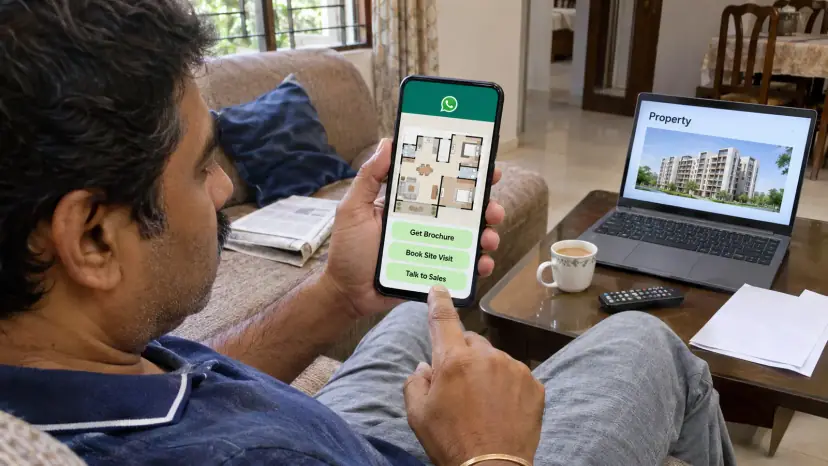
Instead of back-and-forth calls, the bot can send brochures, floor plans, price sheets, location maps and walkthrough videos on request.
Books Site Visits and Sends Reminders
Buyers can pick a slot for a site visit in the chat. The bot confirms it, sends a reminder and shares a map link on the day. It can also send booked customers reminders about payment due dates or construction milestones.
Replies Out of Hours
Whether the question comes at 11 at night or on a Sunday morning, the buyer gets a useful first reply, and the sales team picks up the lead the next working day.
Speaks the Buyer's Language
Chatbots can offer menus and replies in Hindi, Marathi, Tamil, Telugu or other languages, if your buyers use them. Offer the languages your sales team can also support.
A Sample Conversation Flow
A well-designed flow is the difference between a chatbot that helps buyers and one that frustrates them. Here is an example you can adapt for inbound enquiries:
- Greeting: "Hi [Name], welcome to [Developer]. How can I help you today?" with buttons for View Projects, Book a Site Visit, Pricing and Talk to an Agent.
- Property type: "Which type of home are you looking for?" with options for flat sizes, villas or commercial units.
- Budget: "What is your budget range?" with bands that match the projects you are selling.
- Location: "Which area are you considering?" with a list of your active projects.
- Information: the bot sends the brochure, floor plans, a virtual tour link and the price sheet.
- Site visit: "Would you like to visit? Choose a slot." with a link to your booking calendar.
- Handover: the qualified lead, with the full chat, goes to the CRM and the assigned salesperson is alerted.
- Follow-up: with the buyer's permission, the bot sends construction updates, price changes and new launch news.
Keep every step short, and make "Talk to an Agent" available at every stage. For more ideas, see our post on WhatsApp chatbot use cases in India.
Connecting the Chatbot to Your CRM
A chatbot that does not talk to your CRM creates another silo. Developers use general CRMs such as Salesforce, Zoho CRM or HubSpot, or real estate CRMs such as Sell.Do, which describes itself as built for real estate in India. Whatever you use, check that the integration:
- Works both ways: new WhatsApp leads flow into the CRM, and CRM campaigns can trigger WhatsApp template messages.
- Supports webhooks and real-time sync, not daily file uploads.
- Maps chatbot answers, such as budget and location, to CRM fields.
- Keeps the full chat history on the lead record, so the salesperson does not ask the same questions again.
Our post on real estate lead generation and CRM automation covers the wider sales process.
What Drives the Cost
There is no single price for a real estate chatbot, because the work varies a lot between a simple menu bot and a multilingual assistant linked to your CRM and payment systems. The main cost drivers are:
- WhatsApp Business Platform access: most developers go through a provider, and provider fees differ.
- Meta's message charges: Meta's pricing page says it has charged per delivered message since 1 July 2025, with rates that vary by country and message category. Messages from users to businesses are not charged.
- Design and build: the number of flows, languages and projects, and whether the bot uses AI to understand free text or only buttons.
- Integrations: CRM, calendar, payment links and telephony each add work.
- Content: brochures, templates and translations need writing and approval.
- Ongoing support: updating prices, adding projects and improving the flow over time.
Measure the result as cost per site visit and cost per booking, not just cost per lead. Our guide to WhatsApp chatbot development cost explains these factors in more detail.
Best Practices for WhatsApp Chatbot Marketing
- Get a clear opt-in first. Your form or prompt should say the person agrees to receive WhatsApp messages from your named business.
- Send useful content, not spam. Construction updates, RERA details and price alerts are more welcome than generic promotions.
- Use rich media. Walkthrough videos, virtual tours and PDF brochures answer questions better than long text.
- Hand over quickly. When a buyer shows strong interest or asks something the bot cannot answer, pass the chat to a person as fast as you can.
- Test your templates. Small wording changes can noticeably change read and reply rates.
- Respect people's time. For example, avoid sending marketing messages late at night or early in the morning.
- Track the full funnel. Measure replies, site visits, bookings and cost per booked visit.
WhatsApp, RERA and DPDP Rules to Follow
WhatsApp enforces its rules, and breaking them can get templates rejected or messaging limited. Property advertising is also regulated. The key points are:
- Opt-in: WhatsApp's Business Messaging Policy says you may contact people only if they gave you their number and opted in to receive messages from you. You must also honour requests to stop.
- The 24-hour window: the same policy says you can reply freely within 24 hours of a user's last message. Outside that window, and to start a conversation, you must use approved message templates.
- A route to a person: automated replies are allowed, but the policy also requires clear escalation paths, such as a transfer to a human agent, a phone number or an email address.
- Quality: users can block or report a business, and WhatsApp says its systems may limit how many messages a business can send based on that feedback.
- RERA disclosures: under Section 11(2) of the Real Estate (Regulation and Development) Act, 2016, a promoter's advertisement must prominently show the website address of the RERA authority and the project's registration number. Section 3 bars advertising or marketing a project before it is registered. Treat promotional WhatsApp messages as advertisements and include these details.
- Data protection: the Digital Personal Data Protection Act, 2023 governs the personal data your bot collects. Its main duties, including notice and consent, apply from 13 May 2027 under the DPDP Rules notified on 13 November 2025. Explain why you collect data, let people withdraw consent, delete data you no longer need and have a written contract with your chatbot provider.
- No misleading claims: do not promise assured returns, price appreciation or loan approval in your messages.
Our digital marketing strategy for real estate shows how WhatsApp fits with search, social and property portals.
Final Thoughts
Buyers expect quick, clear answers, and WhatsApp is where many of them already are. A well-planned chatbot answers common questions, qualifies leads, shares project details and books site visits, then hands serious buyers to your sales team with the full context. Get opt-ins right, follow RERA and WhatsApp rules, connect the bot to your CRM, and judge it on bookings, not message counts.
Frequently Asked Questions
How do WhatsApp chatbots help real estate developers generate leads?
They reply to property enquiries straight away, including in the evening and at weekends, ask about budget and location, send brochures and floor plans, and book site visits. Qualified leads go to the CRM with the full chat history, so the sales team can follow up with the buyers most likely to book.
What drives the cost of a WhatsApp chatbot for real estate?
The main factors are the platform provider's fees, Meta's per-message charges, which vary by country and message category, the number of flows and languages, CRM and payment integrations, content and ongoing updates. Judge the spend by cost per site visit and cost per booking rather than the number of leads.
Do I need permission before messaging buyers on WhatsApp?
Yes. WhatsApp's Business Messaging Policy says businesses may message people only if they shared their number and opted in to hear from that business. Keep a record of when and where each opt-in was given, make it easy to opt out, and stop messaging anyone who asks you to.
Do RERA rules apply to WhatsApp promotions?
Section 11(2) of the RERA Act, 2016 requires a promoter's advertisements to show the project's registration number and the RERA authority's website address, and Section 3 bars advertising before registration. Treat promotional WhatsApp messages about a project as advertisements and include these details, and avoid promises of assured returns.
Can a WhatsApp chatbot replace my sales team?
No. A chatbot handles first replies, routine questions, brochures, reminders and bookings. Buying a home is a big decision, and buyers still want to speak to a person about negotiation, finance and legal checks. The bot's job is to make sure your team spends its time on buyers who are ready to talk.
Want help with this?
Talk to our team about CRM and automation.
Read next

AI Automation Services in India
How AI differs from rule-based tools, where it helps in support, sales, finance and HR, the risks to plan for and what to ask a provider.
Read article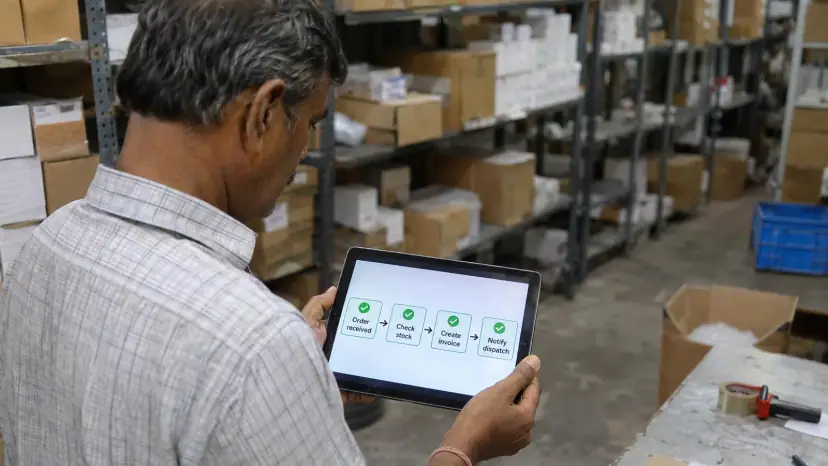
Artificial Intelligence Examples in India: AI Automation at Work
HDFC Bank, Flipkart, Zomato, Delhivery and Tata Steel show AI at work on support, forecasting, addresses and machine wear, with lessons for smaller firms.
Read article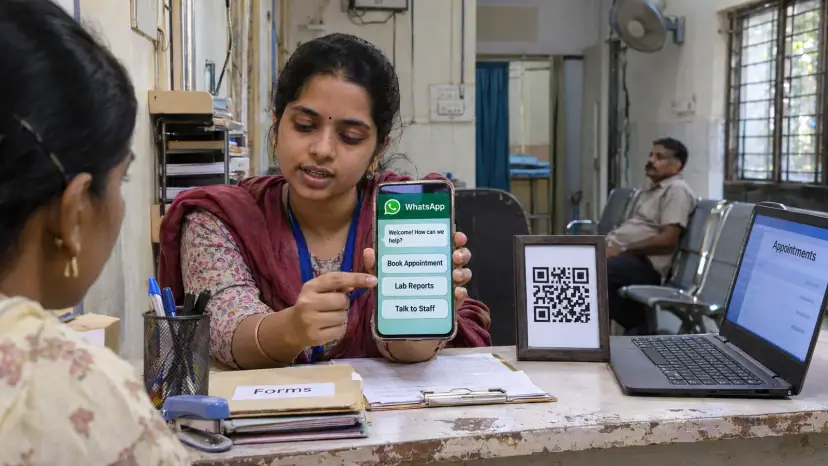
WhatsApp Chatbot Uses in India: 10 Practical Examples
Order queries, buyer screening, appointments and EMI reminders are among ten uses covered here, along with WhatsApp's opt-in and template rules.
Read article
Comments
Be the first to share your thoughts on this article.