Bengaluru SaaS: tie each acquisition source to real product use
Good SaaS marketing helps a buyer judge the product. In a Bangalore-based team, conversations with local founders can test your messaging, yet the people who pay may sit in India or overseas, so treat them as separate audiences. Someone looking for incubation support may have no interest in your software. A friendly local networking response says nothing about product-market fit.
The task in this guide is specific to B2B SaaS: take a defined buyer problem to a qualified demo, then check whether that buyer reaches a meaningful product milestone. We can support the marketing, website and automation work remotely from Noida. Service scope is on our broader SaaS marketing page, while this page adds local resources and a practical brief for Bengaluru founders.
What the STPI resources in Bengaluru are for
STPI Bengaluru's official incubation page describes incubation facilities for entrepreneurs and names its Electronic City location. If you are weighing up workspace or incubation, start there and then confirm suitability, availability and application requirements with STPI directly. Treat the page as a resource reference. It is neither an endorsement nor a partnership with us.
Incubation, mentoring, lab and entrepreneurship initiatives are set out on the STPI Centres of Entrepreneurship page. Each programme is its own eligibility decision. A programme logo on your sales page would imply admission, funding or product certification, so leave it off. Founder-support enquiries also belong outside the customer-acquisition funnel, which keeps your reports about actual software buyers.
One buyer brief before any new channel
Pick one workflow and one buyer role for the first campaign. An operations manager looking at a workflow tool wants implementation details. A technical evaluator wants integration and security material, and a finance approver wants clear scope and commercial information. The founder supplies what is true today, product limitations included. AI can help with drafts and query grouping, though a person must approve any product claim.
- Buyer role: say which team it is, what recurring task they do and what event makes them search for software.
- Market: tell Bengaluru-based accounts apart from a national or international audience, and build the campaign around the intended buyer and not the founder's address.
- Proof: show real product screenshots and customer evidence you have permission to use, and clearly label demonstrations and hypothetical workflows.
- Evaluation: set out integration requirements, onboarding steps and support boundaries, and give a route to someone who can answer technical questions.
A common mistake is showing a polished demo environment full of invented data as if it were the live product. It happens because the sample account looks better than a real one. A buyer then expects dashboards that need weeks of integration work. Label demonstration data plainly, and tell the evaluator in the first meeting what a real account looks like in its first month, including the setup effort on their side.
Keep the approved limitation document open during every demo, and have the presenter name one thing the product does not do. Hearing a limit early gives the buyer a reason to raise integration questions at once, and the sales notes then carry something engineering can act on.
Measuring from demo to activation
A qualified demo needs three things: a business need, a product fit and a contact able to take part in evaluation. Collect only the information the team will use. Turn unsuitable requests away politely and note the reason, because a pattern may point to a misleading keyword or an unclear landing page.
Once the demo is done, pick an activation event that shows progress for this product. An invited teammate completing the intended workflow is one example, and a test integration passing data successfully is another. Both are illustrations and not SaaS benchmarks that apply everywhere. Track the agreed event the same way each time and compare acquisition sources against it. An AI-generated lead score should never reject someone automatically until a person has reviewed the evidence behind it.
The implementation can stay light: one documented event definition, conversion tracking that works, a CRM stage agreed with sales and a regular review of the journey. Extra automation only helps if the product team can explain what happens to the data and can respond when a prospect needs help. Customer account content must not go into an AI tool without the necessary authorisation and controls.
Here are the checks a SaaS team in this city should complete before any new channel goes live. If the product handles customers' personal data, someone needs to confirm what the contract with each customer says about that data and who may open it. Demo consent wording needs the same care under the DPDP Act 2023. Security questionnaires are a third item: an AI draft can pull answers from approved documents, but the person who owns security signs every answer before it is sent.
In the first weeks, read the unsuitable requests you turned away and group them by reason. If many want a feature the product lacks, the page is promising too much. If many are founders seeking incubation, the wording is attracting the wrong audience. Change the page first, and change the assistant only if the answers themselves are wrong.
A worked example from one search to a first completed task
This is a planning example, not a client story. A finance operations manager searches for a way to match supplier invoices to purchase orders. The page explains the one workflow the product supports and lists its limits. She books a demo, and the assistant records her team size, the accounting system she uses and the integration she needs. The sales owner checks that the integration is on the supported list and runs the demo on a sample account labelled as a demonstration. After the demo she invites a colleague. The activation event is the colleague finishing a first match, and it is recorded against the same source. Had the integration not been supported, the reply would have said so before any trial began.
Who owns what in a Bengaluru SaaS team
Small teams often share these jobs, and that is where things slip. Product owns the feature and limitation document. Marketing owns the pages and the source tags. Sales owns the qualification notes, and one named person owns the activation event definition. When that last role is empty, marketing counts a signup, sales counts a paid account and product counts a finished task, and nobody can compare sources.
Write the event definition in one sentence and keep it where all three teams can read it. Review it whenever the product changes. Local resources, such as the STPI incubation page, are separate from this reporting: NSRCEL at IIM Bengaluru lists programmes of its own, each with its own admission decision, and interest in one of them is a founder-support question and not a software lead.
What to bring from your Bengaluru SaaS team
- A demo that works, along with the use cases it supports and its limitations.
- Your first buyer role, your target geography and the objections that come up in evaluation.
- Current acquisition sources, demo stages and the events that count as product activation.
- Screenshots, customer evidence and documentation links that have been approved.
The next step depends on the gap. It may be product development, SaaS acquisition work or CRM automation. Earlier-stage founders can also read our Bengaluru startup guide. When you have the product brief, request a free consultation.
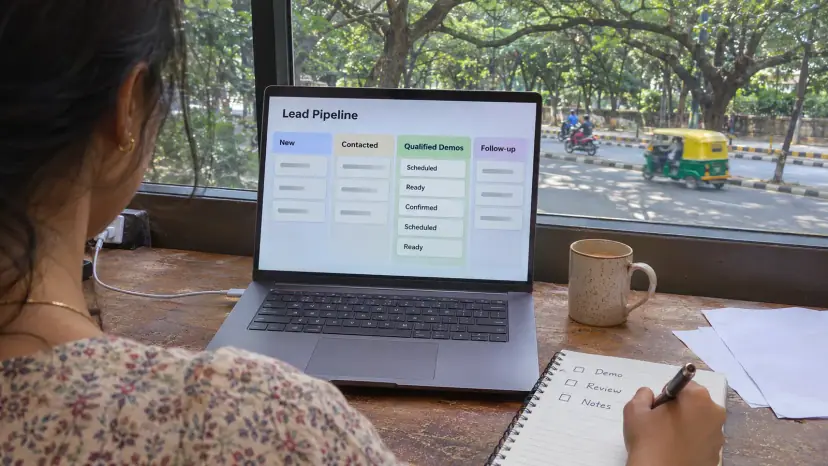
We checked local resources on 2 October 2026. Confirm programme requirements with the provider before you apply, and revisit this brief when your product or buyer changes. Treat the hero image as illustration only.