Evidence-based charging and energy-project enquiries in Pune
This guide is for EV & Clean Energy teams serving Pune who need evidence-based charging and energy-project enquiries. It sets out the information to collect, which local source to consult, what an assistant may do and where a person must approve the next step. The workflows below are planning examples, not reported Brainguru client results. Services are scoped around the actual business, data and permissions.
Pune: local addresses, sources and coverage
Pune district resources cover an administrative area, not just a single marketing neighbourhood. Identify the actual town, locality and operating site in a Pune enquiry. City-wide targeting should not make an unverified claim about coverage of the whole district.
Start with Pune district. The resource supports local administrative context; it does not establish market demand, commercial availability or an endorsement of a private business. For this EV & Clean Energy workflow, record Pune locality, town and operating site. Then match that location to the approved business record. If the two disagree, a reviewer should resolve the difference before the page or assistant gives directions, coverage information or an appointment instruction.
Prepare the Pune EV & Clean Energy enquiry brief
Use the following fields as a working brief, rather than publishing a city name beside an unrelated national offer. Keep each statement tied to its source and reviewer. If information is unavailable, record the gap and route it to a person; do not let the model fill it with an assumption.
- Actual proposed site and operating location: Pune locality, town and operating site. Use the actual operating address, not the advertising audience.
- Vehicle/charger/system model: State the supported task or offer precisely, including its limits and current reference.
- Approved technical compatibility evidence: Capture the requirements needed to check this field; missing details remain questions for review.
- Site/electrical prerequisites: Keep the approved evidence and its current version with the record; a photograph or city name is insufficient.
- Installation or charging-use enquiry: Record the requested next step and necessary information; separate unsupported or misrouted requests.
- Qualified technical reviewer: Identify who can confirm the answer or action before the next step is offered.
An illustrative Pune request should pass the location check and the vehicle/charger/system model check before a commercial or professional next step is suggested. A failed check stays unresolved in the handoff. This gives the receiving team a concrete question to answer instead of a falsely qualified lead.
AI assistance, human review and system connections
For EV and clean-energy enquiries, identify the actual use case: a vehicle charging question, charger installation, fleet charging or a separate energy-system project. AI can collect requirements and retrieve approved technical information, while a qualified reviewer checks site and electrical prerequisites. A map entry or a marketing photograph is not evidence that a charging point is currently available or compatible.
Connect only the sources and systems the business has authorised: an approved knowledge pack, the relevant operational system and a CRM or intake route where needed. Record the source version used for an answer. Test access permissions and who can revise the content before using live customer data. A draft, prediction or extracted field is an aid for the reviewer; it is not an automatic commercial commitment.
Sector boundaries before publication
Do not promise range, charging speed, payback or subsidy eligibility without current project-specific evidence. Commercial commitments require a site and technical review. Keep grant or incentive resources separate from an approved installation quote; an assistant should not certify a connection, installation or government benefit.
Language, local search and measurable outcomes
If the audience needs Marathi and English, have competent speakers review terminology, locality names and the proposed next step. These are language options to assess with the business, not a claim that every customer uses them or that Brainguru supplies every translation. Preserve the actual address and a consistent contact route across the page and business records. Do not create extra offices or profiles to simulate local presence.
For Pune, separate the audience location from the location where the requested service is fulfilled. Use the approved serviceable area in page content and enquiry routing. Track these stages independently: technical enquiry → compatibility/site review → scoped proposal → approval → implementation. Keep rejected, cancelled and unsupported requests in the evaluation; a click or conversation is not revenue.
Test an incompatible connector, unavailable power capacity, an unverified charger listing and a subsidy question without current evidence. Compare the reviewed outcomes with the business’s own baseline before increasing spend. Inspect search queries for mismatched intent and improve the relevant answer or handoff. No ranking, inclusion in AI answers, lead volume or return on investment is guaranteed.
Related implementation guides and next steps
Read EV & Clean Energy solutions for the industry scope and AI Visual Inspection for Automotive Components: Measuring Missed Defects and False Rejects for implementation detail. The article explains a related workflow; it is not evidence of a Pune client engagement.
Other planning tasks in Pune: Automotive, Manufacturing. Browse Pune and other city guides to compare supported information and official references.
For a free consultation, bring the actual actual proposed site and operating location, the vehicle/charger/system model, approved source material and the reviewer who can decide the next step. Brainguru delivers from Bhutani Alphathum, Tower A, Sector 90, Noida, Uttar Pradesh. No Pune branch is claimed. Scope, integrations and any on-site work are discussed case by case.
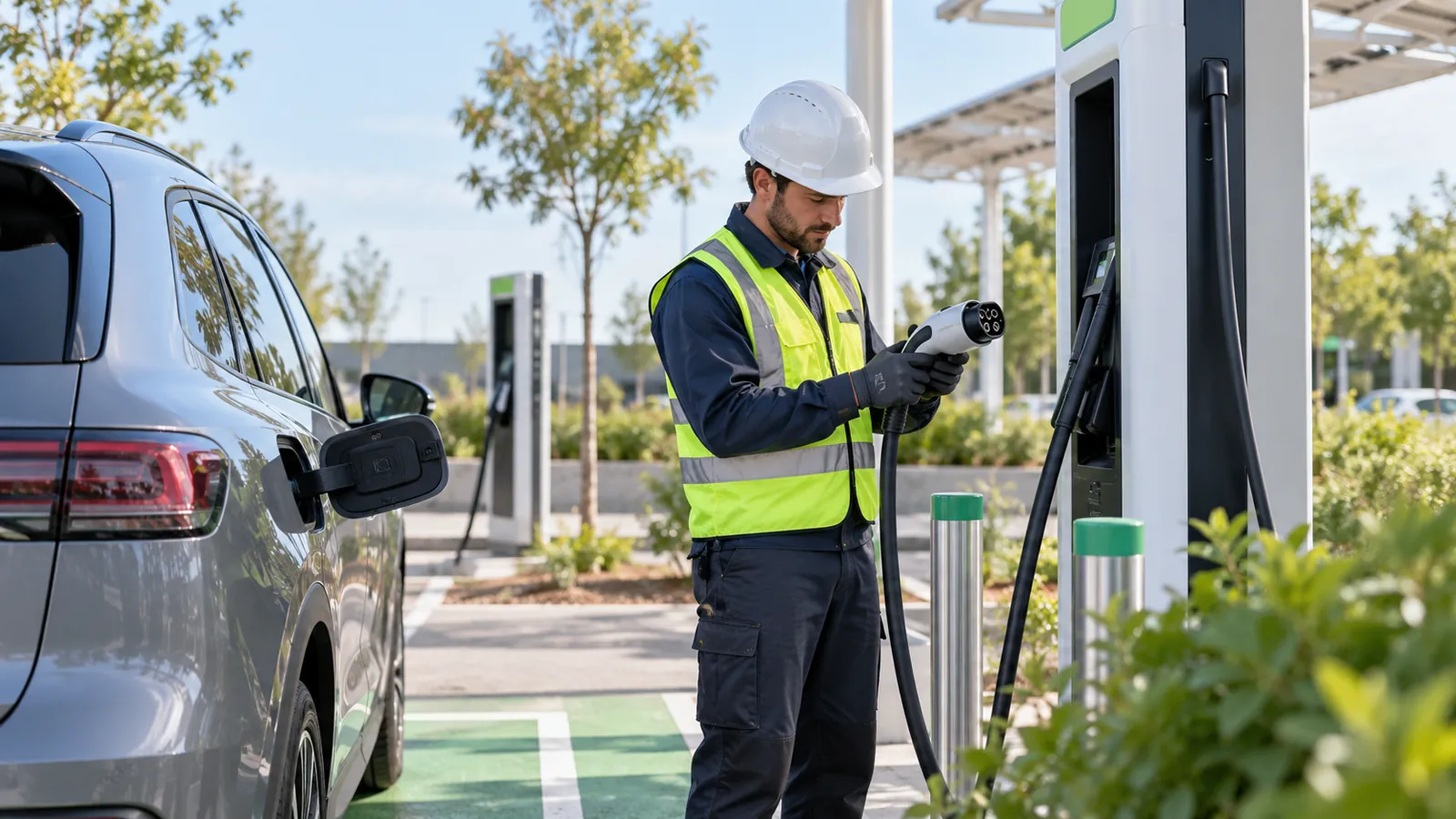
Local and sector resources checked on 5 October 2026. Recheck current instructions before campaign changes. Photographs are illustrative topic images, not verified photographs of local offices, customers or facilities.