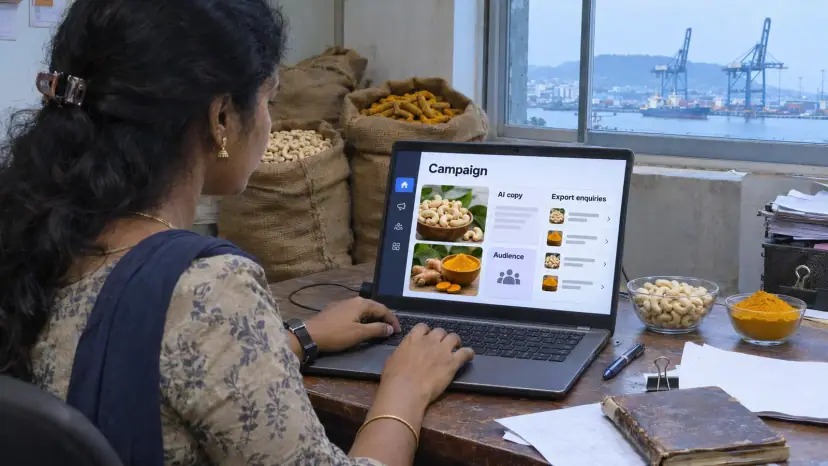
Vizag export marketing starts with telling product routes apart
Being near the port in Visakhapatnam does not make every agricultural or food enquiry alike. Before a supplier advertises export capability, it has to pin down the actual product, the intended buyer and the competent resource for that product. This guide is about classifying products and building traceable enquiry packs for teams based in Vizag. It is not a general farming page or a suggestion that a port location guarantees an export order.
Which local resource answers which question
A Visakhapatnam regional office appears in APEDA’s official contact directory. Go to the current directory to find the right contact for a question about your agricultural or processed-food product. Have your product description and destination ready before you ask for guidance, because the same authority or documentation route may not cover every food category.
Seafood context and related local resources are described in the district’s official ODOP information. Read that as a reason to keep seafood enquiries apart from an agricultural export brief. It gives you no basis for marketing seafood under an unsupported APEDA approval claim. Qualified people should confirm the competent authority and what the product actually requires. Neither resource is a partner of Brainguru, and neither is a testimonial.
Prepare the question before you contact anyone. Write down the product name and its form, such as fresh, dried or processed, the packing format, the destination country and what the buyer has asked for, for example a sample or a test report. Note who you spoke to and on what date. Answers from an office can differ by product and can change, so a dated note is more useful than a memory. If the answer changes how you describe the product, the page owner should hear about it the same week.
Building a product and origin record a buyer can trace
Buyers should be able to see whether your team produces, processes or trades the product. Write down where it really comes from and where it is processed, even if the sales contact sits in Vizag. Specification versions, permitted product photographs, packing formats and the current availability owner belong in one place. Say clearly which facts can be reviewed online and which need confirming.
In an illustrative enquiry, a buyer picks a product family and asks to discuss a specification or a sample. The assistant sums up the question against approved information, flags a missing destination or grade and sends it to the responsible reviewer. Deciding export eligibility is outside its job, and so is inventing test results or promising a shipment because of a past supply record.
Take a planning example with two products. A Vizag trader handles a dried agricultural item and a seafood item. Each gets its own record: the specification version, the origin and processing place, the packing format, the photographs cleared for use and the person who answers for availability. The two records never share a page or an assistant answer. When a buyer asks about "your export range", the assistant asks which product, and the answer comes only from that product's record. Anything the record lacks is sent to the reviewer.
Marketing copy is not shipment approval
Get operations to confirm what delivery information you may publish. A dispatch date requested by a buyer is not yet an accepted commitment. Leave room for product review, documentation and a logistics discussion, and do not print an arbitrary turnaround time. Any certificate you show needs its scope and relevance spelled out, since one report cannot establish approval for all products or destinations.
Telugu or English material should only go out once competent reviewers have checked the technical and commercial wording. Collect the product, organisation, intended market and requested next step, and agree a secure route for sensitive files. Do not ask an AI model to work out missing test methods or destination rules from a general web search.
Think through a sample request as a planning example. A buyer asks for a sample of a product before discussing price. The reviewer first checks that the specification and the destination are known, then asks the quality person what can be sent and with which documents. Only after that does the sales contact say when a sample could go, and the date is described as the team's plan and not as a commitment. If the buyer's destination turns out to need something the team has not handled before, the reviewer says so and the sample waits for a qualified answer. A Telugu note for a local contact follows the same approved facts as the English one.
Who answers for each export enquiry
Even a small Vizag team needs named owners. The sales contact owns the conversation with the buyer and nothing else. The quality or product person owns specifications, grades and what the team can truthfully say about tests. Whoever handles documents and shipping owns the discussion of paperwork and logistics, and they speak only after the product is agreed.
What breaks when nobody owns this is easy to see. A sales contact promises a sample date before the specification is settled. A buyer receives a different grade from the one discussed. A certificate is quoted for a product it does not cover. Write the three names on the handoff sheet and require the reviewer's sign-off before any sample, price or date goes to a buyer.
Checks before an export page or assistant goes live
Run through these with the people named above. The product claims on the page match the current specification. Each certificate shown has its scope and expiry date beside it, and an expired one comes down. The photographs are cleared for use and show the product being offered. Buyer contact details are kept where only approved staff can open them, with a note of how the buyer agreed to be contacted, in line with the DPDP Act 2023. Wording about the port stays factual: the location is a fact, and the port authority's own notices are where port matters are announced, not your page.
In the first weeks, read the enquiries your reviewer could not answer. If the same grade, destination or packing question keeps appearing, the page is missing a fact buyers need, and adding it will help more than reaching new buyers. If the unanswerable questions are mostly about products you do not handle, the page is attracting the wrong audience and the plan should narrow.
Counting suitable enquiries and logging what was missing
Check whether each enquiry fits the product range and a market the supplier can really serve. Keep requests for specification sheets, samples and reviewed quotations in separate counts. When grade, destination or packing details keep going missing, that tells you what to fix on the page. Traffic on its own shows nothing about a completed export sale.
Once the evidence pack is ready, talk to us about agriculture technology, CRM routing and search campaigns. You can request a free consultation with our Noida team. We make no claim to a Vizag branch, regulatory approval, port partnership or shipment result.
Local resources were checked on 5 October 2026. Look at the source instructions again before a campaign, and review local links every quarter. Photography is illustrative and does not show a local office or client.