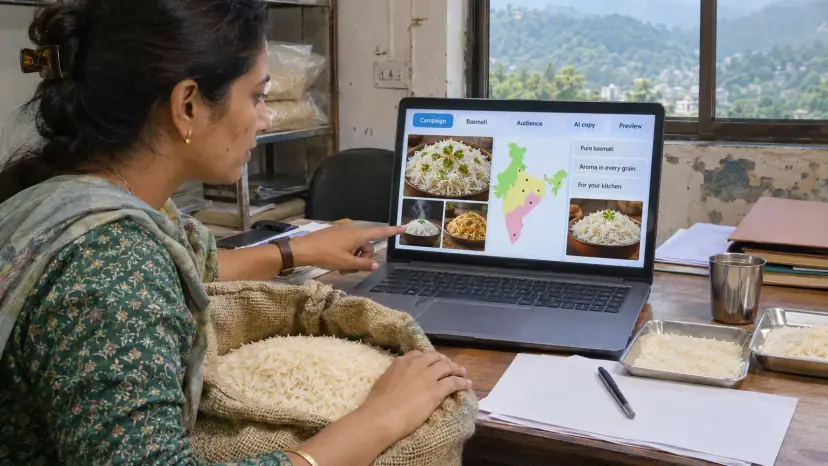
Dehradun agriculture enquiries: right lot, right destination, sourced market information
Two things can go wrong when an agricultural enquiry reaches a Dehradun team: the reply drifts away from the actual lot, or a market figure goes out with no source attached. Agriculture and AgriTech teams can use this guide to prevent both. It lists the information to gather, the local source to consult, the limits on an assistant and the moment a person has to approve what comes next. The workflows are planning examples, not reported Brainguru client results, and any service is shaped by the real business, its data and its permissions.
City or district? Pin down the Dehradun destination first
Administrative information and local services appear on the Dehradun district resources. A quote for travel, pickup or support coverage should wait until the exact city or district destination is known. Access arrangements at an address elsewhere in the district may not match those at a city location, so never assume they do.
The source to open is Dehradun district. It gives you administrative context and stops there, with no proof of market demand or commercial availability and no endorsement of a private business. Log the Dehradun premises and the district destination for each enquiry, and compare them with the approved business record. If the record says something different, a reviewer clears it up before a page or assistant offers directions, coverage information or an appointment instruction.
Six fields for a Dehradun collection or supply enquiry
A national offer with Dehradun typed beside it does nothing for a buyer, so fill in these fields instead, showing the source and reviewer behind every statement. A missing detail is recorded and sent to a person, and the model never assumes an answer.
- Actual farm, seller or collection location: Give the Dehradun premises and district destination you really operate from, not where your adverts run.
- Commodity, grade and lot identity: Pin the reply to one commodity, grade and lot, and show the limits and current reference that apply to it.
- Quantity and availability source: Show which record states the quantity and what checks it, leaving unknown amounts as review questions.
- Dated market-information reference: File the approved reference and its current version on the record; a photograph or the city name cannot stand in for it.
- Buyer delivery/export question: Capture the delivery or export step the buyer is asking for and what it requires, and split off anything unsupported or misrouted.
- Seller/technical reviewer: Name whoever can vouch for the answer on the seller or technical side before a next step goes to the buyer.
An illustrative Dehradun request must get past the location check and the commodity, grade and lot identity check before anyone raises a commercial or professional next step. If it fails either one, the handoff shows it as open, so your receiving team knows what to ask and nobody mistakes it for a qualified lead.
Sorting enquiries with AI, with people checking the commitments
An enquiry is workable once it names the commodity, lot, grade, quantity and the place of collection or delivery. AI can organise those buyer questions and retrieve approved product information, but it cannot turn a dated market reference into the seller’s current quote. An input-sales question, produce procurement, an agritech demonstration and an export enquiry are different conversations, each with its own reviewer and evidence.
Authorised systems only: typically the approved knowledge pack, the operational system involved and a CRM or intake route if the work calls for one. Each answer should show the source version it used. Try out access permissions and content-editing rights before any live customer data is touched. Whatever the system drafts, predicts or extracts is an aid for a reviewer and binds the business to nothing.
Claims to keep out of Dehradun agriculture pages
Stay away from promises about yields, pest-control outcomes, export acceptance or subsidies. A crop recommendation or product-use claim has to rest on an appropriate qualified source. APEDA has resources on the agricultural and export functions it supports, which does not make it an approval for seafood or every commodity. Show people the real lot evidence and the seller’s current terms.
Sector reference outside the business: APEDA official resources. Confirm the instructions are still current, then ask the responsible professional to judge how they fit the proposed activity.
Hindi and English pages, local search and tracking the sale
Where Hindi and English are needed, competent speakers should go through the terminology, locality names and proposed next step. Assess this with the business as an option, with no claim about what every customer uses or that we supply every translation. Page and business records alike should carry the true address and a steady contact route, and invented offices or profiles have no place here.
Someone can be searching from Dehradun while the service is fulfilled somewhere else, so hold those two locations apart. Page copy and enquiry routing both rely on the approved serviceable area. Track commodity enquiry → lot/grade review → quantity/location confirmed → quote → fulfilment as five independent stages. A click or a chat is not revenue, so turned-down, cancelled and unsupported requests stay in your figures.
Try it with an unconfirmed grade, a stale price reference, a seafood export enquiry and a product-use question for an expert. Hold reviewed outcomes up against the business’s own baseline before spending more. Queries that attract the wrong intent tell you which answer or handoff to fix. We give no guarantee of rankings, AI-answer inclusion, leads or return on investment.
One collection enquiry, step by step
This is a planning example, not a real buyer. Someone writes in Hindi asking whether a seller can supply a commodity in a quantity he names and whether it can be collected from the seller's site. He mentions a market price he saw somewhere.
The assistant keeps the buyer's price apart from the seller's. It records the commodity, the quantity and the collection request, and it notes that the price he quotes has no source. It identifies the lot from the seller's own record, if one matches, and says that the seller will confirm quantity, grade and collection arrangements. The seller or the technical reviewer then replies, with the quote coming from the seller and not from any market reference.
Whether the commodity is still available, and whether the collection point can be reached by the buyer's transport, are the seller's calls. The record shows the enquiry as quoted, declined or lapsed, with the reason.
Further reading and a first conversation
Industry scope is covered under Agriculture & AgriTech solutions, with implementation detail in Demand Forecasting for Indian Distributors: Data Requirements and Pilot Evaluation. That article is a related workflow and no proof of a Dehradun client engagement.
Planning something else in Dehradun? Try Logistics & Supply Chain or E-Commerce. To compare what each guide supports and which official references it uses, browse Dehradun and other city guides.
Ask for a free consultation once you have the actual farm, seller or collection location, the commodity, grade and lot identity, the approved source material and the reviewer who decides the next step. The work is delivered from our Noida office, and Dehradun has no branch of ours. We talk through scope, integrations and on-site work separately for each case.
Resources were last checked on 5 October 2026, local and sector alike, and instructions should be rechecked ahead of any campaign change. Images on this page illustrate the subject and are not verified pictures of local offices, customers or facilities.