In this article
- Why Father's Day Is Often Underused in Indian D2C Marketing
- Five Gift Segments Worth Targeting
- Audience Targeting Matrix — Who Buys for Whom
- Creative Angles That Work in India
- AI Creative Pipeline — Producing Many Ad Variants Quickly
- Channel Mix for a Father's Day Campaign
- Bid Strategy and Budget Pacing for the 14-Day Window
- Discount Strategy — What Works for D2C
- Sample Creative Briefs (3 Examples)
- An Illustrative Campaign Structure
- Post-Campaign — Extending Father's Day Audiences Through the Year
- Frequently Asked Questions
- The Bottom Line
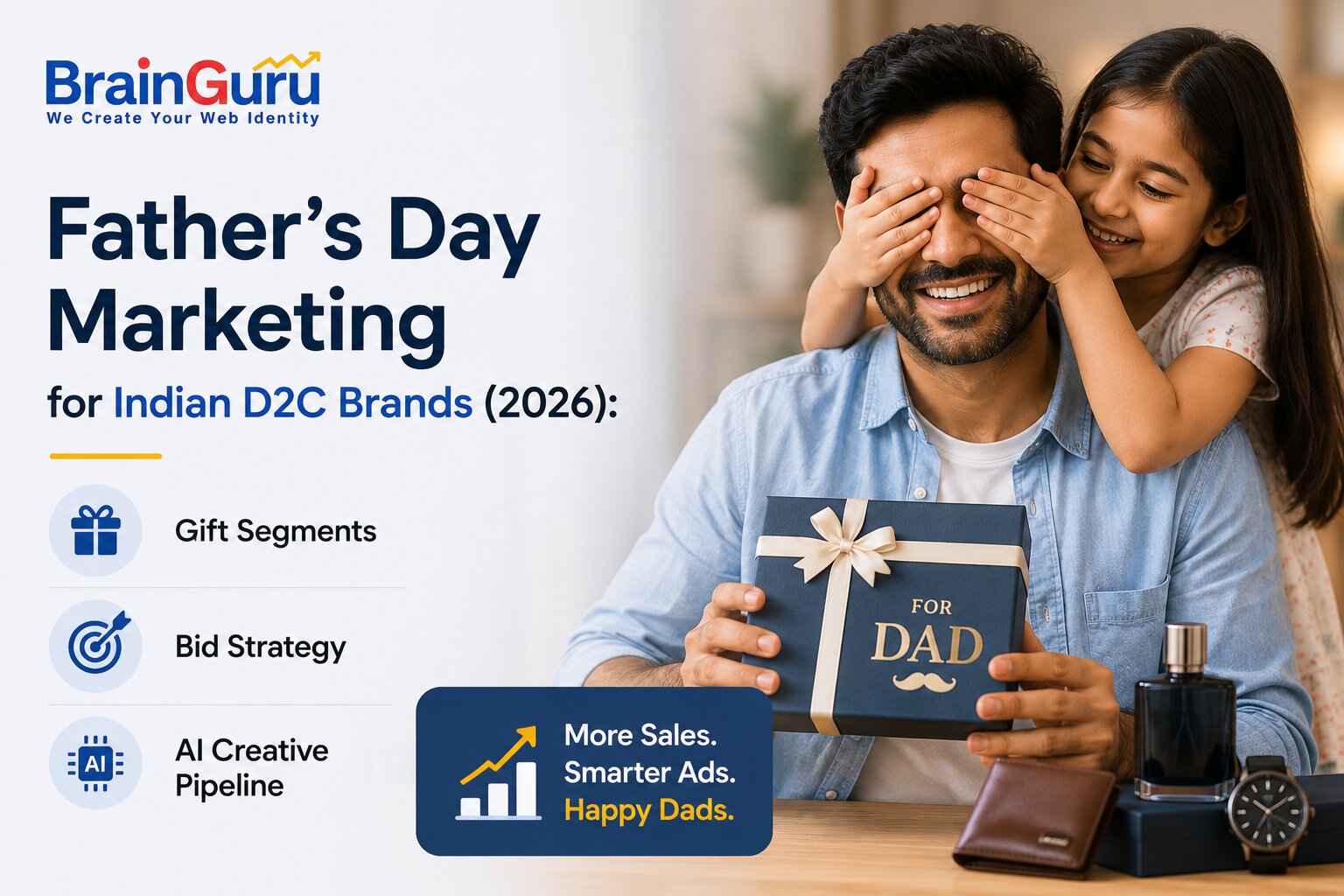
Mother's Day tends to be heavily marketed in India — inboxes get saturated, ad auctions get crowded, and many campaigns end up competing for the same attention. Father's Day is often the opposite story: comparatively under-marketed, with a buyer dynamic that can be easier to convert if you understand it. For Indian D2C brands looking for a second-half-of-year sales window, Father's Day in 2026 is one of the better-positioned festival moments you can plan around.
This is a practical 2026 planning guide for Father's Day marketing for Indian D2C brands: the gift segments worth targeting, an audience-targeting matrix (who buys for whom), creative angles tuned to Indian sensibilities, an AI-assisted creative pipeline for producing variants quickly, and how to structure budget, bidding and post-campaign retargeting.
Why Father's Day Is Often Underused in Indian D2C Marketing
A few general observations worth keeping in mind when planning:
Mother's Day campaigns tend to face heavy competitive density. Ad costs typically rise in the days before the date as more brands bid for the same audiences, which can compress returns.
Father's Day usually sees lighter competitive density. Costs tend to stay closer to baseline, which can make brand visibility easier to achieve for the same spend.
Indian fathers are increasingly purchase-targets, not just gift-recipients. Interest in "what's good for dad" style products appears to be growing, opening up a self-purchase angle many brands ignore.
The opportunity is real, but many Indian D2C brands still default to a generic discount blast for Father's Day. Brands that invest in campaign-quality content and segmentation tend to stand out more easily in a less crowded window.
Five Gift Segments Worth Targeting
These are the broad segments where Father's Day spend tends to make sense for D2C brands, with indicative price ranges as planning guidance (your actual pricing will depend on your catalogue):
| Segment | Indicative Price Range (₹) | Top Categories |
|---|---|---|
| Daily-use essentials (premium) | 800–3,500 | Skincare, grooming, eyewear, accessories |
| Wellness and supplements | 1,200–4,500 | Heart health, joint care, vitamins, sleep aids |
| Tech and gadgets | 2,500–15,000 | Smartwatches, headphones, e-readers |
| Lifestyle and hobbies | 1,500–8,000 | Books, golf accessories, fishing gear, fitness tech |
| Experiential gifts | 3,000–25,000 | Spa, golf, weekend trips, premium memberships |
The category-fit thinking: what would a 50-year-old Indian man actually use and value? Father's Day buying often leans more rational than emotional ("does he actually need this"), so brands that emphasise utility plus a sense of premium-ness tend to resonate.
Audience Targeting Matrix — Who Buys for Whom
Father's Day in India is a multi-buyer category. Different relationship types tend to behave differently. The spend ranges below are indicative planning guidance, not measured figures:
| Buyer Relationship | Typical Behaviour | Channel Preference | Indicative Spend Range (₹) |
|---|---|---|---|
| Daughter (age 25–40) | Often active, more emotionally driven purchase | Instagram, WhatsApp, e-commerce apps | 1,500–8,000 |
| Son (age 25–40) | Less browsing, more direct, utility-driven purchase | Google Search, Amazon | 2,000–10,000 |
| Wife / spouse | Considered purchase, value-conscious | WhatsApp, Instagram, family group chats | 2,000–6,000 |
| Grandchildren (via parent) | Symbolic gifts, lower spend | Through parent's channel | 500–2,500 |
| Father himself (self-purchase) | An easy-to-overlook segment worth tagging explicitly | Direct search, brand websites | 1,500–15,000 |
One commonly under-used targeting opportunity: men aged 45–65 who self-purchase. They see Father's Day offers and buy for themselves, yet Indian D2C brands rarely tag this segment explicitly. It is worth testing as its own audience.
Creative Angles That Work in India
Practical Utility
"Things he'll actually use" framing. Show the product in a real Indian father-context (morning routine, office, weekend) rather than aspirational lifestyle imagery. This frame tends to perform well in the Indian market.
Nostalgic Family Moments
Indian families often respond strongly to multi-generational imagery — daughter-with-father or grandfather-with-grandchild moments can outperform generic gift imagery.
Humour
"Dad jokes" framing works in both Hindi and English — light and self-aware. Several well-known consumer brands have run humour-led Father's Day creative successfully, and it can be a good fit if it suits your brand voice.
Premium Indulgence
For higher-price segments: "He deserves this" framing — better quality than what he'd buy himself.
What Tends Not to Work in India
- Western "spoil dad" framing (can feel disconnected from Indian family dynamics)
- Over-emotional ads (Indian humour around masculinity can make earnest emotion feel awkward)
- Generic flat discounts (visible everywhere, with little creative differentiation)
AI Creative Pipeline — Producing Many Ad Variants Quickly
One advantage of an AI-assisted creative workflow for Father's Day is the ability to produce a large set of ad variants matched to specific segments and angles in a short time. An illustrative workflow:
- Brief generation: build segment briefs (daughter, son, wife, self-purchase, multi-generation) across a few creative angles each.
- Copy variants per brief: use an AI assistant (e.g. ChatGPT or Claude) to generate multiple headline and body variations per brief.
- Visual variants: use an image generation tool (e.g. Midjourney) to produce several hero image options per brief.
- Assembly: combine copy and visuals into a set of unique ad variants.
- Compliance and brand check: human review of the top variants before anything goes live.
- Launch: feed the strongest variants into Meta Advantage+ (or your platform of choice) across segments.
Done well, this can compress what would otherwise be days of manual production into a much shorter turnaround at modest tooling cost, while still keeping a human in the loop for quality and brand safety. Always review AI-generated copy and imagery before publishing.
Channel Mix for a Father's Day Campaign
Indicative budget allocation as a starting point — adjust to your own channel performance:
| Channel | Indicative % of Budget | Why |
|---|---|---|
| Meta Ads (FB + Instagram) | 50–60% | Strong discovery and emotional product alignment |
| Google Search | 15–20% | Capture "father's day gift" intent |
| WhatsApp Business broadcasts | 10–15% | Reach an engaged loyalty list |
| YouTube | 5–10% | Storytelling and multi-generation creative |
| 5–10% | Existing subscriber base | |
| Influencer (3–8 micro) | 5–10% | Daughter-influencers with father content |
Bid Strategy and Budget Pacing for the 14-Day Window
The Indian Father's Day buying window is roughly the 14 days before the date, with the most intensity in the final few days. A budget pacing structure that works as a starting point:
| Day Range | Indicative Budget Share | Focus |
|---|---|---|
| Day -14 to -7 | ~20% | Brand awareness and discovery |
| Day -7 to -4 | ~30% | Consideration and lookalike retargeting |
| Day -4 to -1 | ~40% | Conversion and urgency |
| Day 0 (Father's Day itself) | ~10% | Last-minute and experiential gifts |
Important: communicate shipping cut-off dates clearly. Indian e-commerce delivery often takes a few days even with priority shipping, so for physical products, orders typically need to close a couple of days before Father's Day. Experiential and digital gifts can stay open later.
Discount Strategy — What Works for D2C
The instinct is "flat discount, free shipping" — but that is also what most competitors are doing. Often better:
- Bundles, not discounts: e.g. "Buy our grooming kit, get a free shaving cream" can outperform a simple flat discount.
- Premium positioning: skip discounts entirely and position as a gift-quality premium product.
- Time-limited GWP (Gift With Purchase): exclusive gift-wrap, a premium card, or samples add perceived value without eroding price.
- Free express shipping instead of a discount: drives urgency without margin erosion.
Sample Creative Briefs (3 Examples)
Brief 1 — Skincare for Father (Daughter Buyer)
- Hook: "Notice how dad's skin has changed? It's time for grown-up skincare."
- Product: anti-aging facewash + moisturizer bundle
- Visual: daughter handing father the product, both smiling
- CTA: "Gift him the upgrade"
Brief 2 — Smartwatch for Father (Son Buyer)
- Hook: "Track his health. Worry less."
- Product: smartwatch with cardiac monitoring + step tracker
- Visual: father using smartwatch while walking morning routine
- CTA: "His health, your peace of mind"
Brief 3 — Self-Purchase (Father Himself)
- Hook: "Treat yourself on Father's Day. You've earned it."
- Product: premium grooming kit or hobby item
- Visual: man enjoying his hobby or a premium morning routine
- CTA: "Add to cart"
An Illustrative Campaign Structure
To make the playbook concrete, here is a hypothetical, illustrative way a mid-sized D2C menswear brand might structure a 14-day Father's Day campaign. The figures below are planning examples only — not results from a specific brand:
- 14-day window: a defined media budget split across Meta, Google and WhatsApp.
- Five segment-specific campaigns: daughter, son, wife, self-purchase, and multi-generation.
- A library of AI-assisted creative variants: several per segment across a few angles, all human-reviewed before launch.
- Bundle offers: a few curated bundles (essentials, premium, gift box) rather than flat discounts.
- WhatsApp broadcast: a steady cadence to an existing opt-in list.
What to measure for your own campaign: ROAS by segment, customer acquisition cost, conversion rate against your own baseline, the share of revenue contributed by your owned channels (WhatsApp and email), and how much of total revenue comes from the self-purchase segment — the last is often the most useful test of whether the under-targeted opportunity is real for your brand.
Post-Campaign — Extending Father's Day Audiences Through the Year
A common mistake is to spend on Father's Day and then forget the audience. The compounding play:
- Build a Custom Audience of everyone who engaged with your Father's Day ads.
- Retarget that audience in the following months for related categories (men's products year-round).
- Wedding season (roughly Oct–Feb) creates another men's gifting wave the same audience can convert into.
- Diwali becomes a natural re-engagement moment for father-gifting customers.
If you engage them well, a meaningful share of Father's Day buyers can return for at least one more purchase later in the year — which is what turns a seasonal spike into lasting value.
Frequently Asked Questions
When is Father's Day in India in 2026?
Sunday, June 21, 2026 — the third Sunday of June, the same calendar position as the US.
How does Father's Day compare to Mother's Day for Indian D2C marketing?
Mother's Day generally has higher gross spend but tends to face heavier competitive density, which can compress returns. Father's Day usually sees lighter competition, so for many D2C brands it can deliver better unit economics. Test both against your own data.
What's the right marketing budget for Father's Day for a small D2C?
As rough guidance, a smaller D2C brand might plan something in the ₹50K–₹2L range for a 14-day campaign, plus activation of existing organic and WhatsApp lists (effectively free). Scale to your own margins and goals.
Should I discount on Father's Day or use bundles?
Bundles are often the better choice. Flat discounts can train customers to wait for sales, whereas bundles tend to drive higher average order value and protect margin.
Which Father's Day creative angle works best?
In the Indian market, a practical-utility frame ("things he'll actually use", "I noticed dad needs this") tends to resonate more than Western-style "treat dad like a king" framing. Test against your own audience.
Can I extend a Father's Day campaign to Bharat-tier audiences?
Yes — vernacular versions of creative tend to work well. Hindi-speaking middle India often responds well to multi-generational imagery and practical-utility messaging.
The Bottom Line
Father's Day 2026 is an underrated opportunity for Indian D2C brands. Lighter competitive density, multiple distinct buyer segments, and AI tools that make a large library of ad variants achievable quickly mean brands that show up with quality content can stand out disproportionately. Skip the generic flat-discount blast; build a 14-day, segmented campaign with bundles and segment-specific creative.
If you'd like a structured review of your Father's Day strategy and help setting up an AI creative pipeline, our D2C AI team can help. For broader social media strategy, see our SMO services. For AI-driven personalisation, see AI for personalisation. To model your campaign ROI, use the AI cost calculator. Or reach out via our contact page or call +91-8010010000.
Related Articles
10 Digital Marketing Strategies for Indian SMEs in 2026: Budget, Stack & Channel Priorities
Practical 2026 digital marketing strategies for Indian SMEs — budget tiers (₹15K to ₹2L/mo), real case studies (D2C, B2B SaaS, local services), and a stack that actually works for a 5-to-50 person business.
Read More
Local SEO for Noida Businesses (2026): How to Rank Higher on Google Maps
Step-by-step local SEO playbook for Noida businesses — GBP optimisation, NAP consistency, reviews via WhatsApp+QR, local backlinks. Real Noida case studies inside.
Read More
Best Digital Marketing Agencies in Delhi NCR (2026): Top 10 Reviewed
Choosing the right marketing partner is one of the most consequential decisions a growing business will make this year. Get it right and you build a…
Read More
Comments
Be the first to share your thoughts on this article.